
Alex Hormozi: Close High-Ticket Sales By Saying "NO"
Last updated: Jun 14, 2023
The video is about how to structure questions in a sales process, including yes-based, neutral, and negatively inclined questions, and the power of using no-based statements to get people to say yes.
This video by Alex Hormozi was published on Apr 22, 2021.
Video length: 07:19.
In this video, Alex Hormozi discusses the different types of questions that can be used in a sales process, including yes-based, neutral, and negatively inclined questions.
He explains that no-based statements can be powerful in getting people to say yes, as people often feel safer saying no and retaining their autonomy.
Hormozi provides examples of no-based questions and how they can be used effectively in sales conversations.
- There are three types of questions in a sales process: mining questions and questions to get agreement.
- No-based statements can be used to get people to say yes.
- Fair enough is a great close because it makes a concession and is reciprocal.
- People feel safer saying no and retaining their autonomy.
- No-based questions can be used as antecedents to lead into a no-based question.
Close High-Ticket Sales By Saying "NO" - YouTube
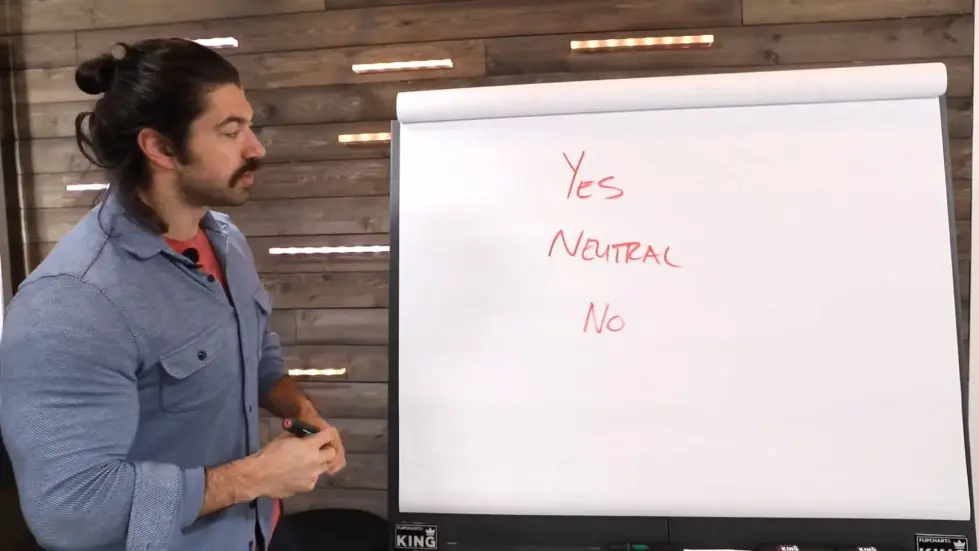
Types of Questions in Sales Process
- There are three types of questions in a sales process: mining questions and questions to get agreement.
- Yes-based questions are easier to get agreement on, but neutral questions are less demanding.
- No-based statements can be used to get people to say yes.
- Phrasing questions properly can help people feel safer saying yes.
- No-based questions can be used as antecedents to lead into a no-based question.

Power of Fair Enough
- Fair enough is a great close because it makes a concession and is reciprocal.
- Many successful salespeople are natural born salesmen, but anyone can become a great salesman with practice.
- Neutral questions like fair enough are easier to get agreement on than yes-based questions.
- Phrasing questions properly can help people feel safer saying yes.
- No-based questions can be used as antecedents to lead into a no-based question.
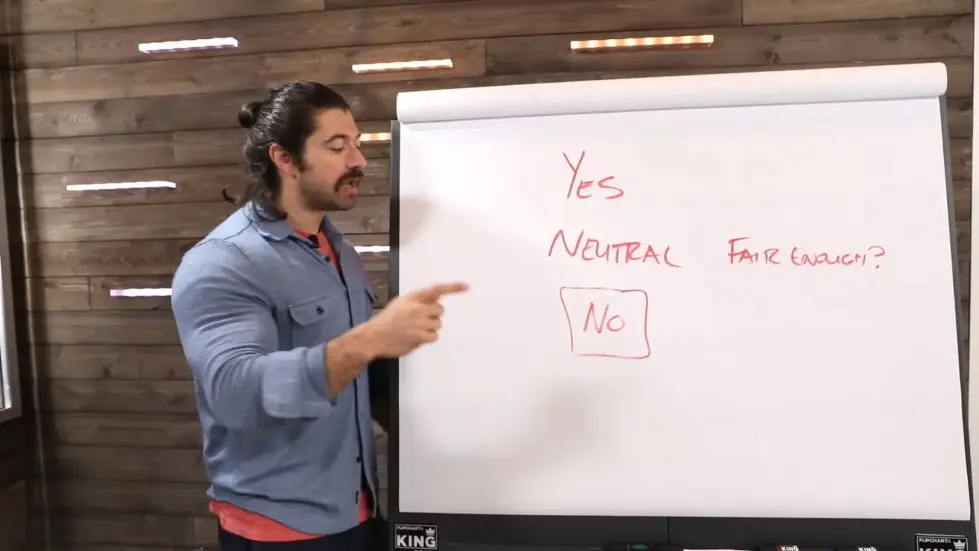
No-Based Statements
- No-based statements can be used to get people to say yes.
- People feel safer saying no and retaining their autonomy.
- Phrasing questions properly can help people feel safer saying yes.
- No-based questions can be used as antecedents to lead into a no-based question.
- Examples of no-based questions include "Would you be opposed to moving forward today?" and "Would it be completely unreasonable for us to get started at the end of this conversation?"
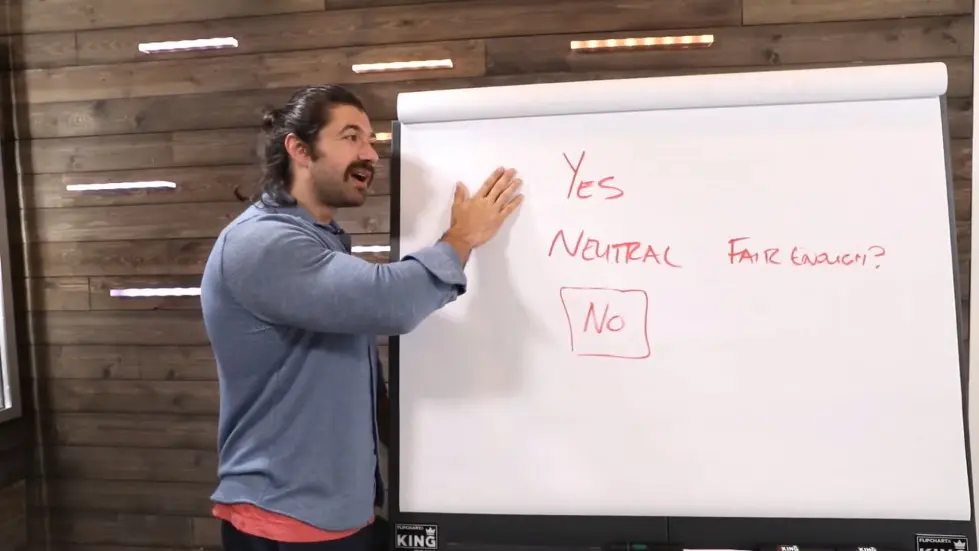
Close High-Ticket Sales By Saying "NO" - YouTube
Example of No-Based Statements in Sales Process
- No-based questions can be used as antecedents to lead into a no-based question.
- Example scenario: trying to convince someone to go to a specific restaurant.
- Asking a direct question like "Do you want to go to Cheesecake Factory?" may result in a no.
- Using a no-based statement like "Would it be completely out of left field for me to say that we should start working together today?" can lead to a yes.
- Phrasing questions properly can help people feel safer saying yes.
The Power of No-Based Questions in Sales
- No-based questions can be more effective in getting people to say yes than yes-based questions.
- Asking if someone is opposed to something can be a more comfortable way for them to agree than asking if they are excited about it.
- Using psychology to make people feel safe and comfortable can help get agreement in a sales conversation.
- No-based questions can be used for key milestone questions or when someone is leaning towards saying no.
- No-based questions can be easier to get agreement with, especially when someone is fatigued at the end of the day.
- No-based questions are not for mining-based questions where information is being extracted from someone.
Watch the video on YouTube:
Close High-Ticket Sales By Saying "NO" - YouTube
Related summaries of videos:
- Alex Hormozi: 1 SKILL That Is HARD To Learn, BUT Will Pay Off FOREVER
- Alex Hormozi: All Entrepreneurs Have Only 1 Problem...
- Alex Hormozi: First Lesson My $3.4B Mentor Taught Me...
- Alex Hormozi: Warren Buffet’s Secret Weapon (and how I made $53M using it)
- Alex Hormozi: How my job changed from $10k/day to $100,000/day
- Alex Hormozi: 3 Landing Page Tests To Skyrocket Conversions & Optins
- Alex Hormozi: I Spent $312,900 Living Like The 1% (Here's What I Learned)
- Alex Hormozi: 8 Lessons Charlie Munger Taught Me To Build $112M Business
- Alex Hormozi: I Broke Down Every High Margin Service Into 6 Buckets [Delivery Cube]
- Alex Hormozi: How I Lost $217,000 on A Day Trade & How I Trade Now
- Home
- About us
- Contact
- Book Summaries 0-9
- Book Summaries A
- Book Summaries B
- Book Summaries C
- Book Summaries D
- Book Summaries E
- Book Summaries F
- Book Summaries G
- Book Summaries H
- Book Summaries I
- Book Summaries J
- Book Summaries K
- Book Summaries L
- Book Summaries M
- Book Summaries N
- Book Summaries O
- Book Summaries P
- Book Summaries Q
- Book Summaries R
- Book Summaries S
- Book Summaries T
- Book Summaries U
- Book Summaries V
- Book Summaries W
- Book Summaries X
- Book Summaries Y
- Book Summaries Z
- Jay Shetty Podcast - Summaries
- Tom Bilyeu Impact Theory - Summaries
- Lex Fridman - Summaries
- Diary of a CEO - Summaries
- Alex Hormozi - Summaries
