
Alex Hormozi: The Best SALES TRAINING On The Internet
Last updated: Jun 18, 2023
The video is about sales training and understanding the power of decision making in order to become more powerful and successful in business.
This video by Alex Hormozi was published on May 3, 2022.
Video length: 01:23:19.
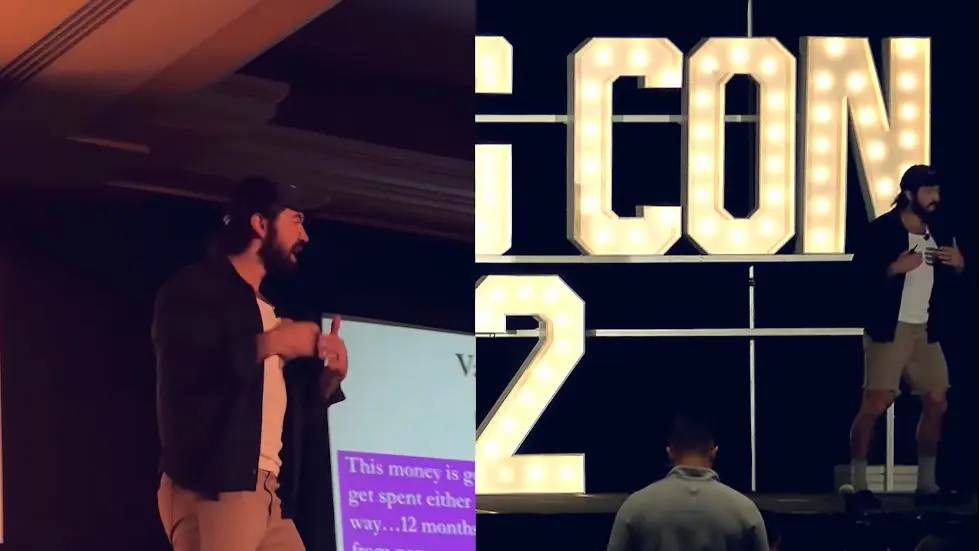
In this video, Alex Hormozi talks about the importance of understanding power and how to unlock it through the actions and decisions we make.
He shares his personal story of going from sleeping on a gym floor to owning a successful company and emphasizes the need for power in influencing others and making decisions that can change our lives for the better.
He also discusses the different selling styles and presents a new framework for selling with logic to give people the power to make decisions.
- Our decisions can unlock power in our lives.
- Alex Hormozi is an entrepreneur, investor, and CEO of Acquisition.com.
- Power is neutral and can be used for good or bad.
- Logical selling involves talking through the decision and making sense of it.
- Decision making is crucial for success in business.
- Logic is what makes a decision stick and creates a great customer.
- Selling is helping prospects make decisions for themselves.
- The goal of closing is to sell from your back foot and help the prospect.
- Understanding the skill of influence is essential to becoming powerful.
The Best SALES TRAINING On The Internet - YouTube

Introduction
- We are all one decision away from changing our lives forever.
- The decisions we make today can unlock power in our lives.
- Understanding the power of decision-making is crucial for success in business.
- Alex Hormozi is an entrepreneur, investor, and CEO of Acquisition.com.

Power
- Power is neutral and can be used for good or bad.
- Harnessing power amplifies who we are.
- Aspiring to have more power in our lives is important.
- The underlying theme of the presentation is to become more powerful.
- Power is the ability to influence or direct.

Logical Selling
- Logical selling is one of the three types of selling styles.
- Emotional selling and not letting the prospect leave are the other two types.
- Logical selling involves talking through the decision and making sense of it.
- Alex Hormozi tends to be a logical seller.
- The goal of logical selling is to get the prospect to decide.

The Best SALES TRAINING On The Internet - YouTube
Decision Making
- Decision making is crucial for success in business.
- The subheadline for the presentation is selling with logic to make lots of money.
- The goal is to get the prospect to decide.
- The presentation is a brand new one that Alex Hormozi put together.
- The framework for getting to yes is reverse engineering the decision-making process.

The Power of Rational Decision Making
- Emotional buyers often regret their decisions later on.
- Logic is what makes a decision stick and creates a great customer.
- As you progress in business, you'll encounter more people who make logical decisions.
- Helping prospects make rational decisions is important in sales.
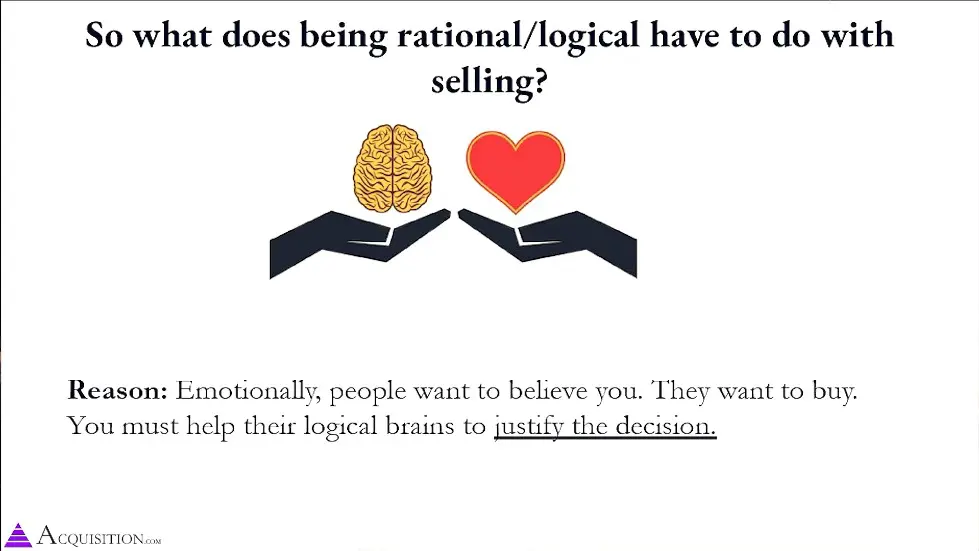
- People want to believe you, but you must help their logical brains justify the decision.
Beliefs About Selling
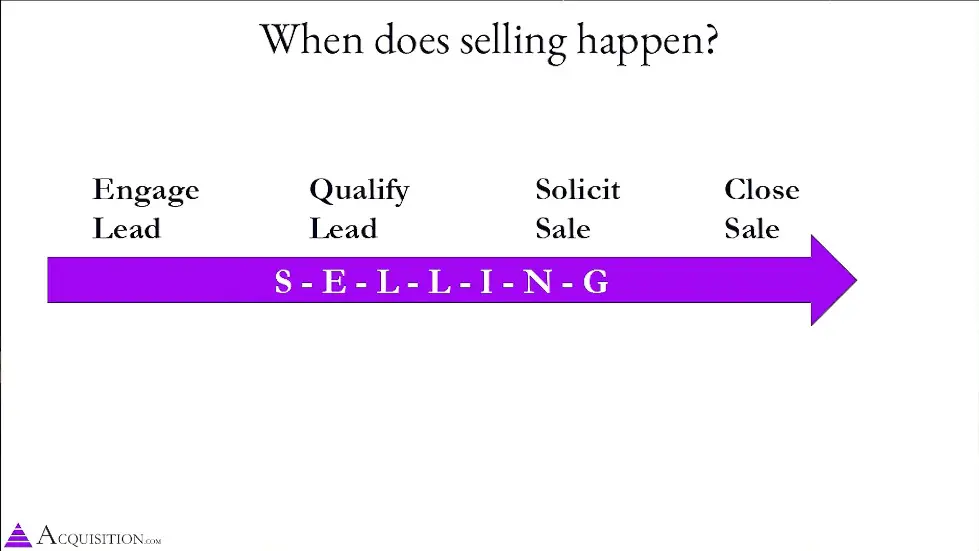
- Selling happens before you ask for the sale.
- Expect and plan for rejection.
- It's easier to handle obstacles than objections.
- If you didn't get a gasp from a price tag, you didn't go high enough.
- Selling properly is the first step in becoming a coach.
- Selling is helping prospects make decisions for themselves.

The Importance of Price Anchoring
- If you're not getting gasps, you're not going high enough with your prices.
- Train your team to be comfortable with rejection and to go for the gasp.
- Price anchoring can be used to your advantage.

The Relationship Between Selling and Coaching
- Selling is the first step in coaching.
- Your first impressions and the expectations you set dictate the relationship.
- Using logic in the sale sets you and your client up for long-term success.
- Selling is about helping prospects make decisions for themselves.

Understanding the Prospect
- Help the prospect help themselves.
- Keep the prospect, not the sale, as the priority.
- Vanish in the sale and magnify the prospect.
- Seek to understand, not to argue.
- Maintain childlike curiosity in conversations.

The Art of Closing
- Closing is a dance, not a fight.
- The goal is to sell from your back foot and help the prospect.
- Selling is a transference of belief over a bridge of trust.
- Belief and trust are a continuum, not binaries.
- Closers ask hard questions because they genuinely care.

The Power of Conviction
- Conviction is one of the easiest and best ways to increase closing percentage.
- You can only build trust if you genuinely want to help.
- Belief and trust are required to make the transfer of sales.
- The person who cares the most about the prospect wins the sale.
- Report all your sales to analyze and improve your performance.
The Skill of Influence
- Power is the ability to direct or influence people.
- Understanding this skill is essential to becoming powerful.
- Selling happens throughout the entire sales process, not just at the close.

The Importance of Closing
- Closing has one of the highest predictors of success in business.
- Analogy: Top five red zone offenses in the NFL made the playoffs 90% of the time.
- If you can close, it will make up for deficiencies in other areas of your business.
- It's difficult to grow in business if you can't close, especially in the beginning.
- 10% of people will always buy, 10% will never buy, and the problem is not knowing which 10%.

The Power of Decision Making
- You're only one decision away from changing your life forever.
- Blaming sources outside of our control makes us weak and powerless.
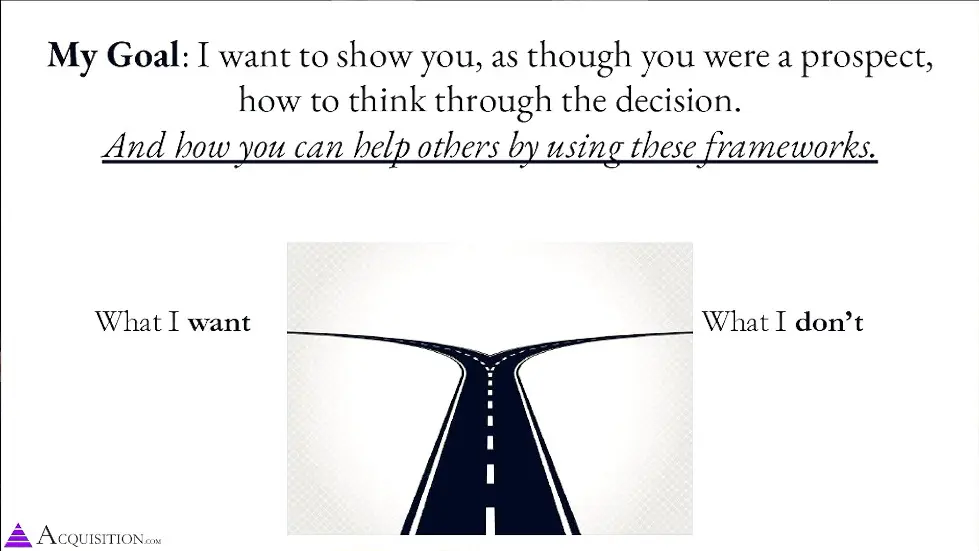
- Visualize a decision you need to make.
- Understand the logic behind arguments people give for not becoming more powerful.
- Use logic to create an emotion and make people feel more powerful.
The Importance of Understanding the Decision-Making Process
- People make decisions based on emotions, not logic.
- People are afraid of making the wrong decision.
- People are afraid of change and the unknown.
- People are afraid of losing something they already have.
- People are influenced by social proof and what others are doing.
The Decision-Making Framework
- Identify the decision you need to make.
- Identify the potential outcomes of each decision.
- Identify the worst-case scenario of each decision.
- Identify the best-case scenario of each decision.
- Identify the most likely scenario of each decision.
- Make the decision based on the most likely scenario and take action.

The Power of Decision Making
- Maximize the left, minimize the right.
- Deciding to buy the offer makes you feel more certain about your decision.
- Deciding not to buy the offer makes you feel less certain about your decision.
- Undecided? Make a decision that has the highest likelihood of getting you closer to your goal.
- Helping someone make a decision to help themselves does not mean buying from you.

Obstacles vs Objections
- An obstacle is something that blocks progress before the sale.
- An objection is when they disagree with you after the sale.
- It's easier to confront and destroy obstacles before asking for the sale.
- Learning how to talk through high-stakes decisions with yourself or others is the purpose of presentation.
- The person must really want the goal and believe three things: the product will get them the goal, the way they want to get there, and that it will work for them.

Sales Ethics
- Helping someone make a decision to help themselves does not mean buying from you.
- Keep their goals at the center of the decision.
- Shift your focus from the sale to the person.
- Be happy when someone decides to own the power and not work with you.
- Pay attention to the person, not yourself.

High-Stakes Decisions
- Make high-stakes decisions to help your prospects in order to best serve them.
- Shift your focus from the sale to the person.
- Change the metric you're measuring yourself by.
- Win every sale by caring about the person, not the sale.
- People pay for you to pay attention to them, not talk about yourself.

Providing Proof for Logical Close
- Provide proof to make it more unreasonable not to believe than to believe.
- Logical close is not an emotional close.
- Ask how many people they need to see to make it more unreasonable not to believe.
- Confront the real reason if they are not sure or do not want to lose weight or make money.
- Expect no at first because people would have already made the decision if they could.
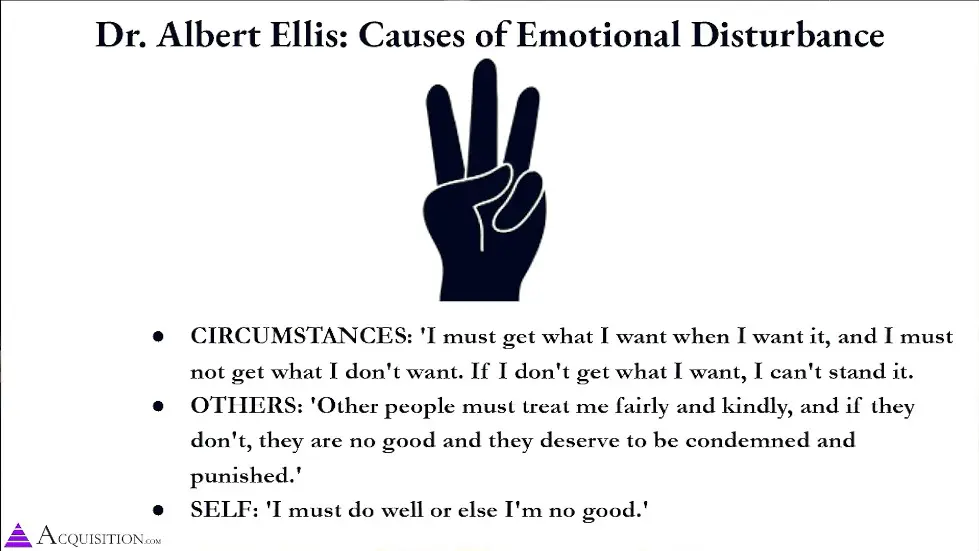
Three Sources of Power
- There are three sources that people cast their power to.
- Dr. Albert Ellis came up with three core distortions of reality.
- The three sources of power are circumstances, others, and self.
- The three core distortions are "I must get what I want when I want it," "Other people must treat me fairly and kindly," and "I must do well or else I am no good."
- Understanding these distortions can help overcome objections in high-stakes conversations.

Onion of Blame
- People start with blaming circumstances, then move on to blaming others, and finally blame themselves.
- Overcoming objections may require peeling back multiple layers of blame.
- The five most common excuses scapegoats are circumstances, others, self, special snowflake, and authority.
- These excuses manifest in multiple ways such as time, value, price, money, and authority.
- Understanding these excuses can help equip you to deal with them for yourself and others.

Richard Feynman's Principles
- Richard Feynman was a brilliant teacher known for understanding, not memorizing.
- Learn principles, not formulas.
- Understanding the principles behind overcoming distortions of reality can help in sales and business.
- Do not take pictures of the slides, be present in the moment to understand the content.
- Understanding the truth behind objections can help in high-stakes conversations.

Understanding the Power of Decision Making
- Avoidance stall is a common problem in sales.
- It is important to go from surface level to core to understand the problem.
- There are different reasons for avoidance, such as lack of time, money, or interest.
- It is important to understand the principles behind these things, not just memorize them.
- By understanding the principles, you can help your clients make better decisions.

Overcoming Time Objections
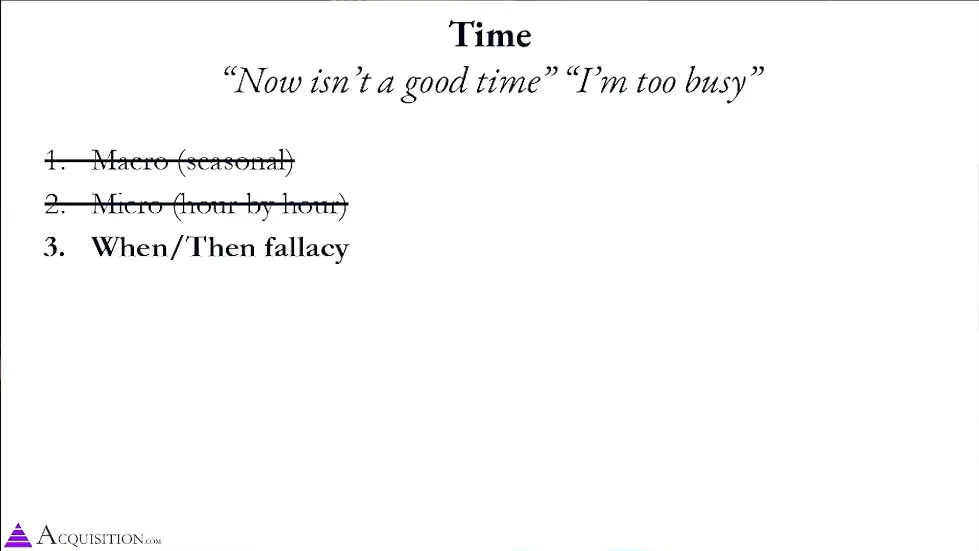
- There are three main types of time objections: macro, micro, and when-then.
- Macro objections are related to busy seasons or lots of things going on.
- Micro objections are related to not having enough time in the day.
- When-then objections are related to waiting for the perfect time to start.
- It is important to understand the direction you are going in and keep peeling to get to the truth.
- You can use logical arguments to help your clients see the benefits of starting now, even if they are busy.
Overcoming Money Objections
- Money objections are often related to the perceived value of the product or service.
- It is important to understand the client's perspective and show them the benefits of investing in your product or service.
- You can use social proof, testimonials, and case studies to demonstrate the value of your product or service.
- You can also offer payment plans or discounts to make it more affordable for the client.
- It is important to focus on the long-term benefits of the product or service, not just the short-term cost.
Overcoming Interest Objections
- Interest objections are often related to the client's perception of the product or service.
- It is important to understand the client's objections and address them directly.
- You can use storytelling, humor, and emotion to engage the client and make the product or service more interesting.
- You can also offer a free trial or demo to give the client a taste of what the product or service is like.
- It is important to focus on the benefits of the product or service, not just the features.

Understanding the Power of Decision Making
- Empathize with the prospect's situation and step into their shoes.
- Don't attack them, but walk them through the epiphany you experienced.
- Logical fallacy called the "one then fallacy" where people say "when I have X, then I will do Y."
- Examples of this fallacy include "I'll pay for the program that'll make me more money when I have more money."
- Goal of high-stakes conversations is to show people that you're not attacking them, but helping them.
Overcoming Objections About Price
- Four frameworks to overcome objections about price: why a lot is good, why is this not a lot, do you believe me, and comparison.
- If someone thinks the price is a lot, ask them if it's a lot for them.
- If they say yes, explain that it's a good thing because it means they'll try hard.
- Relative amount of the price is very little if it adds $10,000 a month to their income.
- Goal is to get the person to confront reality, not a distortion they've created.
- Use comparison to price anchor and show the value of the product or service.

Attacking Time from Three Angles
- Three angles to attack time: time is not real, time is a choice, and time is a skill.
- Time is not real because it's a man-made construct.
- Time is a choice because people choose how they spend their time.
- Time is a skill because people can learn to manage their time better.
- Goal is to show people that they have control over their time and can make better choices.
You have read 50% of the summary.
To read the other half, please enter your Name and Email. It's FREE.
You can unsubscribe anytime. By entering your email you agree to our Terms & Conditions and Privacy Policy.
Watch the video on YouTube:
The Best SALES TRAINING On The Internet - YouTube
Related summaries of videos:
- Alex Hormozi: I emailed myself all of my failures for the last 5 years...this is what I learned..
- Alex Hormozi: I sold 8 businesses by age 32 [here’s how]
- Alex Hormozi: Why losing friends is normal...
- Alex Hormozi: I went from $1000 - $100M in Sales in 44 months...this is how I did it. [EXACT PROCESS]
- Alex Hormozi: How I built a 1.2M follower audience in 6 months
- Alex Hormozi: 2 Signs That You Will Become Wealthy One Day..
- Alex Hormozi: 10 Lessons that have taken our companies to over $75,000/hr...
- Alex Hormozi: How to CLOSE THE SALE when the prospect says, "I left my wallet at home.."
- Alex Hormozi: I lived on $0 income for 3 years growing my business...
- Alex Hormozi: How I learned to SELL...[mindset training]
- Home
- About us
- Contact
- Book Summaries 0-9
- Book Summaries A
- Book Summaries B
- Book Summaries C
- Book Summaries D
- Book Summaries E
- Book Summaries F
- Book Summaries G
- Book Summaries H
- Book Summaries I
- Book Summaries J
- Book Summaries K
- Book Summaries L
- Book Summaries M
- Book Summaries N
- Book Summaries O
- Book Summaries P
- Book Summaries Q
- Book Summaries R
- Book Summaries S
- Book Summaries T
- Book Summaries U
- Book Summaries V
- Book Summaries W
- Book Summaries X
- Book Summaries Y
- Book Summaries Z
- Jay Shetty Podcast - Summaries
- Tom Bilyeu Impact Theory - Summaries
- Lex Fridman - Summaries
- Diary of a CEO - Summaries
- Alex Hormozi - Summaries
