
Andrew Huberman: How to Use Music to Boost Motivation, Mood and Improve Learning (Huberman Lab Podcast)
Last updated: Oct 2, 2023
The video is about how music can boost motivation, mood, and improve learning. The speaker, Andrew Huberman, discusses the science behind how music activates nearly every piece of our brain and how it can be leveraged to shift our brain states and bodily states. He also talks about the use of music to enhance brain plasticity, emotional processing, and learning and memory. The video includes examples of different types of music that activate different neural circuits in the brain and how to use music to enhance productivity and enrichment in life. The speaker also announces three live events in Australia that will cover science and science-related tools for mental health, physical health, and performance.
This video by Andrew Huberman was published on Sep 18, 2023.
Video length: 01:44:26.
The video is about the science and science-based tools for everyday life, specifically discussing the impact of music on motivation, mood, and learning.
The speaker, Andrew Huberman, is a professor of neurobiology and ophthalmology at Stanford School of Medicine. The video explores how music activates nearly every piece of our brain and how it can be leveraged to shift our brain states and bodily states. The video also discusses the use of music to enhance brain plasticity, emotional processing, and learning and memory. The speaker provides examples of different types of music that activate different neural circuits in the brain and how to use music to enhance productivity and enrichment in life.
The video also announces three live events in Australia that will cover science and science-related tools for mental health, physical health, and performance.
- The Huberman Lab podcast discusses science and science-based tools for everyday life
- Hosted by Andrew Huberman, a professor of neurobiology and ophthalmology at Stanford School of Medicine
- Today's episode focuses on music and its impact on the brain
- Music activates nearly every piece of our brain in ways that our brain itself and our body helped to create
- Studies have been done on how music affects our mood and bodily state
- Music can be leveraged to shift our brain states and bodily states
- Different types of music activate different neural circuits in the brain
- Music can be used to enhance brain plasticity
- Music can be used to process emotions
How to Use Music to Boost Motivation, Mood & Improve Learning | Huberman Lab Podcast - YouTube

Introduction
- Welcome to the Huberman Lab podcast
- Discusses science and science-based tools for everyday life
- Hosted by Andrew Huberman, a professor of neurobiology and ophthalmology at Stanford School of Medicine
- Today's episode focuses on music and its impact on the brain

The Science Behind Music and the Brain
- Music activates nearly every piece of our brain
- Music activates our brain in ways that our brain itself and our body helped to create
- Music is a neurological phenomenon
- Studies have been done on how music affects our mood and bodily state
- Music can be leveraged to shift our brain states and bodily states

Using Music to Boost Motivation, Mood, and Improve Learning
- Different types of music activate different neural circuits in the brain
- Music can be used to enhance brain plasticity
- Music can be used to process emotions
- Music can be used to enhance learning and memory
- Music can be used to enrich and enjoy life

How to Use Music to Boost Motivation, Mood & Improve Learning | Huberman Lab Podcast - YouTube
Live Events
- Huberman Lab will be hosting three live events in Australia
- The events will cover science and science-related tools for mental health, physical health, and performance
- There will be a live question and answer session
- Tickets can be accessed through hubermanlab.com

Section 1: The Science Behind Music and Brain Activation
- Music activates nearly every piece of our brain.
- It can be leveraged to shift our brain states and bodily states.
- Music can enhance brain plasticity.
- It can be used to process emotions.
- Different types of music activate different neural circuits in the brain.

Section 2: Using Music to Boost Motivation, Mood, and Improve Learning
- Music can boost motivation and mood.
- It can improve learning and memory.
- Examples of different types of music that activate different neural circuits in the brain are given.
- Music can be used to enhance productivity and enrichment in life.

Section 3: Andrew Huberman's Experience with an Eight Sleep Mattress Cover
- Andrew Huberman started sleeping on an eight-sleep mattress cover over two years ago.
- It has transformed his sleep, allowing him to fall and stay deeply asleep throughout the night and wake up feeling refreshed.
- He falls back asleep more quickly if he wakes up during the middle of the night.
- His mood, focus, and alertness throughout the day are greatly elevated as compared to prior to sleeping on his eight Sleep mattress.

Section 4: Roca Eyeglasses and Sunglasses
- Roca makes eyeglasses and sunglasses that are the absolute highest quality.
- Their visual system biology understanding has designed their glasses and sunglasses so that you always see with Crystal Clarity.
- They come in some of the aesthetics more typically associated with performance glasses like those with cyborg style.
- Roka eyeglasses and sunglasses are extremely lightweight and won't slip off your face if you get sweaty.

The Science Behind Music and Emotions
- Music can activate nearly every piece of our brain and can be leveraged to shift our brain states and bodily states.
- Music can enhance brain plasticity, emotional processing, and learning.
- Different types of music activate different neural circuits in the brain.
- Music can evoke emotions within us and give us a sense of empathy for others.
- Music can describe emotions and can also imply intent.

Using Music to Enhance Productivity and Enrichment
- Music can be used to enhance productivity and enrichment in life.
- Examples of different types of music that activate different neural circuits in the brain include classical music, jazz, and ambient music.
- Listening to music that has a lightness to it can evoke a sense of the Turning of the Seasons from Winter to Spring.
- The firing of neurons in our brain and body responding to particular frequencies of sound can make our body itself an instrument playing that sense of the Turning of the Seasons from Winter to Spring within us.
- Music can not only describe and evoke emotions but can also imply intent.

Examples of Music and Emotions
- Drumming that is approaching can imply the intent of aggression or War.
- A different frequency of sound played at a higher pitch can be far less clear in terms of what they mean and what their intent is.
- Contrasting two different emotional states in you can convey two separate or distinct sets of intent.
- Spoken language can convey intent, but music can also describe emotions and imply intent.
- Music can evoke emotions that give us a sense of empathy for others.

Using Music to Boost Motivation, Mood, and Improve Learning
- Music can boost motivation, mood, and improve learning.
- Music can be used to enhance brain plasticity, emotional processing, and learning.
- Different types of music can activate different neural circuits in the brain.
- Music can evoke emotions within us and give us a sense of empathy for others.
- Music can describe emotions and can also imply intent.

The Science Behind Music and Brain Activation
- Music activates nearly every piece of our brain.
- It can be leveraged to shift our brain states and bodily states.
- Music can enhance brain plasticity, emotional processing, and learning.
- Different types of music activate different neural circuits in the brain.
- Examples of music that activate different neural circuits include classical music, jazz, and hip-hop.

Using Music to Enhance Productivity and Enrichment in Life
- Music can boost motivation, mood, and improve learning.
- It can be used to enhance productivity and enrichment in life.
- Examples of music that can be used to enhance productivity include classical music and ambient music.
- Examples of music that can be used to enhance enrichment in life include jazz and hip-hop.
- There are also live events in Australia that cover science and science-related tools for mental health, physical health, and performance.

The Science Behind Music and Our Bodily Physiology
- Music can change various health metrics.
- Studies have shown that listening to music for 10 to 30 minutes per day can have a significant effect on the bodily physiology of people.
- The selection of music in these studies ranged from Rock and Roll to classical music to country music.
- Subjects in these studies were asked to listen to their favorite genre of music for 10 to 30 minutes per day.
- Heart rate variability tends to increase for those who listen to music for 10 to 30 minutes per day.

The Effects of Music on Heart Rate and Heart Rate Variability
- Listening to music can reduce resting heart rate.
- Heart rate variability tends to increase after listening to music.
- Heart rate variability reflects a periodic breaking and slowing down of heart rate and breathing.
- Sympathetic activation is an accelerator, while parasympathetic activation is a break.
- Parasympathetic activation is associated with deeper relaxation and calm.

The Benefits of Listening to Music for Heart Rate Variability
- Heart rate variability increases around the clock, even during sleep.
- Listening to music for 10 to 30 minutes per day can increase heart rate variability.
- Heart rate variability is beneficial for mental and physical health.
- There are dozens of studies that have explored how music impacts our physiology.
- Listening to music that we like for 10 to 30 minutes per day can improve our health metrics.

The Recent Meta-Analysis on the Effects of Music on the Cardiovascular System
- A recent meta-analysis identified that the way in which listening to music positively impacts the cardiovascular system is through changes in breathing.
- The relationship between breathing and heart rate is something that has been touched on before.
- Even if people were not singing along with the music, listening to music can still have an effect on the cardiovascular system.
- The relationship between breathing and heart rate is complex and multifaceted.
- Listening to music can have a positive impact on our cardiovascular system and other aspects of our physiology.

The Science Behind Music and Brain Activation
- The video discusses the science behind how music activates nearly every piece of our brain.
- Music can be leveraged to shift our brain states and bodily states.
- Music can enhance brain plasticity, emotional processing, and learning and memory.
- Different types of music activate different neural circuits in the brain.

Using Music to Boost Motivation, Mood, and Improve Learning
- Music can boost motivation by activating the pre-motor circuits that would have us move.
- Music can improve mood by evoking emotion and communicating intent.
- Music can enhance learning by activating nearly every piece of our brain.
- Music can be used to shift our brain states and bodily states.
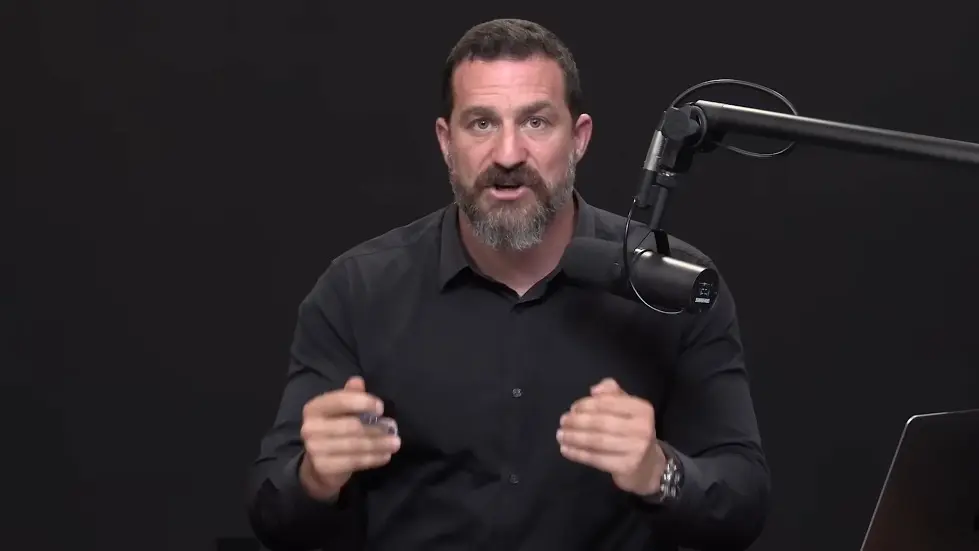
Examples of Music and Their Effects on the Brain
- Inhaling with vigor or making the inhale longer than naturally would activate the heart rate.
- Exhaling with vigor or making the exhale longer than naturally would slow down the heart rate.
- Respiratory sinus arrhythmia is a phenomenon that occurs when the heart has more space due to inhaling and the nervous system registers that as the blood moving more slowly through the temporarily enlarged heart.
- Listening to music increases heart rate variability, which is beneficial to all of us.

Using Music as a Tool for Mental and Physical Health
- Listening to music for 10 to 30 minutes per day can positively impact mental and physical health.
- The video mentions ag-1 as a vitamin mineral supplement that can be used in conjunction with music to enhance its effects.
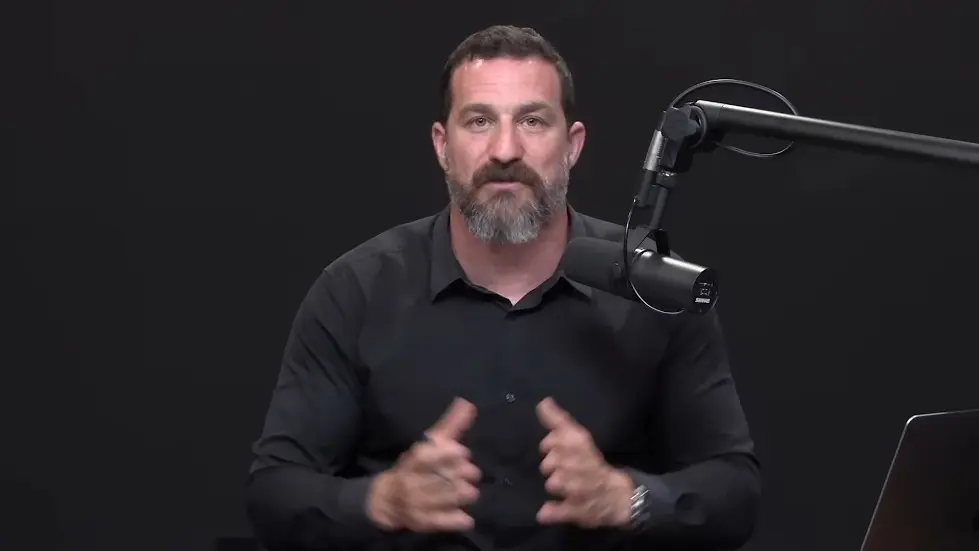
Probiotic Drink
- The speaker discusses the use of a probiotic drink called ag1.
- The drink is designed to meet all of one's foundational nutrition needs.
- It contains adaptogens to help buffer stress.
- The speaker claims that taking ag1 makes them feel better, with more focus and energy.
- The drink also helps with sleep and improves mood.

Music and Motivation
- The speaker discusses the science behind how music activates nearly every piece of our brain and body.
- They explain how music can be leveraged to shift our brain states and bodily states.
- The speaker talks about the use of music to enhance brain plasticity, emotional processing, and learning and memory.
- They discuss different types of music that activate different neural circuits in the brain.
- The speaker announces three live events in Australia that will cover science and science-related tools for mental health, physical health, and performance.

Introduction
- The speaker is Andrew Huberman, discussing the science behind how music activates the brain and can be used to boost motivation, mood, and improve learning.
- The speaker mentions that music influences the likelihood that the next neuron will be active or less active, and that neurons speak the language of electricity by evoking the release of chemicals and chemistry.
- The speaker mentions that when people listen to music, there is heightened activation of the frontal cortex, which is involved in understanding context, making predictions, and suppressing certain actions in a context-dependent way.

Frontal Cortex and Music
- The frontal cortex is activated when we listen to music because within music there are some regularities, such as motifs or melodies, that our brain predicts will happen again or not happen again.
- The frontal cortex is great at doing the if this then that type of analysis, predicting what we will hear next based on what we are currently hearing and what we heard before.
- When we listen to music, our frontal cortex increases inactivation because it is predicting what we will hear next based on what we are currently hearing and what we heard before.

Frontal Cortex and Predictions
- The frontal cortex is activated when we listen to music because it is making predictions about what we will hear next based on what we are currently hearing and what we heard before.
- The frontal cortex is great at doing the if this then that type of analysis, predicting what we will hear next based on what we are currently hearing and what we heard before.
- When we listen to music, our frontal cortex increases inactivation because it is predicting what we will hear next based on what we are currently hearing and what we heard before.
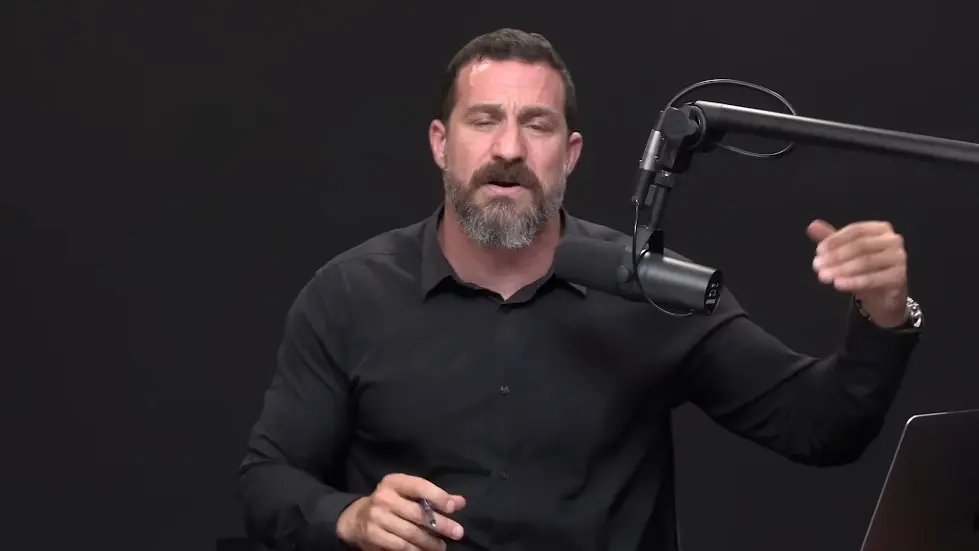
Frontal Cortex and Suppression
- The frontal cortex is activated when we listen to music because it is suppressing certain actions in a context-dependent way, such as actions that are dangerous to us socially, physically, etc.
- The frontal cortex is great at doing the if this then that type of analysis, predicting what we will hear next based on what we are currently hearing and what we heard before.
- When we listen to music, our frontal cortex increases inactivation because it is predicting what we will hear next based on what we are currently hearing and what we heard before.

Conclusion
- The speaker concludes that when we listen to music, our frontal cortex increases inactivation because it is predicting what we will hear next based on what we are currently hearing and what we heard before.
- The speaker mentions that music influences the likelihood that the next neuron will be active or less active, and that neurons speak the language of electricity by evoking the release of chemicals and chemistry.

The Science Behind Music and Motivation
- The frontal cortex is making predictions and when those predictions are broken, it evokes a sense of novelty.
- Dopamine is deployed when we hear something novel that we like.
- The mesolimic pathway, also known as the mesolimic reinforcement pathway, deploys dopamine when we hear something novel that we like.
- Other brain centers and circuits that listening to music activates include the amygdala, the para hippocampal formation, the cortex, and the hippocampus.
- Music activates the prediction machinery in our brain and the circuits that register novelty.

The Effects of Music on Learning and Memory
- Music activates areas of the brain that encode and store memories and emotions.
- Hearing particular pieces of music can activate a whole library of memory and emotions within us.
- Music can evoke a sense of nostalgia, longing, sadness, or delight and happiness.
- Music can activate the para hippocampal regions of the brain, the cortex, and the hippocampus.
- Music can encode our memories, our sense of self, our sense of others, our sense of history with those people, and on and on.

The Role of Music in Enhancing Productivity and Enrichment
- Music can activate the prediction machinery in our brain and the circuits that register novelty.
- Music can evoke a sense of yes, I like that, which leads to the deployment of dopamine.
- Music can activate areas of the brain that encode and store memories and emotions.
- Music can activate the para hippocampal regions of the brain, the cortex, and the hippocampus.
- Music can enhance productivity and enrichment in life.

You have read 50% of the summary.
To read the other half, please enter your Name and Email. It's FREE.
You can unsubscribe anytime. By entering your email you agree to our Terms & Conditions and Privacy Policy.
Watch the video on YouTube:
How to Use Music to Boost Motivation, Mood & Improve Learning | Huberman Lab Podcast - YouTube
Related summaries of videos:
- Dr. Paul Conti and Dr. Andrew Huberman: How to Build and Maintain Healthy Relationships (Huberman Lab Guest Series)
- U.S. Surgeon General Dr. Vivek Murthy and Dr. Andrew Huberman: Efforts and Challenges in Promoting Public Health
- Dr. Paul Conti and Dr. Andrew Huberman: Tools and Protocols for Mental Health (Huberman Lab Guest Series)
- Chris Voss and Andrew Huberman: How to Succeed at Hard Conversations (Huberman Lab Podcast)
- Andrew Huberman: How to Increase Your Willpower and Tenacity (Huberman Lab Podcast)
- Dr. Lisa Feldman Barrett and Dr. Andrew Huberman: How to Understand Emotions (Huberman Lab Podcast)
- Andrew Huberman: Mental Health Toolkit - Tools to Bolster Your Mood and Mental Health
- Dr. Michael Eisenberg and Dr. Andrew Huberman: Improving Male Sexual Health, Function and Fertility
- Dr. Natalie Crawford and Dr. Andrew Huberman: Female Hormone Health, Fertility and Vitality
- Andrew Huberman: A Science-Supported Journaling Protocol to Improve Mental and Physical Health
- Home
- About us
- Contact
- Book Summaries 0-9
- Book Summaries A
- Book Summaries B
- Book Summaries C
- Book Summaries D
- Book Summaries E
- Book Summaries F
- Book Summaries G
- Book Summaries H
- Book Summaries I
- Book Summaries J
- Book Summaries K
- Book Summaries L
- Book Summaries M
- Book Summaries N
- Book Summaries O
- Book Summaries P
- Book Summaries Q
- Book Summaries R
- Book Summaries S
- Book Summaries T
- Book Summaries U
- Book Summaries V
- Book Summaries W
- Book Summaries X
- Book Summaries Y
- Book Summaries Z
- Jay Shetty Podcast - Summaries
- Tom Bilyeu Impact Theory - Summaries
- Lex Fridman - Summaries
- Diary of a CEO - Summaries
- Alex Hormozi - Summaries
