
Anna Frebel: Origin and Evolution of the Universe, Galaxies, and Stars | Lex Fridman Podcast #378
Last updated: Jul 2, 2023
The video is about Anna Frebel, an astrophysicist at MIT, studying the oldest stars in the Milky Way galaxy to understand the chemical and physical conditions of the early universe and how it formed and evolved to what it is today. The formation of the Milky Way galaxy is discussed, including the formation of the first stars prior to any galaxies, which were very massive and made from hydrogen and helium. These stars exploded in massive supernova explosions, providing the first heavier elements to the universe. The formation of the first stars took a few hundred million years, and it took a few million years for them to explode. The video also discusses the concept of pristine and non-pristine clumps and how they helped make smaller and smaller stars.
This video by Lex Fridman was published on May 18, 2023.
Video length: 02:18:50.
The video is about Anna Frebel, an astrophysicist at MIT, who studies the oldest stars in the Milky Way galaxy to understand the chemical and physical conditions of the early universe and how the galaxy formed and evolved.
The video begins with Anna sharing her personal experience of feeling connected to the universe and the stars. The conversation then moves on to the formation of the Milky Way galaxy and the universe as a whole. Anna explains that the Big Bang left behind a universe made of hydrogen, helium, and tiny amounts of lithium, which is difficult to make stars or any structure from. The first stars that formed were massive, 100 times the mass of the Sun, made from hydrogen and helium. These stars exploded in massive supernova explosions, providing the first heavier elements to the universe. After the first explosion, the universe became chemically pristine, and everything else could happen, including the formation of galaxies and stars like the Sun.
Anna's research involves studying the chemical compositions of the oldest stars to unpack everything that happened in the early universe.
- The formation of the Milky Way galaxy began with the formation of the first stars prior to any galaxies.
- The first stars were very massive and made from hydrogen and helium.
- The formation of the first stars took a few hundred million years, and it took a few million years for them to explode.
- The formation of the first stars cooled down and clumped to form the next generation of stars, including smaller stars.
- The first stars formed from gas clouds surrounding the first stars.
- The formation of the Milky Way galaxy took a few million years.
- The Milky Way galaxy formed from a cloud of gas and dust that collapsed under its own gravity.
- The first stars formed within the Milky Way galaxy from a cloud of gas and dust that collapsed under its own gravity.
- The formation of the first stars helped to create the conditions necessary for the formation of the Milky Way galaxy.

The Early Days of the Milky Way Galaxy
- The formation of the Milky Way galaxy is discussed.
- The formation of the first stars prior to any galaxies took a few hundred million years.
- These stars were very massive and made from hydrogen and helium.
- These stars exploded in massive supernova explosions, providing the first heavier elements to the universe.
- The formation of the first stars took a few million years, and it took a few million years for them to explode.

The Formation of the Universe
- The formation of the universe is discussed.
- The Big Bang left a universe behind that was made of just hydrogen and helium and tiny little sprinkles of lithium.
- It is hard to make stars or any structure from that that is fairly hot gas.
- The very first stars that formed prior to to any galaxies were very massive stars, big stars 100 times the mass of the Sun and they were made from just hydrogen and helium.
- These stars exploded pretty fast after a few million years.

The Formation of Pristine and Non-Pristine Clumps
- The concept of pristine and non-pristine clumps is discussed.
- Pristine clumps were made of just hydrogen and helium and tiny little sprinkles of lithium.
- Non-pristine clumps were made of just hydrogen and helium and tiny little sprinkles of lithium, but also contained heavier elements.
- Non-pristine clumps helped make smaller and smaller stars.
- The first one is pristine non-pristine clumps.

The Study of Early Survivors
- The study of early survivors is discussed.
- These early survivors tell us what the gas looked like back then.
- The chemical compositions of these early gas clouds are preserved until today.
- Chemically analyzing the older stars allows us to study all the beginnings.
- To just reiterate, in the very early days in the first few million years, there were giant stars that were mostly hydrogen and helium, which then exploded in supernova explosions and made these clumps.

The Formation of the Milky Way Galaxy
- The formation of the Milky Way galaxy began with the formation of the first stars prior to any galaxies.
- These first stars were very massive and made from hydrogen and helium.
- They exploded in massive supernova explosions, providing the first heavier elements to the universe.
- The formation of the first stars took a few hundred million years, and it took a few million years for them to explode.
- The formation of the first stars cooled down and clumped to form the next generation of stars, including smaller stars.

The Formation of the First Stars
- The first stars formed from gas clouds surrounding the first stars.
- These gas clouds could now cool down and clump to form the next generation of stars.
- The formation of the first stars took a few hundred million years.
- It took a few million years for these stars to explode in massive supernova explosions.
- These explosions provided the first heavier elements to the universe.

The Formation of the Milky Way Galaxy
- The Milky Way galaxy formed from the formation of the first stars.
- The first stars formed a few hundred million years before the Milky Way galaxy formed.
- The formation of the Milky Way galaxy took a few million years.
- The first stars formed in the outer parts of the Milky Way galaxy.
- The old stuff is on the outer parts of the Milky Way galaxy, and the new stuff is in closer to the middle.
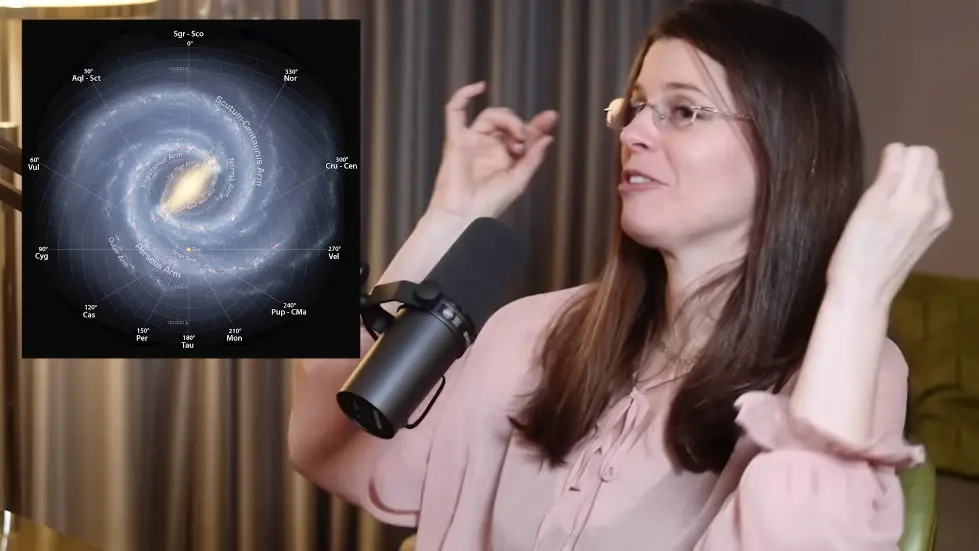
The Formation of the First Stars
- The first stars formed from gas clouds surrounding the first stars.
- These gas clouds could now cool down and clump to form the next generation of stars.
- The formation of the first stars took a few hundred million years.
- It took a few million years for these stars to explode in massive supernova explosions.
- These explosions provided the first heavier elements to the universe.

The Structure of the Milky Way Galaxy
- The Milky Way galaxy is a spiral galaxy located in the constellation Sagittarius.
- It is approximately 100,000 light years in diameter and contains about 200-400 billion stars.
- The galaxy is divided into four main quadrants: the first quadrant, second quadrant, third quadrant, and fourth quadrant.
- The first quadrant contains the galactic center and the solar system, while the fourth quadrant is located on the opposite side of the galaxy from the first quadrant.
- The second and third quadrants are located between the first and fourth quadrants and contain many stars and galaxies.

The Formation of the Milky Way Galaxy
- The Milky Way galaxy formed approximately 13.6 billion years ago from a cloud of gas and dust that collapsed under its own gravity.
- The first stars formed within the cloud, and over time, more stars formed and the cloud began to rotate faster.
- As the rotation speed increased, the cloud began to flatten into a disk-shaped structure, forming the Milky Way galaxy.
- The formation of the Milky Way galaxy took several hundred million years, with the first stars forming within the first few million years.
- The formation of the Milky Way galaxy is still not fully understood, and scientists continue to study the galaxy to learn more about its formation and evolution.

The Formation of the First Stars
- The first stars formed within the Milky Way galaxy from a cloud of gas and dust that collapsed under its own gravity.
- These stars were very massive and made from hydrogen and helium.
- The first stars exploded in massive supernova explosions, providing the first heavier elements to the universe.
- The formation of the first stars took a few hundred million years, and it took a few million years for them to explode.
- The formation of the first stars helped to create the conditions necessary for the formation of the Milky Way galaxy.

The Evolution of the Milky Way Galaxy
- The Milky Way galaxy has evolved over time, with the formation of new stars and the movement of existing stars.
- The galaxy has several spiral arms that contain many stars and galaxies.
- The outermost spiral arm of the Milky Way galaxy is the largest and contains many young, blue stars.
- The inner spiral arms of the Milky Way galaxy contain many older, red stars.
- The evolution of the Milky Way galaxy is still not fully understood, and scientists continue to study the galaxy to learn more about its formation and evolution.

The Formation of the Milky Way Galaxy
- The formation of the Milky Way galaxy is discussed, including the formation of the first stars prior to any galaxies.
- These stars were very massive and made from hydrogen and helium.
- They exploded in massive supernova explosions, providing the first heavier elements to the universe.
- The formation of the first stars took a few hundred million years.
- It took a few million years for them to explode.

The Proto Galaxy and Black Hole Formation
- The idea of the Proto Galaxy is discussed, which relates to the formation of supermassive black holes in galaxies.
- Most large galaxies have a supermassive black hole in the center, but we don't know where they come from.
- The early universe had a little galaxy that was the first gravitationally bound structure held together by dark matter.
- The Milky Way grew from absorbing neighboring smaller even smaller systems, and there must have been a seed for one of these supermassive black holes.
- The new James Webb Space Telescope is working on many people to figure out exactly what happened and there are some surprising results.

The Chicken or the Egg Problem
- The chicken or the egg problem is discussed, which is whether a supermassive black hole is needed to form a galaxy or does the galaxy naturally create the black hole.
- There are lots of little dwarf galaxies out there, and to the extent that we can tell, they do not contain black holes.
- The Milky Way remains surrounded by many dozens of small dwarf galaxies.
- Studying these dwarf galaxies has shown that they were definitely there, but there must have been bigger things that made them more massive.
- The dynamics of the formation and evolution of galaxies is an area of research, and the James Webb Space Telescope is the prime telescope to study this.

Observational Cosmology
- Gravitational waves is one of the observational data that can be used to study the formation and evolution of galaxies.
- The James Webb Space Telescope collects the infrared light from the farthest galaxies that light has traveled some 13 billion years to us.
- Folks are trying to study the early onset of these early supermassive black holes how they shape galaxy.
- The older and older ones are more primitive in terms of the structure, but as you can imagine if you make your system smaller and smaller it becomes dimmer and dimmer and it's further and further away.
- It's dimmer and dimmer means older and older, and it all started really small or smaller.

Theoretical Physics vs. Experimental Astrophysics
- Theoretical physics and experimental astrophysics are different approaches to understanding the universe.
- Theoretical physics involves developing mathematical models and theories to explain natural phenomena.
- Experimental astrophysics involves observing and measuring the universe to test and refine theories.
- The physics of stars and galaxies is a fundamental kind of chemical and physical phenomena.
- The physics of stars and galaxies is different from nuclear fusion, which is an extreme form of fusion that requires tunneling.

Interesting Intersections in Science
- Talking with colleagues who have different interests and backgrounds can lead to new insights and discoveries.
- It can be challenging to communicate with non-scientists and other people who have different perspectives.
- Taking the time to understand and appreciate different approaches to science can lead to a deeper understanding of the universe.
- Big discoveries can come from unexpected sources and perspectives.
- The space of artificial intelligence and neuroscience are two fields that study different aspects of the same mysteries and problems.

Simulation and Understanding the Universe
- Simulation can be used to understand the universe by creating models and testing theories.
- The set of terminology used in simulation can be different from experimental data.
- Playing with the universe in a simulation can be a fun way to explore possibilities and evolve theories.
- The Drake equation is a tool used to estimate the number of potentially habitable planets in the universe.
- Playing between the two possibilities of the Drake equation can lead to new insights and discoveries.

The Big Field of Stellar Archeology
- The concept of stellar archeology in the cosmos is fascinating.
- The lesser the mass of the star, the longer it lives.
- The son's lifetime is 10 billion years, and a star that's 0.6 or 0.8 solar masses has a lifetime of 15 to 20 billion years.
- Even if a small star formed soon after the big bang, it is still observable today.
- Old light is like a few thousand years old, but compared to the age of these stars is nothing.

Young Stars in Our Galaxy
- Young stars in our galaxy are not far away and formed in a little other galaxy in the vicinity.
- The Milky Way ate that galaxy, which means it absorbed all the stars, including the little old stars that are now on the outskirts of the Milky Way.
- These stars are efficient with their energy consumption and are still burning hydrogen to helium in their cores.
- They have done so for the past 12 to 13 billion years and will continue to do so for a few billion years.
- The outer parts of the star, which is mostly gas, does not talk to the core, so whatever composition that star has in its outer layers is exactly the same as the gas composition from which the star formed.

Stellar Archaeology
- Stellar archaeology is the study of old stars in the sky because they have preserved information from the first billion years.
- The information is preserved in the staff or the old stars in the sky because they have perfectly preserved that information from way back then.
- The best look at the chemical composition of early stars can be obtained with telescopes.
- The age of the stars being studied is close to 13 billion years, and the range is from 12 to 13 billion years.
- The pristineness of the universe after the big bang is important to understand the chemical evolution of the universe and the Milky Way.

The Formation of the Milky Way Galaxy
- The formation of the Milky Way galaxy is discussed, including the formation of the first stars prior to any galaxies.
- These stars were very massive and made from hydrogen and helium.
- These stars exploded in massive supernova explosions, providing the first heavier elements to the universe.
- The formation of the first stars took a few hundred million years, and it took a few million years for them to explode.
- The concept of pristine and non-pristine clumps is discussed and how they helped make smaller and smaller stars.

The Importance of Heavier Metals in the Evolution of Stars
- Heavier elements are formed in supernova explosions.
- These elements are a good seed for other processes that create heavier elements.
- The sun has its chemical composition due to the enrichment of gas clouds by supernova explosions.
- The planets were made from the same gas cloud as the sun.
- Supernova explosions create more and more complex elements over time.

The Formation of Stars and Supernovae
- The first stars formed from hydrogen and helium gas clouds.
- These stars exploded in massive supernova explosions, providing the first heavier elements to the universe.
- It took about a thousand generations for the sun to form from a gas cloud enriched by supernova explosions.
- The sun has its chemical composition due to the enrichment of gas clouds by supernova explosions.
- Planets were made from the same gas cloud as the sun.

The Role of Pristine and Non-Pristine Clumps in Star Formation
- Pristine clumps are gas clouds that have not been enriched by supernova explosions.
- Non-pristine clumps are gas clouds that have been enriched by supernova explosions.
- Non-pristine clumps help make smaller and smaller stars.
- The formation of stars takes a few hundred million years.
- It took a few million years for the first stars to explode.

The Signature of Old Stars and Their Formation
- Old stars have huge amounts of heavy elements in them.
- The question is what enriched the gas that formed these stars.
- Old stars formed from gas enriched by just one first star that dumped its elements into the gas.
- Other old stars have a more complicated heavy element signature.
- These stars were probably formed in a gas cloud that had a few things going on, such as a first star, another supernova, and a special process like a neutron star merger.

The Signature of Heavy Elements in Stars and Their Formation
- All stars carry the signature of their progenitor events.
- The amounts of heavy elements in the cells of old stars are so tiny that one supernova explosion is already too much.
- There is no cosmic vacuum cleaner going around sucking things away.
- Black holes are probably the closest thing to a cosmic vacuum cleaner.
- There are maybe 10 stars or so now where we are saying they're contained so little of these heavy elements that there must be second generation because how else would you have made them.

The Process of Archeology
- The study of the formation and evolution of the universe, galaxies, and stars is called archeology.
- The process of archeology involves studying the chemical signatures of stars and their kinematics, or movement about the galaxy.
- By analyzing the chemical signatures and kinematics of stars, scientists can determine where they might have come from.
- Old stars in the galaxy, which are not part of the galaxy, can provide clues about their origin.
- Finding stars with very low abundances of heavy elements, such as strontium and barium, can indicate that they are some of the oldest stars in the galaxy.

The Discovery of Retrograde Stars
- Recently, a paper was submitted with three women undergraduates who found a sample of stars with very low abundances of heavy elements.
- These stars were located in the Milky Way galaxy and were moving in the wrong direction, or retrograde motion.
- Retrograde motion is a clear sign of accretion, or the process of a star coming into the galaxy from outside of it.
- The discovery of retrograde stars provides evidence that the Milky Way galaxy was once a much larger and more chaotic system.
- The study of retrograde stars can help scientists understand the early history of the Milky Way galaxy and how it formed and evolved over time.

The Role of Undergraduates in Scientific Research
- Undergraduates can play an important role in scientific research by contributing their ideas and insights to a project.
- Collaborating with undergraduates can be a rewarding experience for both the student and the researcher.
- Integrating the research process into the classroom can help students develop critical thinking and problem-solving skills.
- Providing a structured and organized framework for research can help students stay on track and achieve their goals.
- By working with undergraduates, researchers can help inspire the next generation of scientists and contribute to the advancement of knowledge.

The Importance of Collaboration in Scientific Research
- Collaboration is an important aspect of scientific research, as it allows researchers to share ideas, expertise, and resources.
- Collaborating with others can help researchers overcome challenges and achieve their goals more efficiently.
- Collaboration can also help researchers develop new perspectives and ideas that they may not have considered on their own.
- By working together, researchers can pool their knowledge and skills to tackle complex problems and make significant discoveries.
- Collaboration can also help researchers build relationships and networks that can be valuable in their future careers.

The discovery of the oldest stars in the Milky Way galaxy
- The discovery of the oldest stars in the Milky Way galaxy is done by studying the chemical and physical conditions of the early universe.
- The formation of the Milky Way galaxy is discussed, including the formation of the first stars prior to any galaxies.
- These stars were very massive and made from hydrogen and helium.
- These stars exploded in massive supernova explosions, providing the first heavier elements to the universe.
- The formation of the first stars took a few hundred million years, and it took a few million years for them to explode.

The concept of pristine and non-pristine clumps
- The concept of pristine and non-pristine clumps is discussed in relation to the formation of the first stars.
- Pristine clumps are those that have not been contaminated by heavier elements, while non-pristine clumps have been contaminated.
- Pristine clumps are important because they help make smaller and smaller stars.
- Non-pristine clumps are important because they help make the first stars.
- The discovery of the oldest stars in the Milky Way galaxy is done by studying the chemical and physical conditions of the early universe.

The discovery of the star HD 132723
- The discovery of the star HD 132723 is discussed in relation to the discovery of the oldest stars in the Milky Way galaxy.
- HD 132723 is a metal-poor star that formed before the Milky Way galaxy was formed.
- HD 132723 is one of the oldest stars in the Milky Way galaxy.
- HD 132723 is important because it helps us understand the formation of the first stars in the Milky Way galaxy.
- HD 132723 is one of the stars that have been discovered by the researcher.

The discovery of the star CH 15230901
- The discovery of the star CH 15230901 is discussed in relation to the discovery of the oldest stars in the Milky Way galaxy.
- CH 15230901 is a metal-poor star that formed before the Milky Way galaxy was formed.
- CH 15230901 is one of the oldest stars in the Milky Way galaxy.
- CH 15230901 is important because it helps us understand the formation of the first stars in the Milky Way galaxy.
- CH 15230901 is one of the stars that have been discovered by the researcher.

The discovery of the star HD 132723
- The discovery of the star HD 132723 is discussed in relation to the discovery of the oldest stars in the Milky Way galaxy.
- HD 132723 is a metal-poor star that formed before the Milky Way galaxy was formed.
- HD 132723 is one of the oldest stars in the Milky Way galaxy.
- HD 132723 is important because it helps us understand the formation of the first stars in the Milky Way galaxy.
- HD 132723 is one of the stars that have been discovered by the researcher.

Discovery of Second Generation Stars
- The discovery of second generation stars, also known as "Anasta" or "Freebo staff," was significant for the career of the speaker.
- These stars were observed in the southern hemisphere and were found to be extremely iron deficient, which meant they must have exploded in a different way than previously thought.
- The discovery of these stars showed that the search techniques used to find them were reliable and that they could be found again.
- The discovery of these stars provided an important part to the story of the very first stars and what they were made of.
- Working with theorists, it was determined that these stars must have exploded in a different way than previously thought, and that they could not output as much iron as previously believed.

Supernova Yields and Theoretical Models
- The discovery of second generation stars led to the development of new theories about supernova yields and the formation of the first stars.
- The discovery of these stars showed that the iron abundance measured was much lower than expected, which meant that the early massive stars must have exploded in a different way than previously thought.
- The discovery of these stars spurred the field to think about the nature of the first stars and how they exploded.
- The discovery of these stars had consequences for the early proto-galaxies in which they were located, as they must have been located in terms of blowing the gas out and disrupting the early galaxies.
- The discovery of these stars led to the development of new theoretical models about the formation of the first stars and the nature of supernova explosions.

Carbon Overabundance in Second Generation Stars
- The discovery of second generation stars showed that these stars had huge overabundances of carbon, which was surprising because they were thought to be extremely iron deficient.
- The discovery of these stars provided an important part to the story of the very first stars and what they were made of.
- The discovery of these stars showed that the early massive stars must have exploded in a different way than previously thought, and that they could not output as much iron as previously believed.
- The discovery of these stars spurred the field to think about the nature of the first stars and how they exploded.
- The discovery of these stars had consequences for the early proto-galaxies in which they were located, as they must have been located in terms of blowing the gas out and disrupting the early galaxies.

Theoretical Challenges in Understanding Second Generation Stars
- The discovery of second generation stars presented a theoretical challenge because it was difficult to understand how these stars could have exploded in a different way than previously thought.
- The discovery of these stars showed that the iron abundance measured was much lower than expected, which meant that the early massive stars must have exploded in a different way than previously thought.
- The discovery of these stars spurred the field to think about the nature of the first stars and how they exploded.
- The discovery of these stars had consequences for the early proto-galaxies in which they were located, as they must have been located in terms of blowing the gas out and disrupting the early galaxies.
- The discovery of these stars led to the development of new theoretical models about the formation of the first stars and the nature of supernova explosions.

Implications of Second Generation Stars for the Early Universe
- The discovery of second generation stars had implications for the early universe, as they must have been located in terms of blowing the gas out and disrupting the early galaxies.
- The discovery of these stars showed that the early massive stars must have exploded in a different way than previously thought, and that they could not output as much iron as previously believed.
- The discovery of these stars spurred the field to think about the nature of the first stars and how they exploded.
- The discovery of these stars provided an important part to the story of the very first stars and what they were made of.
- The discovery of these stars led to the development of new theoretical models about the formation of the first stars and the nature of supernova explosions.

The Formation of the First Stars
- The formation of the first stars took a few hundred million years.
- These stars were very massive and made from hydrogen and helium.
- The first stars exploded in massive supernova explosions, providing the first heavier elements to the universe.
- The formation of the first stars took a few million years for them to explode.
- The first stars were formed from pristine clumps, which were regions of dense gas and dust that eventually formed stars.

The Formation of the Milky Way Galaxy
- The Milky Way galaxy formed from the formation of the first stars.
- The first stars formed prior to any galaxies, which were very massive and made from hydrogen and helium.
- These stars exploded in massive supernova explosions, providing the first heavier elements to the universe.
- The formation of the first stars took a few hundred million years.
- It took a few million years for the first stars to explode.

The Role of Supernovae in the Formation of the Milky Way Galaxy
- Supernovae are explosions that occur when a massive star runs out of fuel and collapses.
- During a supernova explosion, a massive black hole may form.
- Some of the material from the supernova falls back onto the black hole, creating a vacuum cleaner.
- The vacuum cleaner can suck away some of the heavier elements from the supernova, such as iron.
- The vacuum cleaner can also suck away some of the lighter elements, such as carbon.

The Importance of Carbon and Iron in the Formation of the Milky Way Galaxy
- Carbon is an important element in the formation of the Milky Way galaxy because it enables the formation of stars.
- Iron is also important because it is necessary for the formation of heavier elements in stars.
- The abundance of iron in stars is related to their carbon abundance.
- The formation of the first stars likely led to enough cooling in the gas clouds to enable the formation of the first stars.
- Carbon is the most important element in the universe for many reasons, including its ability to enable the evolution of life.

The Formation of the Milky Way Galaxy
- The formation of the Milky Way galaxy began with the formation of the first stars prior to any galaxies.
- These stars were very massive and made from hydrogen and helium.
- They exploded in massive supernova explosions, providing the first heavier elements to the universe.
- The formation of the first stars took a few hundred million years.
- It took a few million years for them to explode.

The Formation of Pristine and Non-Pristine Clumps
- There are two types of clumps in the universe: pristine and non-pristine.
- Pristine clumps are made up of pure hydrogen and helium, while non-pristine clumps contain heavier elements.
- The formation of pristine clumps is thought to be a result of the Big Bang, while the formation of non-pristine clumps is thought to be a result of the interaction of these clumps with the interstellar medium.
- The study of these clumps can help scientists understand the chemical evolution of the universe and how it formed and evolved over time.
- The study of these clumps can also help scientists understand the formation of galaxies and the role that pristine and non-pristine clumps play in this process.

The Formation of the First Stars
- The formation of the first stars is thought to have occurred in dense clouds of gas and dust in the early universe.
- These clouds were made up of hydrogen and helium, as well as trace amounts of heavier elements.
- The formation of the first stars is thought to have been a result of the gravitational collapse of these clouds, which caused the hydrogen and helium to heat up and eventually ignite nuclear fusion.
- The first stars were very massive, with masses of up to 100 times that of the Sun.
- These massive stars exploded in supernovae, providing the first heavier elements to the universe.

The Evolution of the Universe
- The evolution of the universe is thought to have been driven by the expansion of the universe and the formation of galaxies.
- The formation of galaxies is thought to have been a result of the gravitational collapse of dense clouds of gas and dust in the early universe.
- The study of the evolution of the universe can help scientists understand the formation and evolution of galaxies, as well as the role that pristine and non-pristine clumps play in this process.
- The study of the evolution of the universe can also help scientists understand the formation and evolution of stars, as well as the role that chemical evolution plays in this process.
- The study of the evolution of the universe can also help scientists understand the formation and evolution of the elements, as well as the role that the Big Bang played in this process.

Section 1: Formation of Heavy Neutron Rich Nuclei
- The formation of heavy neutron rich nuclei is a rapid process that occurs when a seed nucleus is bombarded with neutrons.
- These heavy nuclei are heavier than uranium and are created through the rapid nuclei decay process.
- The creation of these heavy nuclei is the only simulation that is slower than real time in astronomy.
- The clumping of neutrons is necessary for the formation of heavy neutron rich nuclei.
- Neutron stars are formed in the making of supernovae and can be made in the making of supernova explosions.

Section 2: Formation of Neutron Stars
- Neutron stars are formed when two progenitor stars explode in a supernova.
- Stars usually appear in pairs and neutron stars can be created in pairs that orbit each other after both progenitor stars have exploded.
- These neutron stars will orbit each other diligently but will eventually lose energy and their orbit will decay.
- When two neutron stars collide, they produce a gravitational wave signature due to their super dense nature.
- The formation of neutron stars is a violent process that involves smashing two neutron stars into each other.

Section 3: Formation of Supernovae
- Supernovae are formed when a star runs out of fuel and explodes.
- The explosion of a supernova can create heavy material that is later made into neutron stars.
- The formation of supernovae is a complex process that involves the interaction of various elements and forces.
- The energy released in a supernova explosion is comparable to the energy released in the formation of a neutron star.
- The formation of supernovae is a violent process that involves the explosion of a star's outer layers.

Section 4: Gravitational Waves and Neutron Stars
- Gravitational waves are ripples in the space-time continuum that are produced by the collision of massive objects.
- Neutron stars are super dense objects that produce gravitational waves when they collide.
- The collision of two neutron stars produces a gravitational wave signature that can be detected by gravitational wave observatories.
- The formation of neutron stars is a violent process that involves the interaction of various elements and forces.
- The study of gravitational waves and neutron stars can provide insights into the nature of the universe and the formation of massive objects.

Section 1: Gravitational Wave Observations
- Gravitational waves were detected by LIGO and Virgo observatories.
- Astronomers pointed their telescopes in the direction of the detected gravitational waves and observed an electromagnetic counterpart.
- The light curve of the observed electromagnetic counterpart was exactly what is expected when heavy Neutron Rich nuclei are created in the r-process and then the neutron flux stops.
- It took about two or three weeks for most of the heavy nuclei to become stable.
- The discovery of the electromagnetic counterpart confirmed that the r-process occurred in neutron star mergers.

You have read 50% of the summary.
To read the other half, please enter your Name and Email. It's FREE.
You can unsubscribe anytime. By entering your email you agree to our Terms & Conditions and Privacy Policy.
Watch the video on YouTube:
Anna Frebel: Origin and Evolution of the Universe, Galaxies, and Stars | Lex Fridman Podcast #378 - YouTube
Related summaries of videos:
- Randall Kennedy: The N-Word - History of Race, Law, Politics, and Power | Lex Fridman Podcast #379
- Neil Gershenfeld: Self-Replicating Robots and the Future of Fabrication | Lex Fridman Podcast #380
- Chris Lattner: Future of Programming and AI | Lex Fridman Podcast #381
- Bert Kreischer: Comedy, Drinking, Rogan, Segura, Churchill & Kim Jong Un | Lex Fridman Podcast #382
- Mark Zuckerberg: Future of AI at Meta, Facebook, Instagram, and WhatsApp | Lex Fridman Podcast #383
- Matthew McConaughey: Freedom, Truth, Family, Hardship, and Love | Lex Fridman Podcast #384
- Jimmy Wales: Wikipedia | Lex Fridman Podcast #385
- Marc Andreessen: Future of the Internet, Technology, and AI | Lex Fridman Podcast #386
- George Hotz: Tiny Corp, Twitter, AI Safety, Self-Driving, GPT, AGI & God | Lex Fridman Podcast #387
- Robert F. Kennedy Jr: CIA, Power, Corruption, War, Freedom, and Meaning | Lex Fridman Podcast #388
- Home
- About us
- Contact
- Book Summaries 0-9
- Book Summaries A
- Book Summaries B
- Book Summaries C
- Book Summaries D
- Book Summaries E
- Book Summaries F
- Book Summaries G
- Book Summaries H
- Book Summaries I
- Book Summaries J
- Book Summaries K
- Book Summaries L
- Book Summaries M
- Book Summaries N
- Book Summaries O
- Book Summaries P
- Book Summaries Q
- Book Summaries R
- Book Summaries S
- Book Summaries T
- Book Summaries U
- Book Summaries V
- Book Summaries W
- Book Summaries X
- Book Summaries Y
- Book Summaries Z
- Jay Shetty Podcast - Summaries
- Tom Bilyeu Impact Theory - Summaries
- Lex Fridman - Summaries
- Diary of a CEO - Summaries
- Alex Hormozi - Summaries
