
John Travolta on the True Meaning of Success | Impact Theory
Last updated: Jun 1, 2023
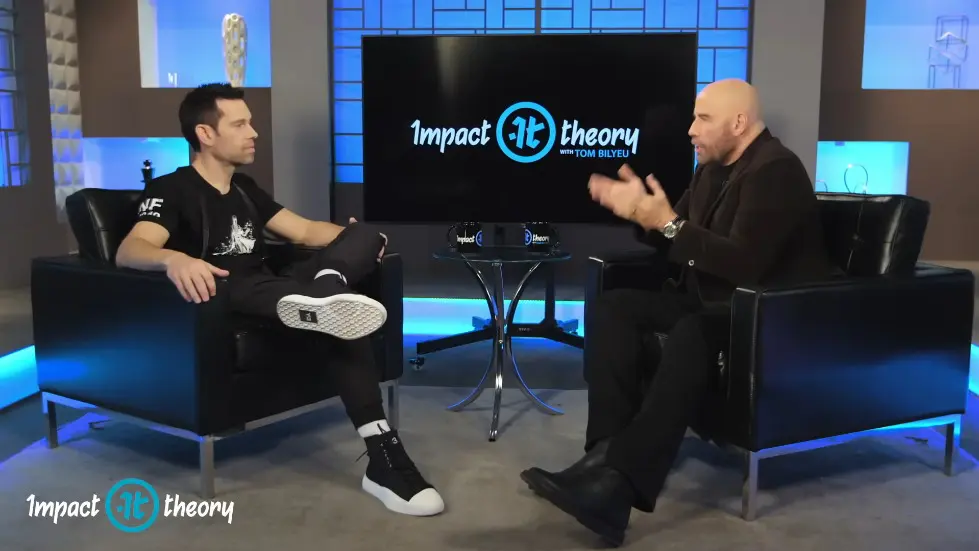
The video is an interview with John Travolta discussing his career and the importance of doing work that aligns with one's own standards rather than others' criteria.
The video is an interview with actor John Travolta on the true meaning of success. Travolta discusses how doing good work based on your own standards is more important than meeting other people's criteria. He also talks about his humble beginnings and how he has managed to stay grounded despite his fame and success. The interview touches on Travolta's iconic career in film and his passion for performance.
- Doing good work from your own standards is important.
- John Travolta is one of the most iconic actors in the history of cinema.
- John Travolta carries himself like he doesn't realize he's John Travolta.
- John Travolta talks a lot about the art.
- John Travolta's mother was a theater director and English teacher who held high standards for performance.
- Travolta shares that he chased money for nearly a decade and woke up every day thinking about getting rich.
- Travolta has never phoned in a performance and takes every role seriously.
- Do work that aligns with your own standards rather than others' criteria.
- Travolta puts a lot of time and energy into his characters.
John Travolta on the True Meaning of Success | Impact Theory - YouTube
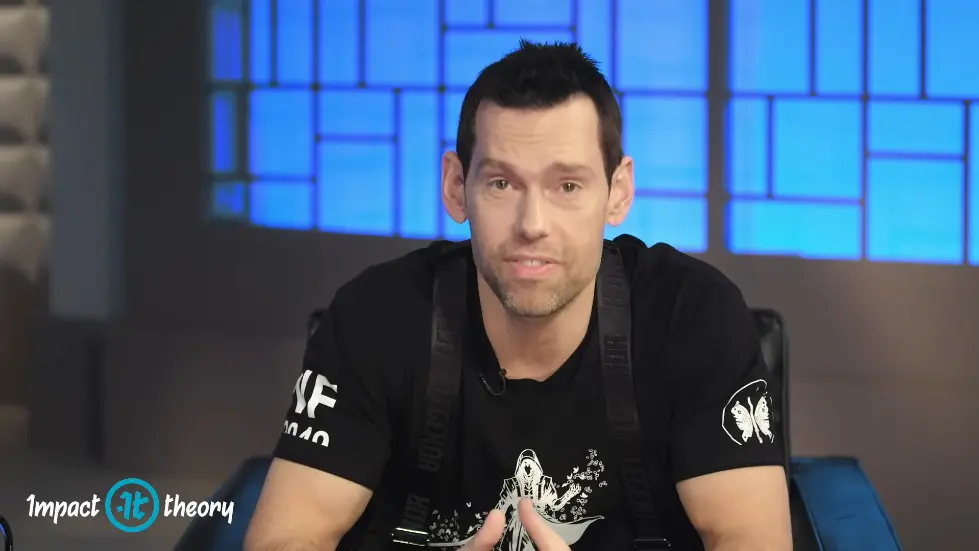
Importance of Doing Work that Aligns with One's Own Standards
- Doing good work from your own standards is important.
- It is better to fail on your own idea than on someone else's criteria.
- Success is less painful when it is your own idea.
- It is important to look at the glass half-full.
- Doing work that aligns with your own standards is the key to living with success or failure.
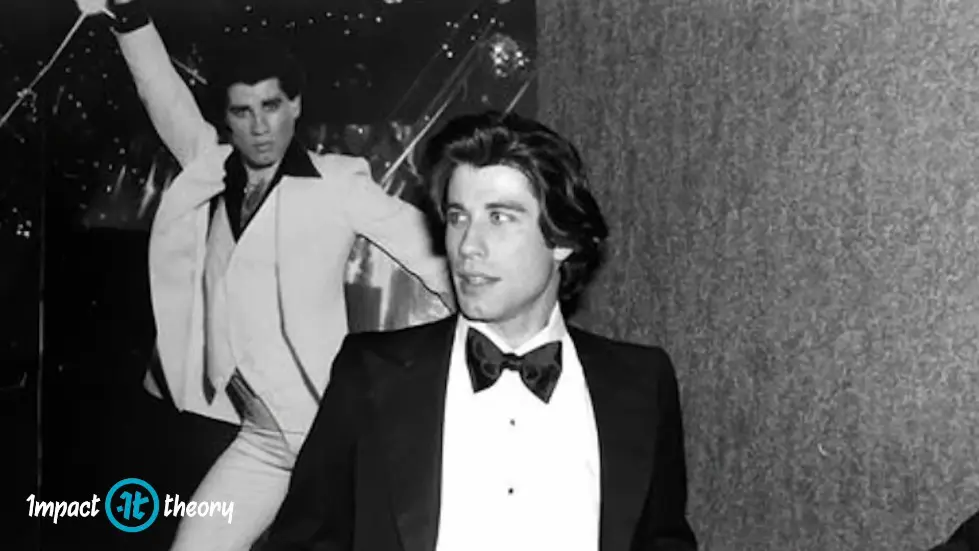
John Travolta's Career Achievements
- John Travolta is one of the most iconic actors in the history of cinema.
- He has received an Emmy, two Academy Award nominations, and six Golden Globe nominations.
- He has had a top-ten song, appeared on Broadway, and starred in era-defining films.
- He has had one of the most lauded and enduring careers of any actor in history.
- His list of credits reads like a list of the all-time great films across most every single genre.

John Travolta's Humility
- John Travolta carries himself like he doesn't realize he's John Travolta.
- He comes from a working-class family and is humbled by nature.
- He loves the good things that he succeeds in life but he can't forget his beginnings.
- He forgets that people are registering that he's anyone different than the guy they just met.
- He is still the same person he was before he became famous.
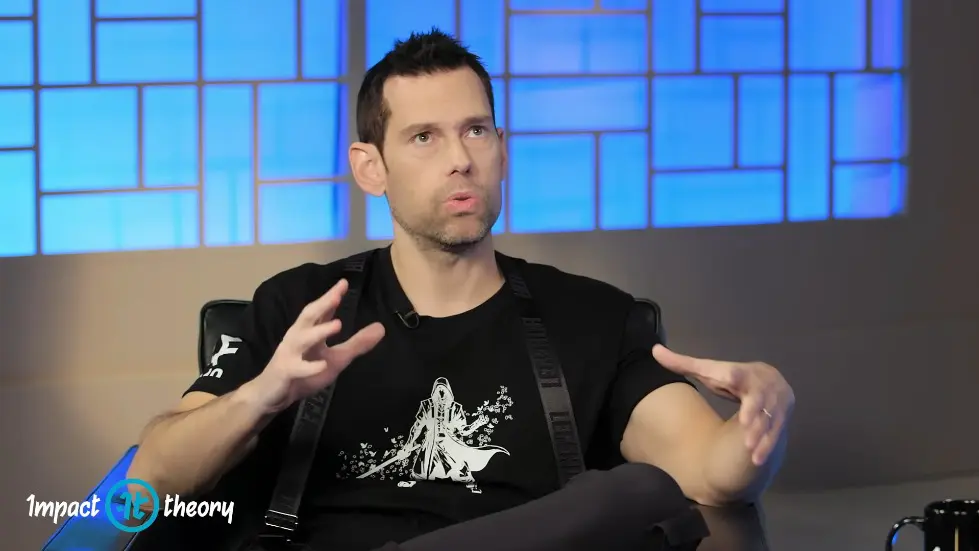
John Travolta on the True Meaning of Success | Impact Theory - YouTube
The Importance of Art in John Travolta's Life
- John Travolta talks a lot about the art.
- He believes that art is the true essence of what he does.
- He is passionate about the art of acting and the art of filmmaking.
- He believes that art is what makes him feel alive.
- He is grateful for the opportunity to be a part of the art world.
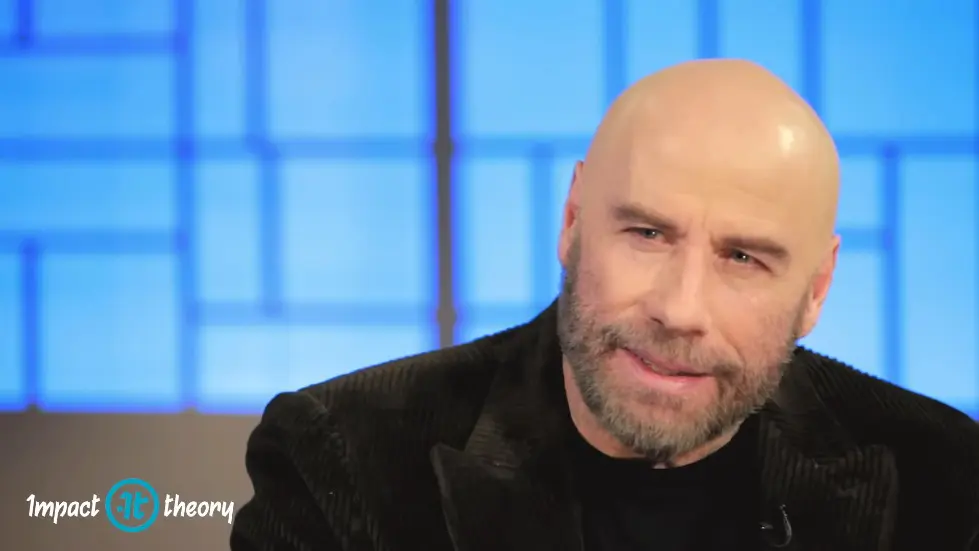
Family Influence
- John Travolta's mother was a theater director and English teacher who held high standards for performance.
- His father was an athlete who valued achievement over superficial things.
- Travolta believes that when you prioritize achievement, wealth and fame come automatically.
- He advises people in the arts to do it for art's sake first and let success follow.
- Travolta believes that if you want to be wealthy in just money, get into the money business, investments, or banking.
Chasing Money
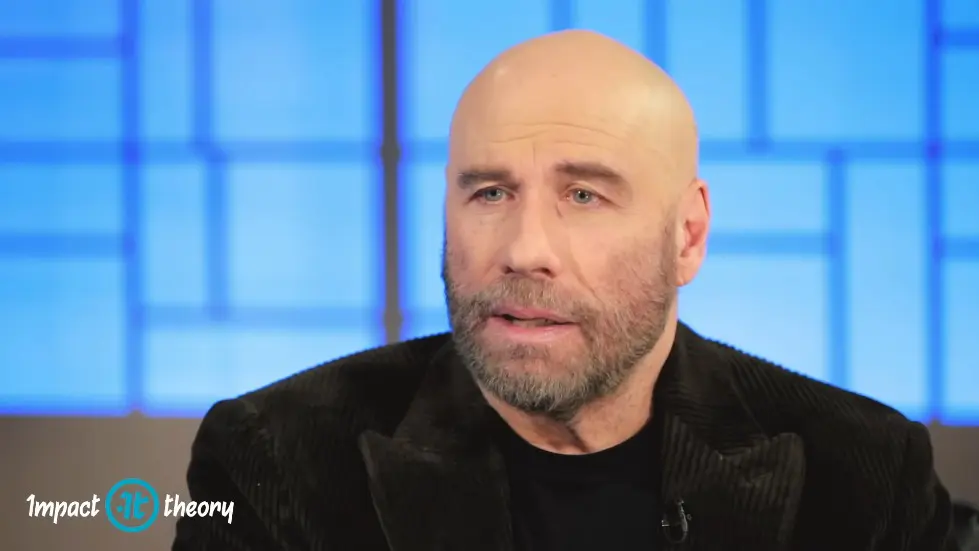
- Travolta shares that he chased money for nearly a decade and woke up every day thinking about getting rich.
- He ended up being emotionally bankrupt and unhappy.
- Travolta realized that he needed to do something that made him feel fulfilled.
- He advises people to focus on doing something that has intrinsic value.
- Travolta built his following by putting his head down for 20 years and making a better cup.
Approach to Performance
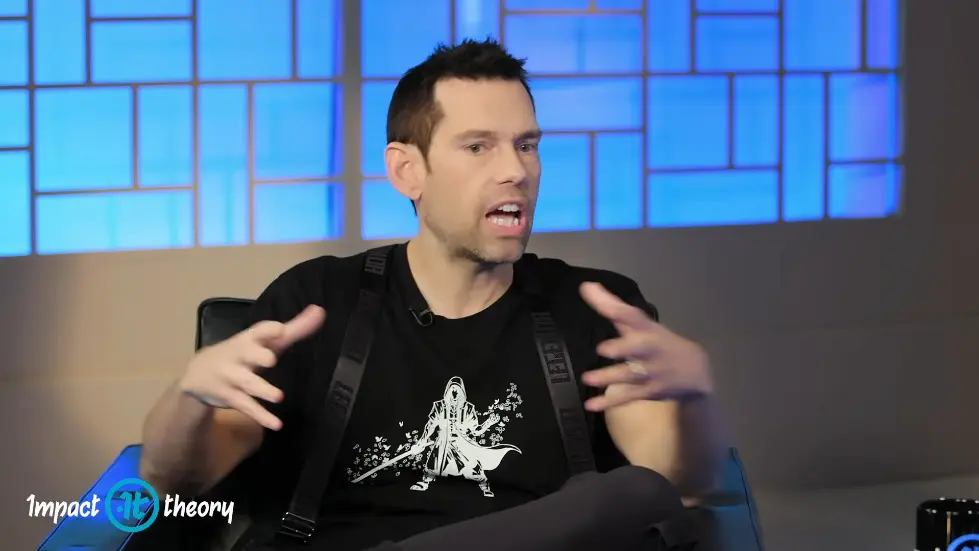
- Travolta has never phoned in a performance and takes every role seriously.
- He behaves as though each performance is the best role he's ever had and may be his last.
- Travolta invests in light comedies as much as he does in well-written dramas.
- He believes that taking every role seriously helps him do his best work.
- Travolta takes a global perspective on choices and has never planned the end result of what he was going to do.
Selection Process
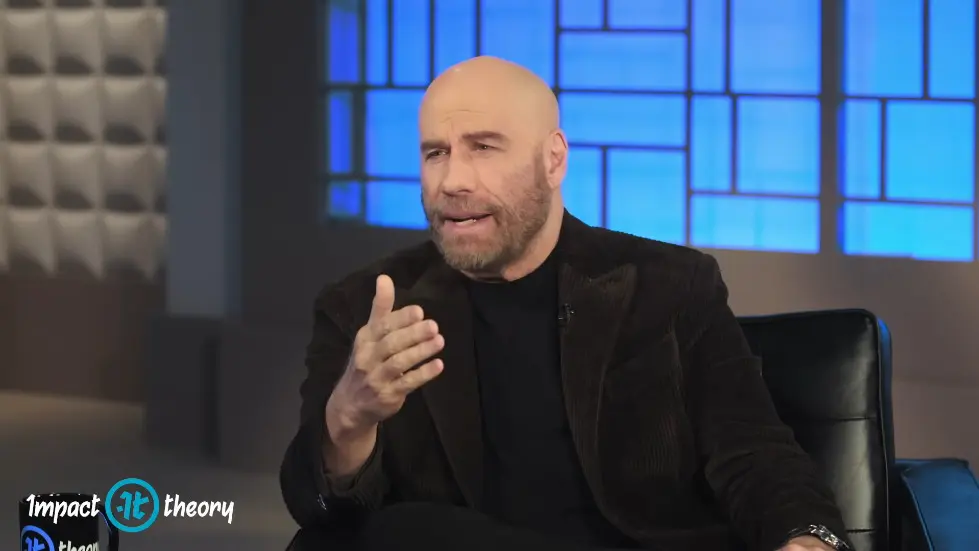
- Travolta has never planned the end result of what he was going to do.
- He did not plan to do Saturday Night Fever or Pulp Fiction.
- Travolta believes that the tonality of a film should match where he is as a human.
- He takes a global perspective on choices and believes that the right roles will come to him.
- Travolta believes that the right role is the one that he can't say no to.
Committing to Good Work
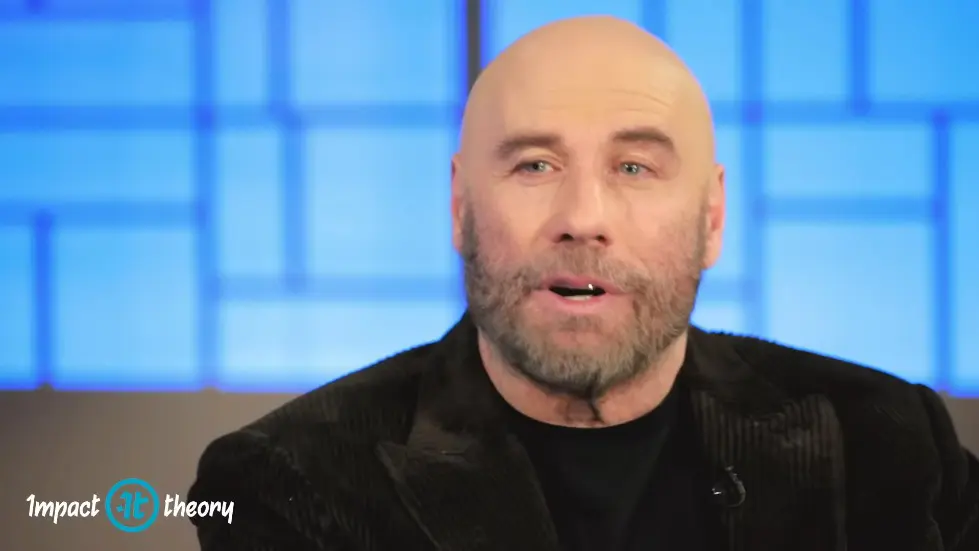
- Do work that aligns with your own standards rather than others' criteria.
- Invest in research and practice to deliver the best product possible.
- Results are not always predictable, but committing to good work is within your control.
- Take responsibility for your aspect of the work, even if other departments alter your intent.
- Show up and deliver the best product you can, otherwise don't do it.
Work Ethic
- Robert De Niro's commitment to his roles gave permission for younger actors to commit at a new level.
- Travolta flew to Serbia and Bosnia to research for his role in The Killing Season.
- Permission to go the distance was an important moment for young actors.
- Travolta believes in delivering an authentic performance.
- Permission to commit at a new level upped the game for everybody.
Sustaining a Career
- Travolta believes that the evidence of a life well-lived is a contribution to people.
- Each movie delivers a kind of joy to a certain audience.
- The mosaic of a career has a blanketed effect that can make a difference in people's lives.
- Travolta takes pride in a job well done.
- Travolta believes that he may have made a difference in a lot of people's lives.
Physical Transformations
- Travolta puts a lot of time and energy into his characters.
- Travolta embodies his characters through physical transformations and mannerisms.
- People may be shocked by the physical transformations that Travolta undergoes for his roles.
- Travolta is hungry to do good work and make a contribution to people.
- Travolta believes that his work is evidence of a life well-lived.
Commitment to the Arts
- Travolta's family had a commitment to the purity of the Arts.
- They always wanted to be professional and good at what they were doing.
- They owned the idea of being good at what they were doing.
- They had to be as good as they could at what they were doing.
- They had a survival mechanism to be good at what they were doing.
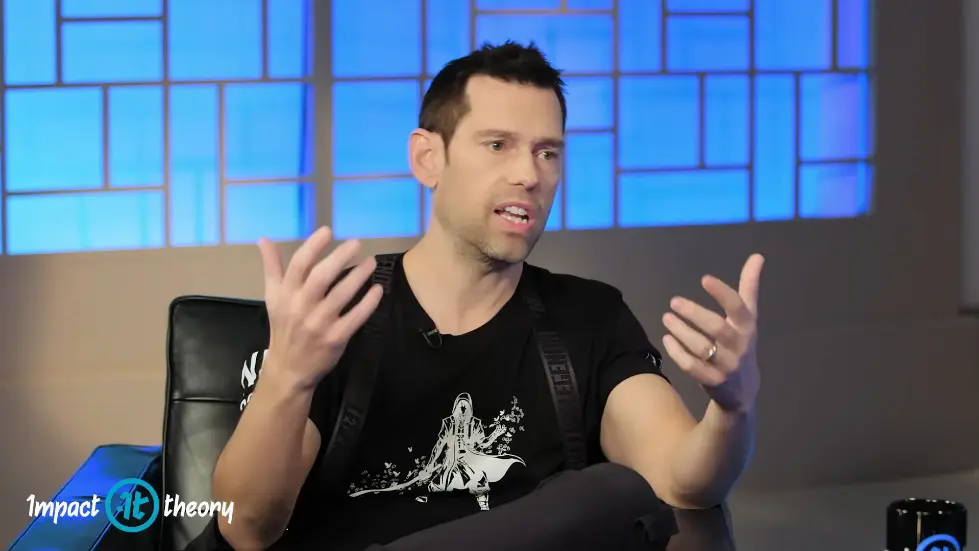
The Joy of Creating
- There's a joy of work and creating that's free.
- Whether you write, play music, or act, the joy is free.
- Everyone can splurge on that joy, but you have to give yourself permission.
- Cynicism is always going to try to get you, but it's your job to navigate around it.
- Cynicism is valueless in Travolta's book, and he has no time for it.
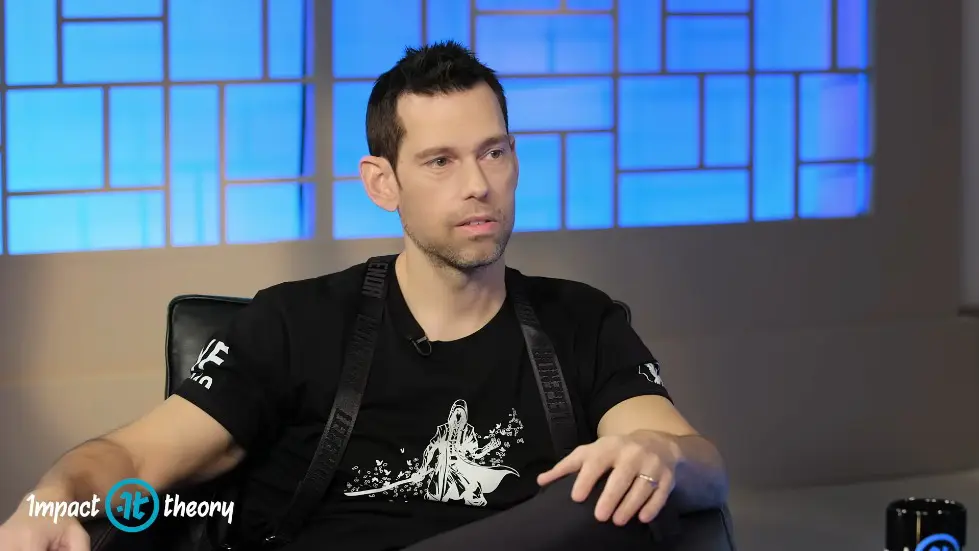
Eliminating Naysayers
- Travolta eliminates all the naysayers when trying to make something happen.
- He can detect who are the people that are not for the deal.
- He asks them to remove themselves from the phone conversation.
- If they stay on, they're not going to make the deal.
- You have to get rid of the people who don't want to play the same game as you do.
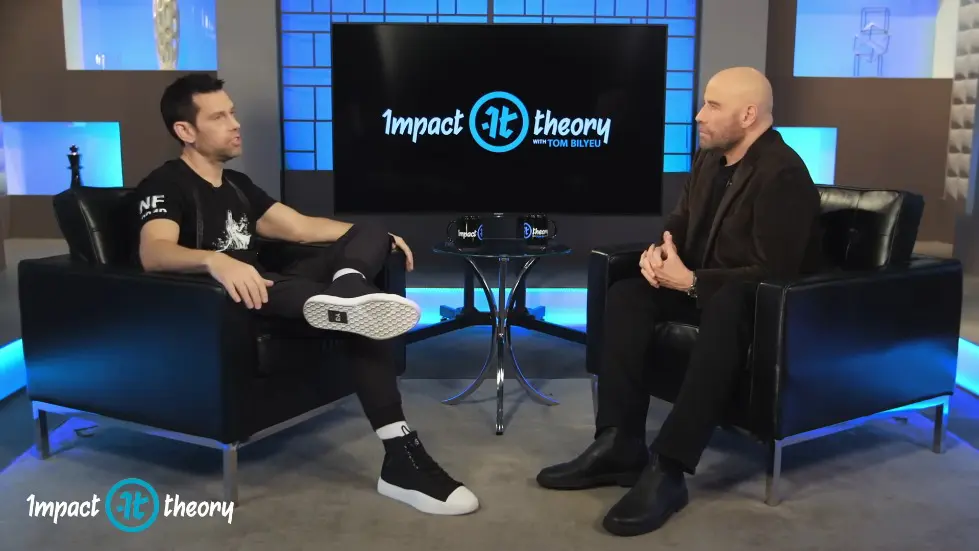
Dealing with Negative People
- Travolta believes that you're the average of the five people you spend the most time with.
- He thinks it extends to ideas as well.
- Some people have negative people in their lives that they can't get rid of.
- Travolta suggests finding a way to navigate around them.
- He thinks it's important to have a support system of people who believe in you.
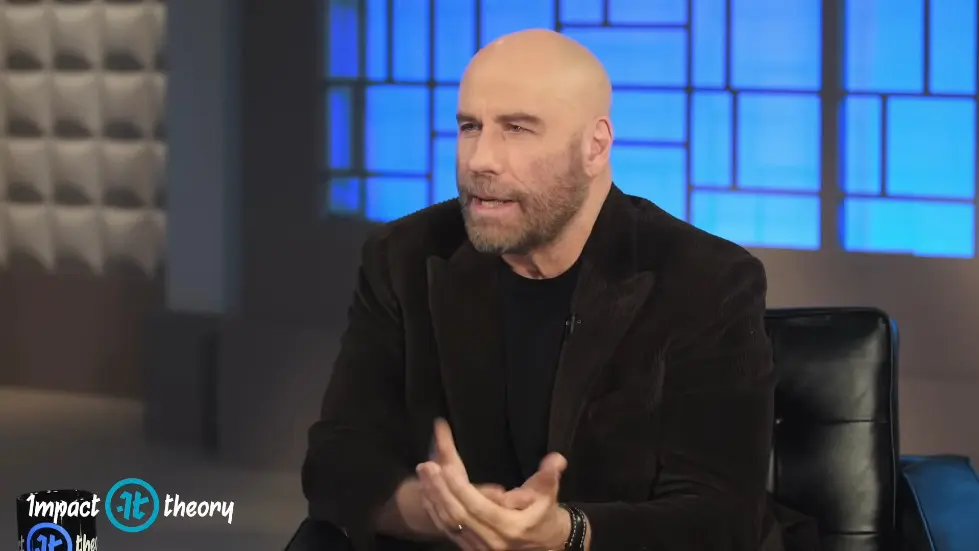
Handling People Who Are Contrary to Your Intentions
- If you deeply love someone and can't feel comfortable about their contrary intentions, you have to find a way of handling them so everybody goes away feeling happy and not antagonized about your displeasure with them.
- If someone has a counter intention to you, you have to get with them and get real and say, "Look, it's my life, it's not your life, and this is how I need to do it."
- There are ways of giving yourself permission and navigating around people that are counter your intentions.
- Sometimes it does matter, and other times it doesn't matter so much.
- It's important to find a way that aligns with your own standards rather than others' criteria.
John Travolta's Experience Dropping Out of High School
- John Travolta's dad was weird about him dropping out of high school to pursue acting for a minute, but when he saw that John could make a living at it, he let it go like a hot potato.
- John's mother had no problems with him dropping out of high school and pursuing acting.
- John made a deal with his dad to take the year off and possibly even do homeschool so he didn't miss any credit.
- John's dad was more pragmatic and wanted to make sure he was going to be okay.
- John wanted to put his bets on his abilities that his parents had so beautifully nurtured since he was born.
- It's important to pursue what you want to achieve and put your bets on your abilities.
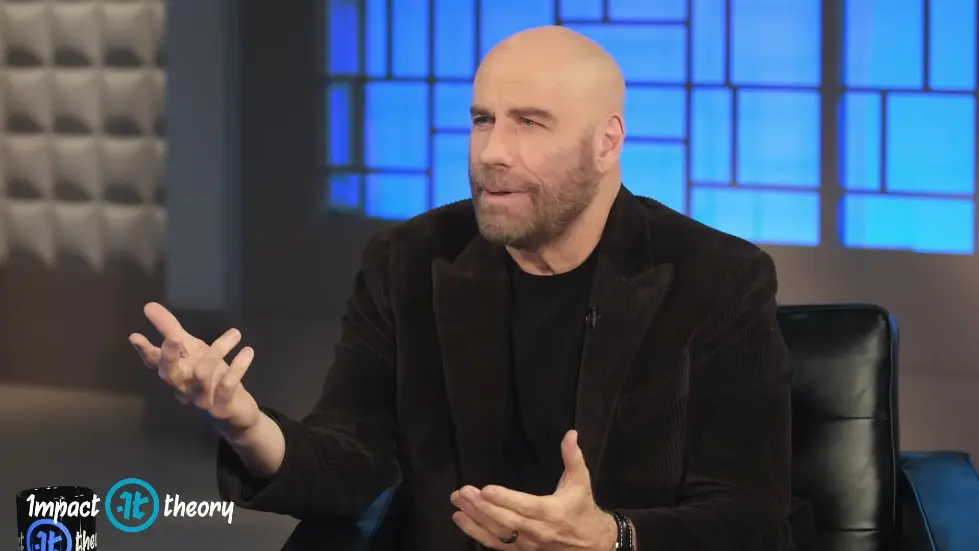
Examples of People Being Contrary to Your Wishes
- There are many examples of people being contrary to your wishes, such as someone wanting to be a baseball player but their parents want them to be a football player.
- It doesn't matter if it's of the wrong sport, it's not your sport.
- John has watched people do this his whole life.
- It's important to give yourself permission and navigate around people that are counter your intentions.
- It's important to find a way that aligns with your own standards rather than others' criteria.
Putting Your Bets on Your Abilities
- It's important to put your bets on your abilities and pursue what you want to achieve.
- It's important to find a way that aligns with your own standards rather than others' criteria.
- It's important to give yourself permission and navigate around people that are counter your intentions.
- John's parents would sit there and watch him for three hours lip sync records and improvise and imitate people, and they would say, "He's something as an ebow."
- It's important to nurture your abilities and pursue what you want to achieve.
Early Years and Swagger
- Travolta's only swagger as a child and teenager was that he liked to dress well and look like his idols, such as the Beatles and Warren Beatty.
- His generation was at the tail end of the beginning of what cool was, with Marlon Brando, James Dean, Paul Newman, and Warren Beatty creating cool illusions.
- Travolta absorbed what he thought cool was as a child, even if he wasn't necessarily behaving like them.
- He applies this affectation within the confines of a character, such as Danny Zuko in Grease.
- Travolta doesn't cross-collateralize characters and has an obligation to be that guy if it includes cool.
Characters Closest to Travolta
- Travolta said that the characters that come closest to him are from Phenomenon or Michael, specifically because of some of the things they say and stand for.
- He believes in not doing anything that someone else can't handle, especially in the loved world of loving your children, loving your wife, and loving your friends.
- Travolta is respectful of the effect he has on others, separate from business.
- He wears his heart on his sleeve and won't take it off, as he doesn't believe in that.
- Travolta's defining characteristic is that he deeply cares at an emotional level.
You have read 50% of the summary.
To read the other half, please enter your Name and Email. It's FREE.
You can unsubscribe anytime. By entering your email you agree to our Terms & Conditions and Privacy Policy.
Watch the video on YouTube:
John Travolta on the True Meaning of Success | Impact Theory - YouTube
Related summaries of videos:
- How to Have Infinite Energy (Yes, It's Possible) | Todd Herman on Conversations with Tom
- Why You Might Want to Reconsider that Carnivore Diet | Dave Asprey on Health Theory
- Jocko Willink Explains Respect, Influence and Leadership | Impact Theory
- If You Want to See How Deep the Mind Can Go, Watch This | Eric Weinstein on Conversations with Tom
- This Is Why You DON'T SUCCEED! (Don't Let This HOLD YOU BACK From Success) | Les Brown
- Change Your Life by Changing Your Thought Process | Brendon Burchard
- Optimize Your Body and Brain Right Now | Ben Greenfield on Conversations with Tom
- Deepak Chopra on the Power of Meditation to Unlock Infinite Possibilities | Impact Theory
- The Secret to Ending Mental Illness | Dr. Daniel Amen on Health Theory
- How To BREAK THE ADDICTION To Negative Thoughts & Emotions In 31 MINUTES | Trevor Moawad
- Home
- About us
- Contact
- Book Summaries 0-9
- Book Summaries A
- Book Summaries B
- Book Summaries C
- Book Summaries D
- Book Summaries E
- Book Summaries F
- Book Summaries G
- Book Summaries H
- Book Summaries I
- Book Summaries J
- Book Summaries K
- Book Summaries L
- Book Summaries M
- Book Summaries N
- Book Summaries O
- Book Summaries P
- Book Summaries Q
- Book Summaries R
- Book Summaries S
- Book Summaries T
- Book Summaries U
- Book Summaries V
- Book Summaries W
- Book Summaries X
- Book Summaries Y
- Book Summaries Z
- Jay Shetty Podcast - Summaries
- Tom Bilyeu Impact Theory - Summaries
- Lex Fridman - Summaries
- Diary of a CEO - Summaries
- Alex Hormozi - Summaries
