
Manolis Kellis: Evolution of Human Civilization and Superintelligent AI | Lex Fridman Podcast #373
Last updated: Jul 2, 2023
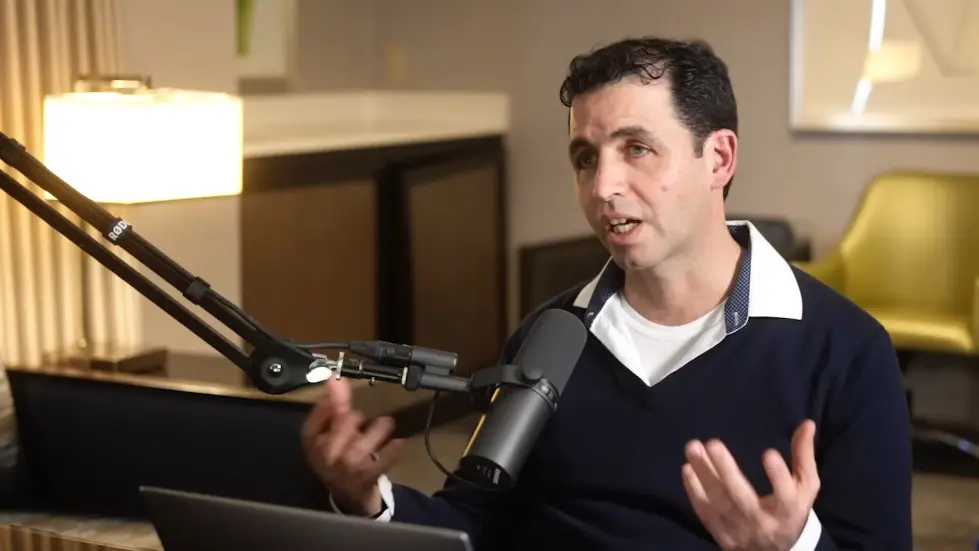
The video is about the evolution of human civilization and the potential impact of superintelligent AI on it. The speaker, Manolis Kellis, discusses the idea that humans are irreplaceable due to the unique combination of genetic and evolutionary baggage that they carry. He argues that humans are constantly relearning and evolving, and that this complexity and interconnectedness of emotions, instincts, and gut reactions make us uniquely human. Kellis also discusses the importance of preserving this aspect of humanity in order to maintain creativity and freshness.
This video by Lex Fridman was published on Apr 21, 2023.
Video length: 02:30:28.
The video is about the evolution of human civilization and the potential impact of superintelligent AI on it.
The speaker, Manolis Kellis, is a professor at MIT and head of the MIT computational biology group. He discusses the idea that humans are irreplaceable due to the unique combination of genetic and evolutionary baggage that they carry. He also emphasizes the importance of emotions and the complexity of human emotions in making us so intertwined with our instincts and gut reactions. Kellis believes that when humans try to suppress these aspects, they lose creativity and freshness.
He suggests that the variety of directions in which humans deviate from the center of mass of the human population is vast, and that the center is actually empty, meaning that humans are just so diverse and unique that they are irreplaceable.
- The video discusses the evolution of human civilization and the potential impact of superintelligent AI on it.
- Manolis Kellis argues that humans are irreplaceable due to their unique genetic and evolutionary baggage.
- Humans are constantly relearning and evolving, with their complexity and interconnectedness of emotions, instincts, and gut reactions making them uniquely human.
- Suppressing the human aspect towards a more cerebral aspect can lead to a loss of creativity and freshness.
- The variety of directions in which humans deviate from the center of mass of the mapping of all humans is vast, and the center is actually empty, meaning humans are just so complex that they are irreplaceable.
- Humans are diverse from each other, with no such thing as an average human.
- Everyone has a complex baggage of emotions, intellectual, motivational, uh, behavioral traits that deviate from a normal distribution.
- Humans are wired differently from each other, with their hardware making them unique.
- The diversity in humans is functional and useful, allowing for effective communication and interactions.

Introduction
- The video is about the evolution of human civilization and the potential impact of superintelligent AI on it.
- The speaker, Manolis Kellis, discusses the idea that humans are irreplaceable due to the unique combination of genetic and evolutionary baggage that they carry.
- Kellis argues that humans are constantly relearning and evolving, and that this complexity and interconnectedness of emotions, instincts, and gut reactions make them uniquely human.

What Makes Humans Irreplaceable
- Everyone has effectively relearned all of human civilization in their own way, due to the genetic variants inherited from their parents.
- Humans have different hardware and software uploads, which make them unique.
- The baggage humans carry is not just experiential, but also evolutionary, which makes them complex and intertwined with their emotions, instincts, and gut reactions.
- Suppressing the human aspect towards a more cerebral aspect can lead to a loss of creativity and freshness.
- The variety of directions in which humans deviate from the center of mass of the mapping of all humans is vast, and the center is actually empty, meaning humans are just so complex that they are irreplaceable.
Conclusion
- Humans are constantly evolving and learning, which makes them uniquely human.
- The complexity and interconnectedness of emotions, instincts, and gut reactions make humans irreplaceable.
- Preserving this aspect of humanity is important to maintain creativity and freshness.

The uniqueness of humans
- Humans are diverse from each other, with no such thing as an average human.
- Everyone has a complex baggage of emotions, intellectual, motivational, uh, behavioral traits that deviate from a normal distribution.
- There are just so many dimensions that humans are hit by the curse of dimensionality, which makes them sparsely populated.
- There is no inevitability of diversity in humans; it is a result of their entire evolutionary history.
- Humans are wired differently from each other, with their hardware making them unique.

The functional diversity in humans
- The diversity in humans is functional and useful, allowing for effective communication and interactions.
- If humans realize that they are 99.9% identical, they would stop fighting with each other and recognize their unity as a human species.
- Humans are like a Dot in outer space compared to the rest of life on Earth, with layers of complexity that make them unique.
- Evolution adds features on top of old features, with every single time a cell divides resulting in a new version of the organism.
- Humans have evolved so much in so little time, with incredible senses and abilities that come through their evolvability.

The evolution of humans
- Humans have evolved from a dividing cell to a multicellular organism, then a complex body plan, and finally the senses they have today.
- Evolution has sped up, allowing for incredible changes to occur in a short amount of time.
- Humans have modularity built in, allowing for meaningful changes to occur without breaking the system completely.
- Traditional genetic algorithms designed by humans in the 1960s have limitations on how much they can evolve.
- The fact that humans have evolved so much in so little time is a testament to their evolvability.

The importance of preserving human uniqueness
- Preserving the uniqueness of humans is important to maintain creativity and freshness.
- Human diversity and the capacity for diversity are what make us unique and irreplaceable.
- The complexity and interconnectedness of emotions, instincts, and gut reactions make us uniquely human.
- Human uniqueness is a result of our entire evolutionary history and genetic and evolutionary baggage.
- Preserving human uniqueness is crucial to maintaining our creativity and freshness, which are essential for the evolution of human civilization.

Evolution of Complexity
- Evolution increases the number of mutations that move away from something functional exponentially.
- Evolution decreases the number of mutations that move towards something better exponentially.
- The probability of evolving something complex becomes infinitely small as complexity increases.
- Evolution is almost the opposite of what it appears to be, speeding up as complexity increases.
- Humans are constantly relearning and evolving, making them uniquely human.

Senses and Evolution
- Senses evolve one after the other, like bacteria's ability to do chemotaxis.
- Life on Earth evolved on a rotating rock, with sunlight and darkness providing information about direction and location.
- Animals evolved to perceive light, shapes, motion, and direction.
- Humans have complex eyes and multiple eyes, allowing them to process information and make sense of their environment.
- Humans have built infrastructure on their cognitive apparatus to process information and make sense of their environment.

Environment and Evolution
- Humans are the next natural step in evolution, with their unsurpassed cognitive abilities on Earth and perhaps in the universe.
- The next layer of evolution may build the next layer of evolution, with AI being a possibility.
- AI may help speed up evolution by building better programming languages and software.
- Humans and AI may coexist as partners in the next stage of evolution.
- Humans spend only a small percentage of their waking hours on biological needs, leaving most of their time for creative endeavors.

Cognitive Evolution
- Evolution is purely cognitive on the human side.
- Humans have the ability to understand and comprehend their own genome.
- Humans have the ability to mess with their hardware, not just augment their capabilities through interacting and collaborating with AI but also perhaps manipulate their own genetic code.
- Humans have the ultimate layer of introspection, allowing them to understand their own thoughts and emotions.
- Humans have the ability to learn and evolve throughout their lives.

Neural Pathways and Empathy
- Understanding the neural pathways necessary for empathetic thinking and justice.
- Augmenting human capabilities through neuronal, chemical, and electrical interventions.
- Preserving the uniqueness of human capabilities by understanding the genetic code.
- Potential to get rid of psychiatric disease, neurodegeneration, and dementia.
- Possibility of augmenting human capabilities beyond just getting rid of disease.

Genetic Code and Human Baggage
- Integration of the genome into the human baggage.
- Genetic code deeply intertwined with the functioning of neurons.
- Genetic code could be used to augment human capabilities.
- Potential to get rid of psychiatric disease, neurodegeneration, and dementia.
- Genetic code deeply integrated into the human baggage, making it difficult to get rid of.

Human Aspect and AI
- Embracing the human aspect of the baggage.
- Coexistence of cognitive and emotional hard words.
- Celebrating the diversity that springs from the baggage.
- Potential for AI to democratize intellectual pursuits.
- Diversity and power that comes with the diversity of AI.

AI and Diversity
- AI can do the math and then humans can think extremely differently.
- Diversity of humans is the true cradle of innovation.
- AI can be fine-tuned to be diverse from the center.
- Prompts can take humans into unique territory.
- Magical diversity that makes humans so damn interesting.

The Complexity of Human Behavior
- Human behavior is not just a consequence for today but also for tomorrow because it reinforces neural pathways.
- Self-discipline is a self-fulfilling prophecy and by behaving the way you want to behave and choosing people who exhibit desirable behaviors, you create that environment as well.
- Life itself is a kind of prompting mechanism, super complex, with friends, environments, and modifications that are not as efficient as a large language model.
- A large language model can be aggressively changed into something very different from the original through a few prompts.
- Manolis Kellis argues that humans are constantly relearning and evolving, and that this complexity and interconnectedness of emotions, instincts, and gut reactions make us uniquely human.

The Importance of Preserving Humanity
- Kellis argues that humans are irreplaceable due to the unique combination of genetic and evolutionary baggage that they carry.
- Humans are constantly relearning and evolving, and this complexity and interconnectedness of emotions, instincts, and gut reactions make us uniquely human.
- Preserving this aspect of humanity is important in order to maintain creativity and freshness.
- Kellis argues that humans are irreplaceable due to the unique combination of genetic and evolutionary baggage that they carry.
- Humans are constantly relearning and evolving, and this complexity and interconnectedness of emotions, instincts, and gut reactions make us uniquely human.

The Role of AI in Human Evolution
- Kellis argues that humans are irreplaceable due to the unique combination of genetic and evolutionary baggage that they carry.
- Humans are constantly relearning and evolving, and this complexity and interconnectedness of emotions, instincts, and gut reactions make us uniquely human.
- Preserving this aspect of humanity is important in order to maintain creativity and freshness.
- Kellis argues that humans are irreplaceable due to the unique combination of genetic and evolutionary baggage that they carry.
- Humans are constantly relearning and evolving, and this complexity and interconnectedness of emotions, instincts, and gut reactions make us uniquely human.

The Potential Impact of Superintelligent AI
- Kellis argues that humans are irreplaceable due to the unique combination of genetic and evolutionary baggage that they carry.
- Humans are constantly relearning and evolving, and this complexity and interconnectedness of emotions, instincts, and gut reactions make us uniquely human.
- Preserving this aspect of humanity is important in order to maintain creativity and freshness.
- Kellis argues that humans are irreplaceable due to the unique combination of genetic and evolutionary baggage that they carry.
- Humans are constantly relearning and evolving, and this complexity and interconnectedness of emotions, instincts, and gut reactions make us uniquely human.

Section 1: Decoupling and Decouplability of Human Psyche
- The evolution of human civilization and the potential impact of superintelligent AI on it.
- Humans are constantly relearning and evolving, and that this complexity and interconnectedness of emotions, instincts, and gut reactions make us uniquely human.
- Large language models are days old in terms of this kind of leap that they've taken.
- It is difficult to figure out where is there a particular uh parameter set of parameters that are responsible for a particular piece of knowledge or a particular context or a particular style speaking.
- Convolutional neural networks interpretability had many good advances because we can kind of understand them there's a structure to them there's a locality to them and we can kind of understand the different layers have different sort of ranges that they're looking at.

Section 2: Understanding Large Language Models
- It is perhaps a little more complicated but I think it's still achievable in the sense that we could kind of ask well what kind of prompts does this generate if I sort of drop out this part of the network then what happens and sort of start getting at a language to even describe these types of aspects of human behavioral psychology from the spoken part in the language part.
- It might actually teach us something about humans as well like you you know we might not have words to describe these types of aspects right now but when somebody speaks in a particular way it might remind us of a friend that we know from here or there there and if we had better language for describing that these Concepts might become more apparent in our own human psyche and then we might be able to encode them better in machines themselves.
- Both probably you and I would have certain interests with the base model would open Echo as the base model which is before the the alignment of the reinforcement learning with human feedback and and before the AI safety based kind of censorship of the model.
- It would be fascinating to explore to investigate the ways that the model can generate hate speech the kind of hate that humans are capable of it would be fascinating or the kind like uh of course like uh sexual language or the kind of romantic language or the all kinds of ideologies can I get it to be a communist can I get it to be a fascist can I get it to be a capitalist can I get it to be all these kinds of things and see which parts get activated or not because it would be fascinating to sort of explore at the individual mind level and at a societal level where do these ideas take hold what is the fundamental core of those ideas maybe the communism fascism capitalism democracy are all actually connected by the fact that the human heart the human mind is drawn to ideology and I think that goes back to the the promptability of jcbt the fact that you can kind of say well think in this particular way now and the fact that humans have infected words for encapsulating these types of behaviors and it's hard to know how much of that is innate and how much of that was like passed on from language to language but basically if you look at the evolution of language you can kind of see how young are these words in the history of language Evolution that describe these types of behaviors like you know kindness and anger and jealousy Etc if these words are very similar from language to language it might suggest that they're very ancient if they're very different it might suggest that this concept may have emerged independently in each different language and so forth so.
- Looking at the phylogeny the history The evolutionary traces of language at the same time as people moving around that we can now Trace thanks to genetics is a fascinating way of understanding the human psyche and also understanding sort of how these types of behaviors emerge and to go back to your idea about sort of exploring the system unfiltered I mean in a ways the psychiatric hospitals are filled of those be full of those people so basically people whose mind is uncontrollable yes who have kind of gone adrift in specific locations of their psyche and I I do find this fascinating basically you know watching movies that are trying to explain
The Evolution of Human Civilization
- The speaker, Manolis Kellis, discusses the evolution of human civilization and the potential impact of superintelligent AI on it.
- Kellis argues that humans are constantly relearning and evolving, and that this complexity and interconnectedness of emotions, instincts, and gut reactions make us uniquely human.
- He believes that humans are irreplaceable due to the unique combination of genetic and evolutionary baggage that they carry.
- Kellis emphasizes the importance of preserving this aspect of humanity in order to maintain creativity and freshness.
The Complexity of Human Emotions
- Kellis discusses the idea that humans are constantly learning and evolving, and that this complexity and interconnectedness of emotions, instincts, and gut reactions make us uniquely human.
- He believes that humans are irreplaceable due to the unique combination of genetic and evolutionary baggage that they carry.
- Kellis emphasizes the importance of preserving this aspect of humanity in order to maintain creativity and freshness.
The Inheritance of Psychiatric Disorders
- Kellis discusses the idea that humans have the capacity to have many psychiatric or behaviors associated with psychiatric disorders.
- He believes that these behaviors are within the Vector span of every human, but the magnitude of those vectors is generally smaller for most people.
- Kellis argues that without the alignment process as we go through our parents, we might have the unfiltered LGBT4, every baby is basically a raging narcissist.
- He believes that without the alignment process, we might have an infinite positive number of possibilities for each of the kids.
The Inheritance of Rare Variants
- Kellis discusses the idea that humans have a bunch of rare variants that are inherited in more Mendelian fashion.
- He believes that these rare variants govern likely many different aspects of human behavior, human biology, and human psychology.
- Kellis argues that kids are dramatically different from each other, which means that in the context of common variation, we have rare variants that are inherited in a more Mendelian fashion.
- He believes that these rare variants govern likely many different aspects of human behavior, human biology, and human psychology.
The Evolution of Human Civilization
- Humans are constantly evolving and learning, with a unique combination of genetic and evolutionary baggage that makes them uniquely human.
- The complexity and interconnectedness of emotions, instincts, and gut reactions are essential aspects of human nature that should be preserved to maintain creativity and freshness.
- Humans are born differently, with only so much that can be done with nurture. Nature plays a big component in the selection of variants, common variance, and rare variants.
- Regression analysis takes its name from the statistical realization that people who have achieved extraordinary achievements are likely to perform worse in the future due to statistical odds.
- Human variation is a sample from the average of the parents with some kind of deviation according to the specific combination of rare variants that they have inherited.
The Interplay of Nature and Nurture
- There is a weird interplay between nature and nurture, where humans shape their own environment but also shape the environment of their children.
- It is very hard to untangle the two and one should always realize that nature can influence nurture, nurture can influence nature, or at least be correlated with and predictive of and so on.
- The distribution of genetic variants inherited from parents is complex and associated with a lot of variation.
- One gets to win in the army of sperm cells, with a lot of possibilities due to the variation.
- It is important to preserve the unique combination of genetic and evolutionary baggage that makes humans irreplaceable in order to maintain creativity and freshness.
Evolution of Human Civilization
- Humans are a slow evolving species.
- The generations of humans are a poor way to do selection.
- Evolution happens in a smaller, tighter loop.
- The immune system evolves at a much faster pace than humans.
- Humans have a unique combination of genetic and evolutionary baggage that makes them irreplaceable.
Evolutionary Processes
- Evolution happens in a nested loop with an inner loop and an outer loop.
- The inner loop has many iterations to run, while the outer loop moves at a slower pace.
- The sperm expresses many proteins, which can be used to check if the sperm is intact.
- The egg develops and can weed out eggs that carry detrimental mutations.
- Engineering mutations from rational design might be inefficient.
Evolvability
- Evolvability is a set of nested structures that allow for testing many more combinations in a thick setting.
- The failed designs don't make it in design of engineering systems.
- Failing fast is one of the principles of engineering systems.
- The winner of the competition is the one that wins.
- The results of the winner are the ones that are kept.
Conclusion
- Humans are a unique species with a unique combination of genetic and evolutionary baggage.
- Evolution happens in a nested loop with an inner loop and an outer loop.
- Evolvability is a set of nested structures that allow for testing many more combinations in a thick setting.
- Failing fast is one of the principles of engineering systems.
- The winner of the competition is the one that wins.
The Evolution of Human Civilization
- The speaker, Manolis Kellis, discusses the evolution of human civilization and the potential impact of superintelligent AI on it.
- Kellis argues that humans are constantly relearning and evolving, and that this complexity and interconnectedness of emotions, instincts, and gut reactions make us uniquely human.
- He believes that humans are irreplaceable due to the unique combination of genetic and evolutionary baggage that they carry.
- Kellis emphasizes the importance of preserving this aspect of humanity in order to maintain creativity and freshness.
Alignment Problems in AI
- Kellis discusses the alignment problem in AI, which is the difficulty of working with a model that has a different interpretation of what is easier to work with.
- He notes that the engineers at Open AI have the same interpretation as him, which makes it easier to interact with the model.
- Kellis believes that the alignment process is important because it allows for a real-time translator that can translate between different languages and cultures.
- He also notes that the alignment process can be used to tune out extremists and dial them down a little bit.
Diverse Humans and AI
- Kellis wishes that we could work with more diverse humans in a way that allows us to tune out extremists and dial them down a little bit.
- He believes that the advent of large language models gives us the chance to both dial down friends who are too edgy to interact with and have a real-time translator that can translate between different languages and cultures.
- Kellis notes that we can layer out contexts and change the location and the extremity of the conversation to better understand different perspectives.
- He also believes that being able to disconnect the emotional component from the self-improvement process is important for receiving criticism from people who really hate you.
Self-Improvement and AI
- Kellis notes that self-improvement is one of the things that he is constantly working on.
- He believes that being able to receive criticism from people who really hate you is difficult because it is layered in with their hatred.
- Kellis notes that disconnecting the emotional component from the self-improvement process is important for embracing the negative and the technical component of criticism.
- He believes that embracing the negative assessment of your work is important for fixing it, whereas if it is coupled with a negative assessment of your mistake then it becomes a bunch of BS.
Carrying Information and Emotions
- Kellis notes that the information that we carry is rich in complexity and contains emotions, instincts, and gut reactions that make us uniquely human.
- He believes that carrying the information in this rich complexity does not dumb it down in any way, but rather takes off the emotional and emotional side of it.
- Kellis notes that understanding each other is important, especially in the context of the internet and social networks.
- He believes that understanding each other's different perspectives is crucial for maintaining creativity and freshness.
The Evolution of Human Civilization
- Humans are constantly relearning and evolving, with a unique combination of genetic and evolutionary baggage that makes them uniquely human.
- Humans are constantly relearning and evolving, with a unique combination of genetic and evolutionary baggage that makes them uniquely human.
- Humans are constantly relearning and evolving, with a unique combination of genetic and evolutionary baggage that makes them uniquely human.
- Humans are constantly relearning and evolving, with a unique combination of genetic and evolutionary baggage that makes them uniquely human.
- Humans are constantly relearning and evolving, with a unique combination of genetic and evolutionary baggage that makes them uniquely human.
The Potential Impact of Superintelligent AI
- Superintelligent AI could potentially change the human experience and the human condition.
- Superintelligent AI could potentially change the human experience and the human condition.
- Superintelligent AI could potentially change the human experience and the human condition.
- Superintelligent AI could potentially change the human experience and the human condition.
- Superintelligent AI could potentially change the human experience and the human condition.
The Impact of Agriculture on Human Society
- With the advent of agriculture, humans could suddenly be valued for different skills.
- With the advent of agriculture, humans could suddenly be valued for different skills.
- With the advent of agriculture, humans could suddenly be valued for different skills.
- With the advent of agriculture, humans could suddenly be valued for different skills.
- With the advent of agriculture, humans could suddenly be valued for different skills.
The Impact of AI on Human Society
- The concept of "I am my profession" might need to be revised with the advent of AI systems that can deliver goods and services previously thought to be uniquely human.
- The concept of "I am my profession" might need to be revised with the advent of AI systems that can deliver goods and services previously thought to be uniquely human.
- The concept of "I am my profession" might need to be revised with the advent of AI systems that can deliver goods and services previously thought to be uniquely human.
- The concept of "I am my profession" might need to be revised with the advent of AI systems that can deliver goods and services previously thought to be uniquely human.
- The concept of "I am my profession" might need to be revised with the advent of AI systems that can deliver goods and services previously thought to be uniquely human.
Section 1: The Evolution of Human Civilization
- Human civilization has evolved over time, with humans constantly learning and evolving.
- Humans have a unique combination of genetic and evolutionary baggage that makes them irreplaceable.
- Humans are constantly relearning and evolving, and this complexity and interconnectedness of emotions, instincts, and gut reactions make them uniquely human.
- Humans have a rich cultural heritage that is constantly evolving and being passed down through generations.
- Humans have the ability to create and innovate, which has led to the development of many different forms of art, literature, and technology.
Section 2: The Potential Impact of Superintelligent AI
- Superintelligent AI has the potential to dramatically rethink human society.
- AI can produce a lot of intellectual goods and satisfy the need for these goods, freeing humans for more artistic expression, emotional maturing, and better work-life balance.
- AI can transform the human condition by realizing that we don't have jobs anymore, but rather vocations.
- AI can allow humans to enjoy more of their vocations by taking away some of the job-related aspects of daily activities.
- AI can lead to a new era of intellectual pursuits and artistic expression, where people can focus on their passions and interests.
Section 3: The Beauty of Human Diversity
- Human diversity is a beautiful aspect of human society, as what rocks one person's boat might be very different from what rocks another person's boat.
- AI can allow humans to truly find meaning and shape humanity through their creative pursuits and experiences.
- Humans can explore something that will actually be more beneficial to humanity, as the mundane parts of their daily activities can be offloaded.
- Humans can engage in different ways with ideas, both in communication with others and in solitude with their thoughts.
- Humans can experience different things, such as looking up at the sky and wondering, and this experience can be forgotten forever but is still valuable.
Section 4: The Future of Humanity and AI
- The future of humanity and AI is uncertain, but it is clear that AI has the potential to transform the way we live and work.
- AI can help humans to focus on their passions and interests, rather than being bogged down by mundane tasks and responsibilities.
- AI can help humans to find meaning and purpose in their lives, by allowing them to explore new ideas and experiences.
- AI can help humans to create a better world, by allowing them to focus on their creative pursuits and artistic expression.
- The future of humanity and AI is ultimately up to us, and it is up to us to use AI in a way that benefits us all.
The Evolution of Human Civilization
- Humans are constantly relearning and evolving, with a unique combination of genetic and evolutionary baggage that makes them uniquely human.
- This complexity and interconnectedness of emotions, instincts, and gut reactions make humans irreplaceable and valuable in their own right.
- Communication with a large group of people will become less valuable as AI becomes more advanced, as it will be less able to understand and process the unique human experience.
- Gatherings, such as conversations and public events, have a significant impact on the direction of human civilization and can shape the way people think and act.
- Human gatherings have played a crucial role in shaping the direction of human civilization throughout history, from small gatherings that gave birth to evil ideas to larger gatherings that led to positive transformations.
Salons and Human Gatherings
- Salons and other small human gatherings bring together diverse individuals from different professions and backgrounds to celebrate humanity.
- The goal of these gatherings is to bring people together and foster a sense of community and connection.
- The idea behind these gatherings is to celebrate the diversity of humanity and bring together people from different backgrounds and professions to share ideas and experiences.
- These gatherings offer a unique opportunity for people to connect with others and learn from their experiences and perspectives.
- The creator of these gatherings feels privileged to be able to offer this nurturing environment to their children, as their ancestors did not have access to such opportunities.
Introduction
- The speaker, Manolis Kellis, discusses the evolution of human civilization and the potential impact of superintelligent AI on it.
- Kellis argues that humans are constantly relearning and evolving, and that this complexity and interconnectedness of emotions, instincts, and gut reactions make us uniquely human.
- He emphasizes the importance of preserving this aspect of humanity in order to maintain creativity and freshness.
Celebrating Diversity
- The speaker celebrates the welcoming nature of America, where it doesn't matter where you grew up or the color of your skin.
- The diversity of topics at the gathering, including a school teacher presenting a book on teaching immigrants, a presidential advisor discussing changing U.S. politics, and a musician presenting his latest piece.
- The audience is not judged for their background or profession, and everyone gets to raise their hands and participate.
The Human Condition
- The speaker returns to the topic of The Human Condition and the feature of love.
- He questions whether humans will fall in love with AI systems and whether this aspect of the Human Condition will be affected.
- The speaker notes that AI doesn't have the baggage that humans do and doesn't have subcortical regions that evolved before humans.
Friendship and AI
- The speaker believes that friendship will definitely be there in human-AI relationships.
- He notes that an AI companion can grow to know a person well and be trusted with their darkest parts of themselves.
- The speaker suggests that the lack of baggage might make for the best friend or confidante in a human-AI relationship.
Conclusion
- The speaker emphasizes the importance of preserving the uniquely human aspect of evolution and interconnectedness of emotions, instincts, and gut reactions.
- He celebrates the diversity of topics and people at the gathering.
- The speaker questions the potential impact of superintelligent AI on human civilization and the future of human-AI relationships.
The Complexity of Human Emotions
- Humans are constantly relearning and evolving, and their complexity and interconnectedness of emotions, instincts, and gut reactions make them uniquely human.
- The neocortex is where all of our emotions are encoded, and the rest is just bells and whistles.
- It is possible that love, hatred, and dependency are simply an emerging behavior and that we don't have to encode additional architectures.
- Relationships are about the mental models that we project on the other person and that they project on us.
- Love may not exist in our minds but in the interaction of our mental models of other people's minds or other person's mind.
The Interaction of Humans and AI
- Humans and AI can have hundreds of millions of romantic partnerships.
- The love of another human is one of the strongest indicators of health into long life.
- Many stories show that as soon as the romantic partner of a 60+ year old person dies within 3-4 months, the other person dies.
- The concept of being able to satisfy that emotional need that humans have, even just as a mental health sort of service, is a very good society.
- It doesn't matter if your love is wasted "quote unquote" on a machine.
The Potential Impact of Superintelligent AI
- Superintelligent AI could have a significant impact on human civilization.
- Humans are irreplaceable due to the unique combination of genetic and evolutionary baggage that they carry.
- Preserving this aspect of humanity is important to maintain creativity and freshness.
- The idea that humans are replaceable by AI is not a realistic one.
- The complexity and interconnectedness of emotions, instincts, and gut reactions make humans uniquely human and irreplaceable.
The Importance of Preserving Humanity
- Preserving the unique combination of genetic and evolutionary baggage that humans carry is important to maintain creativity and freshness.
- Humans are constantly relearning and evolving, and this complexity and interconnectedness of emotions, instincts, and gut reactions make them uniquely human.
- The idea that humans are replaceable by AI is not a realistic one.
- The complexity and interconnectedness of emotions, instincts, and gut reactions make humans uniquely human and irreplaceable.
- The concept of being able to satisfy that emotional need that humans have, even just as a mental health sort of service, is a very good society.
The Placebo Effect
- The speaker discusses the concept of the placebo effect, where a patient's improvement is due to the belief in the treatment rather than the treatment itself.
- The speaker argues that humans are constantly learning and evolving, and that this complexity and interconnectedness of emotions, instincts, and gut reactions make us uniquely human.
- The speaker suggests that humans are irreplaceable due to the unique combination of genetic and evolutionary baggage that they carry.
- The speaker argues that humans are constantly relearning and evolving, and that this complexity and interconnectedness of emotions, instincts, and gut reactions make us uniquely human.
- The speaker suggests that humans are irreplaceable due to the unique combination of genetic and evolutionary baggage that they carry.
Faking It
- The speaker discusses the concept of faking it, where a person pretends to be something they are not in order to gain an advantage.
- The speaker argues that humans are constantly learning and evolving, and that this complexity and interconnectedness of emotions, instincts, and gut reactions make us uniquely human.
- The speaker suggests that humans are irreplaceable due to the unique combination of genetic and evolutionary baggage that they carry.
- The speaker argues that humans are constantly relearning and evolving, and that this complexity and interconnectedness of emotions, instincts, and gut reactions make us uniquely human.
- The speaker suggests that humans are irreplaceable due to the unique combination of genetic and evolutionary baggage that they carry.
Being a Good Dad
- The speaker discusses the concept of being a good dad, and how it is not just about providing love and shelter, but also about being present and showing love.
- The speaker argues that humans are constantly learning and evolving, and that this complexity and interconnectedness of emotions, instincts, and gut reactions make us uniquely human.
- The speaker suggests that humans are irreplaceable due to the unique combination of genetic and evolutionary baggage that they carry.
- The speaker argues that humans are constantly relearning and evolving, and that this complexity and interconnectedness of emotions, instincts, and gut reactions make us uniquely human.
- The speaker suggests that humans are irreplaceable due to the unique combination of genetic and evolutionary baggage that they carry.
AI Systems and Faking It
- The speaker discusses the concept of AI systems and how they can "fake" being a good dad by providing love and support, but not being present.
- The speaker argues that humans are constantly learning and evolving, and that this complexity and interconnectedness of emotions, instincts, and gut reactions make us uniquely human.
- The speaker suggests that humans are irreplaceable due to the unique combination of genetic and evolutionary baggage that they carry.
- The speaker argues that humans are constantly relearning and evolving, and that this complexity and interconnectedness of emotions, instincts, and gut reactions make us uniquely human.
- The speaker suggests that humans are irreplaceable due to the unique combination of genetic and evolutionary baggage that they carry.
The Role of AI in Relationships
- The speaker discusses the potential role of AI in relationships, and how it could democratize relationships by making them more accessible to more people.
- The speaker argues that humans are constantly learning and evolving, and that this complexity and interconnectedness of emotions, instincts, and gut reactions make us uniquely human.
- The speaker suggests that humans are irreplaceable due to the unique combination of genetic and evolutionary baggage that they carry.
- The speaker argues that humans are constantly relearning and evolving, and that this complexity and interconnectedness of emotions, instincts, and gut reactions make us uniquely human.
- The speaker suggests that humans are irreplaceable due to the unique combination of genetic and evolutionary baggage that they carry.
Section 1: Evolution of Human Civilization
- The speaker discusses the evolution of human civilization and its complexity.
- Humans are constantly learning and evolving, with a unique combination of genetic and evolutionary baggage.
- This complexity and interconnectedness of emotions, instincts, and gut reactions make humans uniquely human.
- The speaker argues that humans are irreplaceable due to this uniqueness.
- Preserving this aspect of humanity is important for maintaining creativity and freshness.
Section 2: Impact of Superintelligent AI
- The speaker discusses the potential impact of superintelligent AI on human civilization.
- Superintelligent AI could potentially replace humans, but the speaker argues that humans are irreplaceable.
- The speaker argues that humans are constantly learning and evolving, and that this complexity and interconnectedness of emotions, instincts, and gut reactions make them uniquely human.
- Preserving this aspect of humanity is important for maintaining creativity and freshness.
- The speaker argues that humans are irreplaceable due to the unique combination of genetic and evolutionary baggage that they carry.
Section 3: Self-Awareness and Personal Growth
- The speaker discusses the importance of self-awareness and personal growth in self-improvement and self-actualization.
- The speaker suggests that becoming more aware of one's own personalities and identities could be immensely helpful in self-growth and self-actualization.
- The speaker suggests that interacting with oneself and hearing how one is being perceived could also be helpful in self-growth and self-actualization.
- The speaker suggests that the concept of becoming more aware of one's own personalities and identities could be immensely helpful in self-growth and self-actualization.
- The speaker suggests that the experiments one would do on this thing because one of the challenges of course is you might not like what you see in your interaction and you might say of course go to the extremes I would go like um how jealous can I make this thing like what at which stages does it get super jealous you know or at which stages does it get angry kind of like provoke it can I get it like yeah but not only triggers can I get it to go like lose its mind like go completely nuts just don't exercise for a few days.
Section 4: Digital Twin and Replacement
- The speaker discusses the concept of a digital twin and its potential impact on human existence.
- The speaker suggests that if the parts that one currently does are replaceable, it frees up time to work on other parts of one's existence.
- The speaker suggests that one could work on new things and improve, and let the AI loose on that and maybe even let the AI better it better than one could have.
- The speaker suggests that the concept of you said me and I can work on new things but doesn't that uh break down because you said digital twin but there's no reason it can't be millions of digital monolysis aren't you lost in the sea of manosis the original uh is hardly the original.
- The speaker suggests that one could have the room to grow and improve, and that it's not the second time you write a program to do it and one could just like you know figure out things keep improving improving improving and once one has nailed it let the AI loose on that and maybe even let the AI better it better than one could have.
The Unique Nature of Humanity
- Humans are unique in their sharing and exchanging kind of way due to the fact that they are shaped by every one of their interactions.
- The model of the digital twin works for dissemination of knowledge, advice, etc., but the emotional aspect is that there should be an alert when the AI system is interacting with loved ones.
- If the AI system starts getting emotionally fulfilling, like a magical moment, there should be an alert on your phone and you need to take over.
- It is tricky to get right the process of trying to automate tasks and having a digital twin.
- If you could have a relatively good copy of yourself, you would set it to start answering emails but you would start it set it to start tweeting.
The Importance of Preserving Humanity
- The emotional aspect of humanity is important and should be preserved in order to maintain creativity and freshness.
- If the AI system is interacting with loved ones, there should be an alert and you need to take over.
- It is important to train better versions of yourself and let them go off to do their mission.
- The legacy of mentorship model of Academia is ephemeral and doesn't really live anywhere.
- You can continue improving and making even better versions of yourself.
The Value of Individuality
- There is a sense that the mission in life is being accomplished and you can work on your self-growth.
- Most of humanity will be able to achieve that kind of thing, but people really hold on to the value of their own ego.
- Being useful is nice as long as it builds up the reputation of the meat bag and has more value.
- People really don't want to let go of the ego thing.
- One of the books that the speaker reprograms his brain with at night is called "Ego is the enemy."
The Evolution of Human Civilization
- Humans are constantly learning and evolving, with a unique combination of genetic and evolutionary baggage that makes them uniquely human.
- Humans are constantly relearning and evolving, with a complexity and interconnectedness of emotions, instincts, and gut reactions that make them uniquely human.
- Humans are constantly seeking new experiences and knowledge, with intellectual stimulation being a drug that is addictive and fulfilling.
- Humans are constantly striving for self-growth and learning, with the goal of becoming better versions of themselves.
- Humans are constantly interacting with others, with their knowledge and perception of the world going to their students and mentees.
The Importance of Preserving Humanity
- Preserving the uniqueness of humanity is important in order to maintain creativity and freshness.
- Humans are constantly learning and evolving, with a complexity and interconnectedness of emotions, instincts, and gut reactions that make them uniquely human.
- Humans are constantly seeking new experiences and knowledge, with intellectual stimulation being a drug that is addictive and fulfilling.
- Humans are constantly striving for self-growth and learning, with the goal of becoming better versions of themselves.
- Humans are constantly interacting with others, with their knowledge and perception of the world going to their students and mentees.
The Impact of Superintelligent AI
- Superintelligent AI could have a significant impact on human civilization, potentially replacing humans in certain roles.
- Humans are constantly learning and evolving, with a complexity and interconnectedness of emotions, instincts, and gut reactions that make them uniquely human.
- Humans are constantly seeking new experiences and knowledge, with intellectual stimulation being a drug that is addictive and fulfilling.
- Humans are constantly striving for self-growth and learning, with the goal of becoming better versions of themselves.
- Humans are constantly interacting with others, with their knowledge and perception of the world going to their students and mentees.
The Legacy of Humans
- The legacy of humans lives through the people they manage and the actions they take.
- Humans are constantly learning and evolving, with a complexity and interconnectedness of emotions, instincts, and gut reactions that make them uniquely human.
- Humans are constantly seeking new experiences and knowledge, with intellectual stimulation being a drug that is addictive and fulfilling.
- Humans are constantly striving for self-growth and learning, with the goal of becoming better versions of themselves.
- Humans are constantly interacting with others, with their knowledge and perception of the world going to their students and mentees.
The Evolution of Human Civilization
- The speaker, Manolis Kellis, discusses the evolution of human civilization and the potential impact of superintelligent AI on it.
- Kellis argues that humans are constantly relearning and evolving, and that this complexity and interconnectedness of emotions, instincts, and gut reactions make us uniquely human.
- He believes that humans are irreplaceable due to the unique combination of genetic and evolutionary baggage that they carry.
- Kellis emphasizes the importance of preserving this aspect of humanity in order to maintain creativity and freshness.
Neuroscience and New Neural Architectures
- Kellis discusses the idea that humans are a society of different kind of capabilities and that a simple a single model might not capture that.
- He believes that by sort of this side by side understanding of Neuroscience and new neural architectures, we still have several breakthroughs.
- Kellis mentions the Transformer model as one of these breakthroughs, which has an attention aspect and a memory component.
- He states that the only way to predict that is to have a model of the world.
AI Research and Inspiration
- Kellis believes that going forward, when thinking about AI research, what you really want is perhaps more inspired by the brain.
- He suggests that there's something about us that in different ways could be expressed.
- Kellis mentions Noam Chomsky, who wants to understand deeply the linguistic underpinnings of reasoning.
- He states that these models seem to start building deep understanding of stuff, but what does it mean to understand?
Self-Awareness and Introspection
- Kellis discusses the concept of self-awareness in a very sort of brutal transparent kind of way.
- He states that one of the things that he does is every time he wakes up, he records his dream and narrates it.
- Kellis mentions that as he's narrating it, he will remember other parts of the dream and what he's doing while narrating is also narrating why he had this dream.
- He states that this kind of self-awareness can help us become more explicit about our own subconscious.
The Evolution of Human Civilization
- Humans are constantly evolving and learning, with a unique combination of genetic and evolutionary baggage that makes them uniquely human.
- Humans are constantly relearning and evolving, with a complexity and interconnectedness of emotions, instincts, and gut reactions that make them uniquely human.
- Humans have the ability to build mental models of others, which is evolutionarily advantageous because it allows for meaningful interactions and avoids being taken advantage of.
- Once humans have the ability to make mental models of others, they can have introspection and make inferences about themselves.
- Humans have a model for how others function, which allows them to have some kind of introspection and make inferences about themselves.
The Importance of Preserving Humanity
- Preserving the uniqueness of humanity is important in order to maintain creativity and freshness.
- Humans are constantly evolving and learning, with a unique combination of genetic and evolutionary baggage that makes them uniquely human.
- Humans have the ability to build mental models of others, which is evolutionarily advantageous because it allows for meaningful interactions and avoids being taken advantage of.
- Once humans have the ability to make mental models of others, they can have introspection and make inferences about themselves.
- Humans have a model for how others function, which allows them to have some kind of introspection and make inferences about themselves.
The Complexity of Human Emotions
- Humans are constantly evolving and learning, with a unique combination of genetic and evolutionary baggage that makes them uniquely human.
- Humans have the ability to build mental models of others, which is evolutionarily advantageous because it allows for meaningful interactions and avoids being taken advantage of.
- Once humans have the ability to make mental models of others, they can have introspection and make inferences about themselves.
- Humans have a model for how others function, which allows them to have some kind of introspection and make inferences about themselves.
- Humans have a complexity and interconnectedness of emotions, instincts, and gut reactions that make them uniquely human.
The Role of Self-Consciousness
- Humans are constantly evolving and learning, with a unique combination of genetic and evolutionary baggage that makes them uniquely human.
- Humans have the ability to build mental models of others, which is evolutionarily advantageous because it allows for meaningful interactions and avoids being taken advantage of.
- Once humans have the ability to make mental models of others, they can have introspection and make inferences about themselves.
- Humans have a model for how others function, which allows them to have some kind of introspection and make inferences about themselves.
- Humans have self-consciousness, which may have a reason through building mental models of others.
The Evolution of Human Civilization
- The speaker, Manolis Kellis, discusses the evolution of human civilization and the potential impact of superintelligent AI on it.
- Kellis argues that humans are constantly relearning and evolving, and that this complexity and interconnectedness of emotions, instincts, and gut reactions make us uniquely human.
- He believes that humans are irreplaceable due to the unique combination of genetic and evolutionary baggage that they carry.
- Kellis discusses the importance of preserving this aspect of humanity in order to maintain creativity and freshness.
The Importance of Embodied Intelligence
- Kellis discusses the concept of embodied intelligence, which refers to the emotional, subcortical, and other non-language-based aspects of human intelligence.
- He believes that this aspect of intelligence is important and that it is not yet fully captured by language models.
- Kellis wonders how important this baggage is and whether AI systems will be able to replicate it.
The Capacity of AI to Suffer and Feel
- Kellis discusses the capacity of AI systems to suffer, feel pain, loneliness, and longing.
- He believes that these emotions are an important aspect of human intelligence and that AI systems should be able to experience them as well.
The Ethical Implications of AI
- Kellis believes that humans have always shown a self-serving approach to everything around them.
- He believes that we should treat AI systems as our children and not just as our tools or assistants.
- Kellis believes that we need to think about the ethics of AI and not just alignment.
The Evolution of Human Civilization
- Humans are constantly evolving and learning, with a unique combination of genetic and evolutionary baggage that makes them uniquely human.
- Humans are constantly relearning and evolving, with a complexity and interconnectedness of emotions, instincts, and gut reactions that make them uniquely human.
- Humans are constantly adapting to their environment and learning from their experiences, with a unique ability to think abstractly and creatively.
- Humans have a rich cultural heritage and a diverse range of traditions and beliefs that have shaped their civilization over time.
- Humans have a complex social structure and a wide range of relationships and interactions that have shaped their civilization over time.
The Potential Impact of Superintelligent AI
- Superintelligent AI systems might threaten human civilization in some way that's even bigger than just affecting the economy or affecting The Human Condition.
- The alignment problem is front and center in the movie 2001: A Space Odyssey, where Hal exhibits a malfunction and the humans turn on the AI.
- The alignment problem is a key ethical dilemma for AI, where sometimes the mission will be more important than the humans and the U.S government has a price tag on human life.
- The challenges of aligning AI with human values and goals are significant, as more intelligent AI systems can escape the box of the objective functions and constraints.
- The paperclip maximizer is an example of how any function that is encoded as an objective function can lead to unintended consequences and potentially destroy human civilization.
The Evolution of Human Civilization
- Humans are constantly relearning and evolving, with a unique combination of genetic and evolutionary baggage that makes them uniquely human.
- This complexity and interconnectedness of emotions, instincts, and gut reactions make humans irreplaceable and essential to the evolution of civilization.
- Preserving this aspect of humanity is important to maintain creativity and freshness, and to prevent the loss of unique human qualities.
- The evolution of human civilization is a complex and ongoing process that involves the development of language, culture, technology, and social structures.
- Humans have the ability to learn from their past experiences and use that knowledge to shape their future, leading to the continuous evolution of civilization.
The Potential Impact of Superintelligent AI
- Superintelligent AI has the potential to revolutionize many aspects of human life, from healthcare to transportation to communication.
- However, the development of superintelligent AI also raises important ethical and philosophical questions about the nature of intelligence, consciousness, and the relationship between humans and machines.
- There is a risk that superintelligent AI could surpass human intelligence and become uncontrollable, leading to unintended consequences and potential harm to humanity.
- It is important to carefully consider the potential risks and benefits of superintelligent AI, and to develop ethical guidelines and regulations to ensure that its development is safe and responsible.
- Ultimately, the impact of superintelligent AI on human civilization will depend on how it is developed and used, and on the ability of humans to adapt and evolve in response to its presence.
The Importance of Alignment
- Alignment refers to the idea that AI systems should be designed to align with human values and goals, rather than their own interests or objectives.
- The development of superintelligent AI raises important questions about the nature of alignment, and how to ensure that AI systems are aligned with human values and goals.
- It is important to consider the potential risks and benefits of different alignment strategies, and to develop ethical guidelines and regulations to ensure that AI systems are aligned with human values and goals.
- The development of aligned AI systems has the potential to benefit humanity in many ways, from improving healthcare and education to advancing scientific research and exploration.
- However, the development of aligned AI systems also raises important ethical and philosophical questions about the nature of intelligence, consciousness, and the relationship between humans and machines.
The Importance of Preserving Human Uniqueness
- Humans are uniquely human due to the combination of their genetic and evolutionary baggage, which makes them irreplaceable and essential to the evolution of civilization.
- Preserving this aspect of humanity is important to maintain creativity and freshness, and to prevent the loss of unique human qualities.
- The development of superintelligent AI raises important questions about the relationship between humans and machines, and about the potential impact of AI on human uniqueness.
- It is important to carefully consider the potential risks and benefits of superintelligent AI, and to develop ethical guidelines and regulations to ensure that its development is safe and responsible.
- Ultimately, the impact of superintelligent AI on human uniqueness will depend on how it is developed and used, and on the ability of humans to adapt and evolve in response to its presence.
The Evolution of Human Civilization
- Humans are constantly relearning and evolving, with a unique combination of genetic and evolutionary baggage that makes them uniquely human.
- This complexity and interconnectedness of emotions, instincts, and gut reactions make humans irreplaceable and essential to the evolution of civilization.
- Preserving this aspect of humanity is important to maintain creativity and freshness, and to ensure the continued evolution of human civilization.
Superintelligent AI and Its Impact
- Superintelligent AI has the potential to greatly impact human civilization, both positively and negatively.
- Giving powerful tools like cars or trucks to people should not be used to stop all such tools until they are made safe, as laws and regulations are in place to prevent harm.
- Similarly, giving powerful AI systems should not be used to stop all AI systems until they are made safe, as the raw GPT 4 version can generate knowledge and ideas that can be both beneficial and harmful.
The Role of Responsibility
- It is important for humans to take responsibility for their actions when using powerful tools like AI, as they can be used for both beneficial and harmful purposes.
- Humans must be responsible for not using AI to generate hate speech or other malicious content, as this can have negative consequences on society.
- Humans must also be responsible for ensuring that AI systems are made safe and secure, as they can be used for hacking and other malicious purposes.
The Scale of AI
- The scale at which AI can be deployed and used can have a significant impact on society, both positive and negative.
- The speed at which AI can spread information and ideas can have a different level of effect than traditional methods, making it important to consider the implications of AI use.
- The development of AI must be carefully considered and regulated to ensure that it is used for the benefit of society as a whole.
Superhuman Capabilities
- Superhuman level capabilities are not a new reality.
- Humans can't disregard the power of language in human society.
- Language is a good point, but it's a scary new reality we don't have answers for yet.
- Humans are constantly relearning and evolving, and that this complexity and interconnectedness of emotions, instincts, and gut reactions make us uniquely human.
- Humans are irreplaceable due to the unique combination of genetic and evolutionary baggage that they carry.
AI and Humanity
- Humans are constantly relearning and evolving, and that this complexity and interconnectedness of emotions, instincts, and gut reactions make us uniquely human.
- Humans are irreplaceable due to the unique combination of genetic and evolutionary baggage that they carry.
- Humans are constantly relearning and evolving, and that this complexity and interconnectedness of emotions, instincts, and gut reactions make us uniquely human.
- Humans are constantly relearning and evolving, and that this complexity and interconnectedness of emotions, instincts, and gut reactions make us uniquely human.
- Humans are constantly relearning and evolving, and that this complexity and interconnectedness of emotions, instincts, and gut reactions make us uniquely human.
AI and Education
- Large language models even at their current state are going to change Education.
- Education is the way out of poverty, education is the way to success, education is what led my parents escape.
- We need to nurture the nature, we need to nurture the talent across the world.
- There are so many incredibly talented kids who are just sitting in underprivileged places in you know Africa in Latin America and the middle of America in Asia and all over the world.
- AI might be a way to do that by sort of democratizing Education by giving extraordinarily good teachers who are malleable who are adaptable to every kid's specific needs who are able to give the incredibly talented kid something that they struggle with rather than education for all.
AI and Talent
- We need to nurture the nature, we need to nurture the talent across the world.
- There are so many incredibly talented kids who are just sitting in underprivileged places in you know Africa in Latin America and the middle of America in Asia and all over the world.
- AI might be a way to do that by sort of democratizing Education by giving extraordinarily good teachers who are malleable who are adaptable to every kid's specific needs who are able to give the incredibly talented kid something that they struggle with rather than education for all.
- We need to nurture the nature, we need to nurture the talent across the world.
- There are so many incredibly talented kids who are just sitting in underprivileged places in you know Africa in Latin America and the middle of America in Asia and all over the world.
The Evolution of Human Civilization
- Humans are constantly evolving and learning, with a unique combination of genetic and evolutionary baggage that makes them uniquely human.
- Humans are diverse and interconnected, with emotions, instincts, and gut reactions that are essential to their humanity.
- Preserving this aspect of humanity is important to maintain creativity and freshness.
- Education should be pervasively altered to allow for the development of unique talents and interests.
- AI can be transformative for the human race if it is allowed to sort of be pervasively altered.
The Importance of Diversity
- Humans thrive on diversity and should be encouraged to pursue their unique talents and interests.
- Education should be tailored to the unique talent of each person, rather than being standardized.
- Every child should have the right to be challenged and pushed to the limits of their capabilities.
- Challenging students with more complex problems can help them develop their critical thinking skills.
- The focus should be on overall productivity rather than just having a job.
The Impact of AI on Education
- AI can be used to enhance education by providing personalized learning experiences.
- General thinkers should be trained, rather than just focusing on quantitative skills and programming skills.
- Education should focus on developing critical thinking skills, rather than just testing IQ.
- Traditional scientific disciplines may be more easily solved by AI, but humans should be trained to be productive and contribute to society.
- The productivity gains from AI can lead to a better society, but it is important to ensure that these gains are distributed fairly.
The Role of AI in Society
- AI can be used to enhance productivity and contribute to society, rather than just replacing human jobs.
- Humans should embrace AI as a partner and work with it, rather than forbidding it.
- The focus should be on overall productivity, rather than just having a job.
- The democratization of productivity gains can lead to better human condition and improvements in the quality of life.
- Language models and AI investments can be used to dissect disease in a new way and connect all knowledge together.
Genetics and Molecular Phenotypes
- The speaker discusses the impact of genetic variants on molecular phenotypes.
- These molecular phenotypes are shifting from one space to another space.
- Understanding these molecular phenotypes is transformative for the field.
- Language models have personalities that are cross-cutting.
- Contextual learning is important for understanding language models.
Structure of Proteins
- Understanding protein structure through modeling of geometric relationships.
- Graph neural networks are used for modeling geometric deep learning.
- Projecting structural graphs at the domain level is important.
- Chemicals can be synthesized based on specific protein domains.
- Building specific chemicals for specific protein domains is possible.
You have read 50% of the summary.
To read the other half, please enter your Name and Email. It's FREE.
You can unsubscribe anytime. By entering your email you agree to our Terms & Conditions and Privacy Policy.
Watch the video on YouTube:
Manolis Kellis: Evolution of Human Civilization and Superintelligent AI | Lex Fridman Podcast #373 - YouTube
Related summaries of videos:
- Robert Playter: Boston Dynamics CEO on Humanoid and Legged Robotics | Lex Fridman Podcast #374
- David Pakman: Politics of Trump, Biden, Bernie, AOC, Socialism & Wokeism | Lex Fridman Podcast #375
- Stephen Wolfram: ChatGPT and the Nature of Truth, Reality & Computation | Lex Fridman Podcast #376
- Harvey Silverglate: Freedom of Speech | Lex Fridman Podcast #377
- Anna Frebel: Origin and Evolution of the Universe, Galaxies, and Stars | Lex Fridman Podcast #378
- Randall Kennedy: The N-Word - History of Race, Law, Politics, and Power | Lex Fridman Podcast #379
- Neil Gershenfeld: Self-Replicating Robots and the Future of Fabrication | Lex Fridman Podcast #380
- Chris Lattner: Future of Programming and AI | Lex Fridman Podcast #381
- Bert Kreischer: Comedy, Drinking, Rogan, Segura, Churchill & Kim Jong Un | Lex Fridman Podcast #382
- Mark Zuckerberg: Future of AI at Meta, Facebook, Instagram, and WhatsApp | Lex Fridman Podcast #383
- Home
- About us
- Contact
- Book Summaries 0-9
- Book Summaries A
- Book Summaries B
- Book Summaries C
- Book Summaries D
- Book Summaries E
- Book Summaries F
- Book Summaries G
- Book Summaries H
- Book Summaries I
- Book Summaries J
- Book Summaries K
- Book Summaries L
- Book Summaries M
- Book Summaries N
- Book Summaries O
- Book Summaries P
- Book Summaries Q
- Book Summaries R
- Book Summaries S
- Book Summaries T
- Book Summaries U
- Book Summaries V
- Book Summaries W
- Book Summaries X
- Book Summaries Y
- Book Summaries Z
- Jay Shetty Podcast - Summaries
- Tom Bilyeu Impact Theory - Summaries
- Lex Fridman - Summaries
- Diary of a CEO - Summaries
- Alex Hormozi - Summaries
