
Mohammed El-Kurd: Palestine | Lex Fridman Podcast #391
Last updated: Jul 25, 2023
The video is about a conversation between Lex Fridman and Mohammed El-Kurd, a world-renowned Palestinian poet, writer, and journalist. They discuss the situation in Palestine, specifically the neighborhood of Sheikh Jarah in East Jerusalem, which is threatened with colonialism, settler expansion, and forced expulsion. El-Kurd shares his personal experiences of being expelled from his home in 1948 and the difficulties his family faced in rebuilding their lives. They also discuss the legal battle over the ownership of homes and lands in the neighborhood, which is asymmetrical due to the Israeli court system's refusal to look at documents from the Jordanian government, the U.N, and the Ottoman archives.
This video by Lex Fridman was published on Jul 24, 2023.
Video length: 02:14:43.
The video is about a conversation between Lex Fridman and Mohammed El-Kurd, a world-renowned Palestinian poet, writer, and journalist.
The conversation focuses on the Palestinian cause and the ongoing conflict between Israel and Palestine. El-Kurd provides a different perspective on Israel and Palestine than Fridman's previous guests, Benjamin Netanyahu and Yuval Noah Harari. He discusses the history of the Sheikh Jarah neighborhood in East Jerusalem, which is threatened with colonialism, settler expansion, and forced expulsion. He also talks about his family's experience of being expelled from their homes in 1948 and the challenges they faced as refugees.
The conversation touches on the legal battle over the ownership of homes and lands in Jerusalem, which is seen as a political battle rather than a real estate dispute.
- The video is from Lex Fridman YouTube channel.
- It is a part of a transcript of a video with title 'Mohammed El-Kurd: Palestine | Lex Fridman Podcast #391 - YouTube' and with description 'The video is about a conversation between Lex Fridman and Mohammed El-Kurd, a world-renowned Palestinian poet, writer, and journalist. They discuss the situation in Palestine, specifically the neighborhood of Sheikh Jarah in East Jerusalem, which is threatened with colonialism, settler expansion, and forced expulsion.'.
- The conversation is between Lex Fridman and Mohammed El-Kurd.
- The video discusses the situation in Palestine, specifically the neighborhood of Sheikh Jarah in East Jerusalem.
- Mohammed El-Kurd is a world-renowned Palestinian poet, writer, and journalist.
- He is an influential voice speaking out and fighting for the Palestinian cause.
- He provides a very different perspective on Israel and Palestine than Lex Fridman's previous guests.
- He is known for his writing and journalism.
- He is a world-renowned figure in the Palestinian community.
Mohammed El-Kurd: Palestine | Lex Fridman Podcast #391 - YouTube
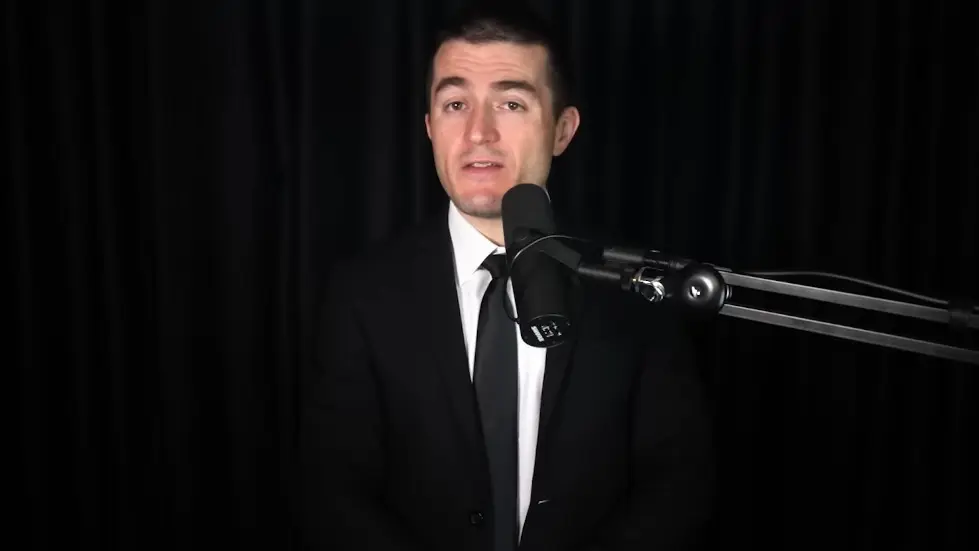
The Video
- The video is from Lex Fridman YouTube channel.
- It is a part of a transcript of a video with title 'Mohammed El-Kurd: Palestine | Lex Fridman Podcast #391 - YouTube' and with description 'The video is about a conversation between Lex Fridman and Mohammed El-Kurd, a world-renowned Palestinian poet, writer, and journalist. They discuss the situation in Palestine, specifically the neighborhood of Sheikh Jarah in East Jerusalem, which is threatened with colonialism, settler expansion, and forced expulsion.'.
- The conversation is between Lex Fridman and Mohammed El-Kurd.
- The video discusses the situation in Palestine, specifically the neighborhood of Sheikh Jarah in East Jerusalem.
- The video is from Lex Fridman YouTube channel.

Mohammed El-Kurd
- Mohammed El-Kurd is a world-renowned Palestinian poet, writer, and journalist.
- He is an influential voice speaking out and fighting for the Palestinian cause.
- He provides a very different perspective on Israel and Palestine than Lex Fridman's previous guests.
- He is known for his writing and journalism.
- He is a world-renowned figure in the Palestinian community.

Sheikh Jarah
- Sheikh Jarah is a neighborhood in East Jerusalem.
- It is threatened with colonialism, settler expansion, and forced expulsion.
- It has been this way since the early 70s.
- The neighborhood is one that is typical in terms of Palestinian neighborhoods.
- It is one of the most challenging conversations and in life.

Mohammed El-Kurd: Palestine | Lex Fridman Podcast #391 - YouTube
Expulsion from Homes
- Mohammed El-Kurd's family, like all of the other families, were expelled from their homes in the Nakabe in 1948.
- They were forced out by the Hagana and other Zionist parallel militaries that later formed the Israeli military.
- They were driven to various cities.
- Mohammed El-Kurd's grandmother moved from City to city.
- People lived there harmoniously after the first explosion.

Expulsion Orders in Sheikh Jarah
- In 2009, there were over 50 expulsion orders issued against families in Sheikh Jarah, an East Jerusalem neighborhood.
- The first wave of expulsions began in 2008 and 2009, with on-camera recorded events.
- The Israeli soldiers pulled a man out of his home while he was urinating and threw him under the streets, resulting in his death a few months later.
- The Ravi and Hanoon families, among others, were also thrown out of their homes.
- The justification for these expulsions was based on the idea of divine decree and the promised land.

Campaign to Demystify Expulsions
- In 2020, the father of the speaker called him to say that there were no more expulsion orders and they decided to launch a campaign.
- The campaign aimed to demystify what was happening and clarify that it was not just a real estate dispute or eviction.
- The images on the screen matched the rhetoric, making it less confusing and complicated for people around the world.
- The campaign was a global success, with immense international and diplomatic support, even from the United States.
- The Israeli Supreme Court was forced to cancel all eviction orders until further notice, setting a precedent and proving that it was a political battle, not a legal one.

Land Registry and Risk of Losing Homes
- The land registry is still ongoing, and there is a risk of losing homes once it is decided.
- The Supreme Court's decision to cancel all past eviction orders has set a precedent and proved that it was a political battle, not a legal one.
- The story highlights the asymmetry of the judicial system and the agenda of colonialism taking place in Palestine.
- The immense international and diplomatic support from all over the world, even the United States, played a significant role in the campaign's success.
- The campaign was a small victory, but it has set a precedent and proved that it was a political battle, not a legal one.

Location of Jerusalem
- Jerusalem is located in East Jerusalem, which is under Israeli occupation.
- Palestinian cities exist throughout the country and Jerusalem is just one infrastructure.
- Israel is built on top of Palestinian villages.
- According to international law, the eastern part of Jerusalem is under occupation.
- Israel's presence in Jerusalem is completely illegitimate.

People living in Jerusalem
- Palestinians live in Jerusalem and throughout the country.
- Palestinians in Jerusalem are not citizens, they are mere residents.
- Residents of the occupied Syrian Golan are also not citizens.
- The story of Palestinians in Jerusalem gets lost in translation.
- Palestinians in Jerusalem are threatened with expulsion through evictions and home demolitions.

Building Permits in Jerusalem
- Palestinians in Jerusalem seldom ever get building permit applications.
- Israeli authorities reject 95 of building permit applications submitted by Palestinians in Jerusalem and the West Bank.
- Jonathan Youssef, an activist in the settler movement and Jerusalem council member, is responsible for rejecting and accepting building permit applications.
- Jonathan Youssef has vandalized Palestinian murals and screamed Islamophobic slurs.
- Masafriotto in the South Hebron Hills is a place where Bedouin and cave-dweller Palestinians have lived for generations.

Evictions in Jerusalem
- Evictions in Jerusalem are legal but have an asymmetry of power in the courts.
- The legal system is not so much legal but is politically and maybe even religiously based.
- The biggest and most important context is that Americans think Israel and Palestine are two neighboring countries at war.
- Palestinian cities exist all over the country and it's just one infrastructure.
- Israel is built on top of Palestinian villages.

The Nakba
- The Nakba refers to the displacement and dispossession of Palestinians in 1948.
- May 15, 1948 is commemorated every year as the anniversary of the Nakba.
- The Nakba was a result of the Israeli declaration of independence and the subsequent expulsion of Palestinians from their homes.
- The Nakba led to the creation of a refugee crisis that continues to this day.
- The Nakba is considered a catastrophe by Palestinians and is a central event in their history and identity.

The Judiciary
- The Israeli judiciary is responsible for ruling on whether Palestinians can continue to live in their homes.
- The judge who rules on these cases is himself a settler living in an illegal settlement in the occupied West Bank.
- There is no representation in the courts for the Palestinian people, despite the presence of lawyers.
- There are over 60 laws that specifically and explicitly discriminate against Palestinian citizens of Israel.
- The law is used to facilitate and bureaucratize ethnic cleansing against the Palestinian people.

The Law
- The law is not always moral, and can be used to facilitate atrocities.
- Legality does not necessarily mean morality, and the law can be used to oppress certain groups.
- The law has served to facilitate and bureaucratize the ethnic cleansing of the Palestinian people.
- Judges and other people in power in the judiciary may have hate for the Palestinian people.
- The policies and actions of the regime have been oppressive towards the Palestinian people for the past 75 years.

The Israeli Prime Minister
- The Israeli Prime Minister has said that he has killed many Arabs and has no qualms about it.
- Netanyahu has said racist and hateful things about Palestinians and other groups.
- Josinski, the pioneer of Zionism, and Herzl, one of the pioneers of Zionism, have also said hateful things.
- These statements and actions demonstrate the deeply ingrained racism and hatred in Israeli society.
- The Israeli government's policies and actions towards the Palestinian people are deeply oppressive and discriminatory.

The Zionist Enterprise in Palestine
- The Zionist Enterprise in Palestine was a crystallization of the Zionist movement.
- Many Zionist paramilitaries merged to form the Israeli Army, which calls itself the Israeli Defense Forces.
- The Israeli Army has committed atrocities and massacres, and destroyed over 500 villages and killed over 15,000 people.
- The near-total destruction of Palestinian society continues to this day, and is referred to as the ongoing nakba.
- The nakba refers to the displacement of the Palestinian population, with many being forced to flee their homes.

Losing Homes and Families
- Many Palestinians lost their homes and families during the nakba.
- People were separated from their families and loved ones, with some even losing their children.
- The loss of homes and families has had a lasting impact on the Palestinian community.
- The stories of displacement and loss have been passed down through generations.
- The nakba continues to affect the lives of Palestinians today.

The Judiciary as a Replacement for the Artillery
- The Israeli Army has replaced its artillery with the Judiciary.
- Laws have been put in place that say Palestinians are not legally allowed to be in their homes.
- Expulsion from homes has happened in broad daylight.
- The Judiciary has been used to enforce the displacement of Palestinians.
- The use of the Judiciary as a tool of displacement is a violation of international law.

The Developer Declaration
- The Developer Declaration was a promise made by the British to the Zionist movement in 1917.
- The promise was to establish a Jewish state in Palestine.
- The promise was made as if Palestine was the British to give away.
- There were different schools of thought in Zionism, with some erasing the Palestinian culture and history.
- The Developer Declaration was a key factor in the displacement of the Palestinian population.

The Continuation of the Zionist Movement
- The Zionist movement continues to this day.
- Profoundly and explicitly racist individuals have called for genocide and genocide.
- The Israeli Army, which was responsible for the King David Hotel bombing, is still celebrated in Israeli society.
- The displacement of the Palestinian population continues to affect their lives today.
- The ongoing nakba is a testament to the failure of the international community to protect the rights of the Palestinian people.

The Video
- The video is a conversation between Lex Fridman and Mohammed El-Kurd, a Palestinian poet, writer, and journalist.
- They discuss the situation in Palestine, specifically the neighborhood of Sheikh Jarah in East Jerusalem, which is threatened with colonialism, settler expansion, and forced expulsion.
- El-Kurd shares his personal experiences of being expelled from his home in 1948 and the difficulties his family faced in rebuilding their lives.
- They also discuss the legal battle over the ownership of homes and lands in the neighborhood, which is asymmetrical due to the Israeli court system's refusal to look at documents from the Jordanian government, the U.N, and the Ottoman archives.

Zionism and Exceptionalism
- Zionism is described as a destructive ideology that has exceptionalism to the Israeli regime.
- Israel is said to have a right to defend itself and to the land, and to shoot 14-year-old boys because it thought they had a knife in their pockets.
- Religious books such as the Torah and the Quran are cited, but it is emphasized that the contents of people's hearts do not matter as much as the policies and the context of the courts and the laws.
- The focus is on the human story and the importance of talking about the contents of hearts if we were to think about the long-term future of this situation.

Hate and Inability to See Humanity
- Hate is described as a destructive emotion that prevents some group of humans from seeing the humanity in another group of humans.
- It is emphasized that it is important to talk about the contents of hearts if we were to think about the long-term future of this situation.
- The people who revolt and are angry are those who cannot breathe and cannot live under excruciating circumstances.
- The Palestinian people are described as some of the most wonderful people, even in the early correspondence between the mayor of Jerusalem and Herzl.

Dignity and Negating Oppressors
- Negating oppressors is described as a way to maintain dignity.
- It is emphasized that anger in one's heart does not cloud judgment or management.
- The campaign to defend homes is described as a way to educate and answer those who ask questions.
- El-Kurd's father is described as telling him that anger is a luxury that cannot be afforded.

The Video
- The video is a conversation between Lex Fridman and Mohammed El-Kurd, a Palestinian poet, writer, and journalist.
- They discuss the situation in Palestine, specifically the neighborhood of Sheikh Jarah in East Jerusalem, which is threatened with colonialism, settler expansion, and forced expulsion.
- El-Kurd shares his personal experiences of being expelled from his home in 1948 and the difficulties his family faced in rebuilding their lives.
- They also discuss the legal battle over the ownership of homes and lands in the neighborhood, which is asymmetrical due to the Israeli court system's refusal to look at documents from the Jordanian government, the U.N, and the Ottoman archives.

The Conversation
- Lex Fridman and Mohammed El-Kurd discuss the situation in Palestine, specifically the neighborhood of Sheikh Jarah in East Jerusalem.
- They talk about the threats of colonialism, settler expansion, and forced expulsion in the neighborhood.
- El-Kurd shares his personal experiences of being expelled from his home in 1948 and the difficulties his family faced in rebuilding their lives.
- They also discuss the legal battle over the ownership of homes and lands in the neighborhood, which is asymmetrical due to the Israeli court system's refusal to look at documents from the Jordanian government, the U.N, and the Ottoman archives.

The Legal Battle
- The legal battle over the ownership of homes and lands in the neighborhood of Sheikh Jarah in East Jerusalem is asymmetrical due to the Israeli court system's refusal to look at documents from the Jordanian government, the U.N, and the Ottoman archives.
- This refusal makes it difficult for Palestinians to prove ownership of their homes and lands.
- The Israeli court system's refusal to look at these documents is a result of the Israeli government's claim to the land and its history of displacing Palestinians from their homes.
- This legal battle highlights the ongoing struggle for Palestinian rights and the challenges faced by Palestinians in reclaiming their homes and lands.

The Personal Experiences
- Mohammed El-Kurd shares his personal experiences of being expelled from his home in 1948.
- He talks about the difficulties his family faced in rebuilding their lives after being expelled from their home.
- El-Kurd's experiences highlight the ongoing displacement of Palestinians from their homes and the challenges they face in rebuilding their lives.
- His experiences also underscore the importance of the legal battle over the ownership of homes and lands in the neighborhood of Sheikh Jarah in East Jerusalem.

The Problem with the Statement
- The statement that states have a right to exist is destructive.
- It ignores the suffering of people, such as those getting shot in the street or losing their homes.
- It also ignores the injustices faced by people held in Israeli prisons without trial.
- The conversations being held on CNN or other media outlets are not addressing the root causes of the issues.
- The idea that Israel has a right to exist is equivalent to opposing a religion that is thousands of years old.

Israel's Right to Exist
- Israel's right to exist is a form of racism and bigotry.
- Opposing Zionism is not equivalent to opposing a religion that is thousands of years old.
- Israel's right to exist is a political movement that is quite young and quite recent.
- Israel's right to exist is a form of colonialism, expansionism, and exclusivity.
- Israel's right to exist is not a universal truth, but rather a political ideology.

The Israeli Regime and Anti-Semitism
- The Israeli regime does not have a problem with anti-Semitism when it serves its interests.
- Evangelical Christians and Christian Zionists support Israel and its policies.
- The idea that we want to derive all of the Jews outside of the United States so that Armageddon could happen is a central tenet of Christian Zionism.
- The accusation of anti-Semitism has been used as a muzzle to silence political opposition.
- The only righteous option is to oppose the labels and smear campaigns that target us.

The Ongoing Colonialism in Palestine
- Every day, people in Palestine are killed.
- The muzzle used to silence political opposition has been effective.
- The only righteous option is to oppose the ongoing colonialism in Palestine.
- The Israeli regime does not have a problem with anti-Semitism when it serves its interests.
- The only way to alleviate the hate in the world is to oppose Israel's right to exist.

Section 1: Anti-Semitism and Muslim Sentiment in the United States
- The speaker discusses the prevalence of anti-Semitism and anti-Muslim sentiment in the United States, especially after 9/11.
- He mentions that there is also anti-Jewish sentiment throughout human history.
- The speaker discusses the idea that people seem to hate Jews throughout history, especially in the 20th century and especially with Nazi Germany.
- He clarifies that he thinks it is completely wrong and unfortunate that Jewish people have been prosecuted across history.
- The speaker mentions that the ADL has criticized him for tweeting a comparison between Israel and Hitler, which he believes is an analogy that is not a good strategy.

Section 2: Exceptionalism and Analogies
- The speaker discusses the idea of exceptionalism when it comes to Palestinians, who are not allowed analogy, expression, or armed resistance.
- He mentions that he is allowed to tweet his frustration out, but there are limitations on what he can do.
- The speaker discusses the idea that one man's Freedom Fighter is another man's terrorist, and he does not necessarily subscribe to the definition of terrorism.
- He mentions that when it comes to Ukraine, people have no problem seeing Ukrainians defending their homes and dying, while Palestinians are told to turn the other cheek.
- The speaker mentions that there are limitations on what Palestinians are allowed to do, and this is another case of Palestinian exceptionalism.

Section 3: Violence and Terrorism
- The speaker discusses the violence going in both directions, with Israelis being killed by terrorist action.
- He mentions that it depends on how you define terrorism, and he does not necessarily subscribe to the definition of terrorism.
- The speaker mentions that when it comes to Ukraine, people have no problem seeing Ukrainians defending their homes and dying, while Palestinians are told to turn the other cheek.
- He mentions that when it comes to Palestine, there are limitations on what Palestinians are allowed to do, and this is another case of Palestinian exceptionalism.
- The speaker mentions that when it comes to Palestine, there are limitations on what Palestinians are allowed to do, and this is another case of Palestinian exceptionalism.

Section 4: Analogies and Comparisons
- The speaker discusses the idea that he is allowed to tweet his frustration out, but there are limitations on what he can do.
- He mentions that when it comes to Ukraine, people have no problem seeing Ukrainians defending their homes and dying, while Palestinians are told to turn the other cheek.
- The speaker mentions that when it comes to Palestine, there are limitations on what Palestinians are allowed to do, and this is another case of Palestinian exceptionalism.
- He mentions that when it comes to Palestine, there are limitations on what Palestinians are allowed to do, and this is another case of Palestinian exceptionalism.
- The speaker mentions that when it comes to Palestine, there are limitations on what Palestinians are allowed to do, and this is another case of Palestinian exceptionalism.

Section 1: Access to Basic Needs
- The neighborhood of Sheikh Jarah in East Jerusalem is threatened with colonialism, settler expansion, and forced expulsion.
- Palestinians are denied access to clean water, the right to movement, building permits, and natural expansion.
- If someone attacks your home, you fight back, but who gets to define terrorism is about power.
- American accents and Iraq is not called terrorism by American politicians, but violence is a mutating concept.
- The power imbalance between the two sides is significant, and non-violent resistance is more effective.

Section 2: The Power of Non-Violent Resistance
- Martin Luther King and Gandhi are examples of non-violent resistance being effective.
- Turning the other cheek has not been effective for the Palestinian people.
- The Zionist Trope is used against Palestinians, and they reject everything but compromise.
- The occupation, strict policies, asymmetry of the judiciary, and the whole system need to be dismantled.
- Justice comes about through recognition, return, and redistribution.

Section 3: Recognition, Return, and Redistribution
- Palestinian refugees need recognition, return, and redistribution to achieve peace.
- Thousands of Palestinian prisoners are held in prisons without charge or trial.
- Many Palestinians are killed in broad daylight with no recourse.
- Journalists, medics, and everyday people are also affected by the occupation.
- The right of return to all Palestinian refugees to their homes is essential for peace.

Section 4: The Right of Return
- The right of return is essential for peace and recognition, return, and redistribution.
- The neighborhood of Sheikh Jarah in East Jerusalem is a prime example of the need for the right of return.
- The right of return is a fundamental human right that should be recognized and respected.
- The right of return is not just about returning to homes but also about rebuilding lives and communities.
- The right of return is a crucial step towards achieving peace and justice for Palestinians.

Section 1: Background
- The video is about a conversation between Lex Fridman and Mohammed El-Kurd, a Palestinian poet, writer, and journalist.
- The conversation focuses on the situation in Palestine, specifically the neighborhood of Sheikh Jarah in East Jerusalem, which is threatened with colonialism, settler expansion, and forced expulsion.
- El-Kurd shares his personal experiences of being expelled from his home in 1948 and the difficulties his family faced in rebuilding their lives.
- The video is from Lex Fridman YouTube channel and is titled 'Mohammed El-Kurd: Palestine | Lex Fridman Podcast #391 - YouTube'.

Section 2: The Neighborhood of Sheikh Jarah
- The neighborhood of Sheikh Jarah in East Jerusalem is threatened with colonialism, settler expansion, and forced expulsion.
- The Israeli court system's refusal to look at documents from the Jordanian government, the U.N, and the Ottoman archives makes the legal battle over the ownership of homes and lands in the neighborhood asymmetrical.
- No Jewish only towns have emerged in Palestine, while Palestinian towns have been popping up every few years.
- Palestinians who have Israeli citizenship are encircled and cannot have their natural community growth in their towns.

Section 3: The Wall
- The wall is a nine-meter high cement wall that was finished in 2003 and is also known as the security wall.
- The wall has stolen thousands of dunams of land and has ripped apart families.
- The wall has torn apart the livelihoods of many Palestinian families.
- The wall has created a reality for many Palestinian families whose lives were torn apart.

Section 4: Legal Classifications for Palestinians
- Israel, as a colonial entity, has divided and fragmented the Palestinian people.
- People with a blue ID, such as Lex Fridman, have Israeli citizenship and can travel and enter the West Bank.
- People with a green ID, such as those from the West Bank, cannot leave the West Bank without a special permit.
- People who live in Russia have no right to movement, no access to clean water, no access to supplies, no access to good food, no access to good health care, and are routinely bombed every few years.

The Video
- The video is about a conversation between Lex Fridman and Mohammed El-Kurd, a world-renowned Palestinian poet, writer, and journalist.
- They discuss the situation in Palestine, specifically the neighborhood of Sheikh Jarah in East Jerusalem, which is threatened with colonialism, settler expansion, and forced expulsion.
- El-Kurd shares his personal experiences of being expelled from his home in 1948 and the difficulties his family faced in rebuilding their lives.
- They also discuss the legal battle over the ownership of homes and lands in the neighborhood, which is asymmetrical due to the Israeli court system's refusal to look at documents from the Jordanian government, the U.N, and the Ottoman archives.

The Neighborhood of Sheikh Jarah
- The neighborhood of Sheikh Jarah in East Jerusalem is a Palestinian neighborhood that is threatened with colonialism, settler expansion, and forced expulsion.
- The Israeli government has been building settlements in the area, which have walls around them for security purposes.
- There are approximately one million settlers living in the West Bank, and the neighborhood of Sheikh Jarah is one of the areas where they reside.

The Legal Battle
- The legal battle over the ownership of homes and lands in the neighborhood of Sheikh Jarah is asymmetrical due to the Israeli court system's refusal to look at documents from the Jordanian government, the U.N, and the Ottoman archives.
- The Israeli government claims that the land in the area was purchased by Jewish settlers in the 19th century, while the Palestinian residents claim that they have been living there for centuries.
- The legal battle has resulted in the forced expulsion of Palestinian families from their homes, and the destruction of their properties.

The Personal Experiences
- Mohammed El-Kurd shares his personal experiences of being expelled from his home in 1948 and the difficulties his family faced in rebuilding their lives.
- He talks about the trauma and displacement that he and his family experienced as a result of the expulsion.
- He also talks about the resilience and determination of the Palestinian people in the face of adversity.

The Occupation of Palestine
- The video is about a conversation between Lex Fridman and Mohammed El-Kurd, a world-renowned Palestinian poet, writer, and journalist.
- They discuss the situation in Palestine, specifically the neighborhood of Sheikh Jarah in East Jerusalem, which is threatened with colonialism, settler expansion, and forced expulsion.
- El-Kurd shares his personal experiences of being expelled from his home in 1948 and the difficulties his family faced in rebuilding their lives.
- They also discuss the legal battle over the ownership of homes and lands in the neighborhood, which is asymmetrical due to the Israeli court system's refusal to look at documents from the Jordanian government, the U.N, and the Ottoman archives.

The Importance of Context
- The video emphasizes the importance of understanding the context of the situation in Palestine, specifically the illegal occupation of the neighborhood of Sheikh Jarah by the Israeli Army.
- The video argues that the Israeli Army has no business being in the neighborhood and that the occupation is a violation of international law.
- The video also highlights the impact of the occupation on the lives of the people living in the neighborhood, including the trauma experienced by those who lived through the 2002 Massacre.

The Violence in Palestine
- The video argues that the violence experienced by the Palestinian people is a result of their resistance to the illegal occupation of their land.
- The video also highlights the trauma experienced by the people living in the neighborhood, including the loss of their homes and the violence inflicted upon them by the Israeli Army.
- The video argues that the Israeli Army's use of violence against the Palestinian people is a violation of international law and that it is not an effective way to quell resistance.

You have read 50% of the summary.
To read the other half, please enter your Name and Email. It's FREE.
You can unsubscribe anytime. By entering your email you agree to our Terms & Conditions and Privacy Policy.
Watch the video on YouTube:
Mohammed El-Kurd: Palestine | Lex Fridman Podcast #391 - YouTube
Related summaries of videos:
- Joscha Bach: Life, Intelligence, Consciousness, AI & the Future of Humans | Lex Fridman Podcast #392
- Andrew Huberman: Relationships, Drama, Betrayal, Sex, and Love | Lex Fridman Podcast #393
- Neri Oxman: Biology, Art, and Science of Design & Engineering with Nature | Lex Fridman Podcast #394
- Walter Isaacson: Elon Musk, Steve Jobs, Einstein, Da Vinci & Ben Franklin | Lex Fridman Podcast #395
- James Sexton: Divorce Lawyer on Marriage, Relationships, Sex, Lies & Love | Lex Fridman Podcast #396
- Greg Lukianoff: Cancel Culture, Deplatforming, Censorship & Free Speech | Lex Fridman Podcast #397
- Mark Zuckerberg: First Interview in the Metaverse | Lex Fridman Podcast #398
- Jared Kushner: Israel, Palestine, Hamas, Gaza, Iran, and the Middle East | Lex Fridman Podcast #399
- Elon Musk: War, AI, Aliens, Politics, Physics, Video Games, and Humanity | Lex Fridman Podcast #400
- John Mearsheimer: Israel-Palestine, Russia-Ukraine, China, NATO, and WW3 | Lex Fridman Podcast #401
- Home
- About us
- Contact
- Book Summaries 0-9
- Book Summaries A
- Book Summaries B
- Book Summaries C
- Book Summaries D
- Book Summaries E
- Book Summaries F
- Book Summaries G
- Book Summaries H
- Book Summaries I
- Book Summaries J
- Book Summaries K
- Book Summaries L
- Book Summaries M
- Book Summaries N
- Book Summaries O
- Book Summaries P
- Book Summaries Q
- Book Summaries R
- Book Summaries S
- Book Summaries T
- Book Summaries U
- Book Summaries V
- Book Summaries W
- Book Summaries X
- Book Summaries Y
- Book Summaries Z
- Jay Shetty Podcast - Summaries
- Tom Bilyeu Impact Theory - Summaries
- Lex Fridman - Summaries
- Diary of a CEO - Summaries
- Alex Hormozi - Summaries
