
Robert Sapolsky and Jordan Peterson: Of Baboons and Men
Last updated: Nov 2, 2023
The video is by Jordan Peterson with primatologist and neuroendocrinology researcher Dr. Robert Sapolsky. They discuss Game Theory and its application to human behavior, including the unexpected success of the tit-for-tat negotiating principle, the role of neurochemical dopamine in reward reinforcement, and the anticipation of the future and the potentially objective reality of transcendent ethical structures operating within the biological domain. The video also touches on the emergence of a spontaneous morality in rats as a result of repeated pairing of the same individuals across an indeterminate landscape.
This video by Jordan B Peterson was published on Oct 23, 2023.
Video length: 01:45:37.
The video is about the podcast episode of Jordan Peterson, where he interviews primatologist and neuroendocrinology researcher Robert Sapolsky.
The episode is about Game Theory and its application to human behavior. Sapolsky discusses the unexpected success of the tit-for-tat negotiating principle, the role of neurochemical dopamine in reward reinforcement, and the anticipation of the future and the potentially objective reality of transcendent ethical structures operating within the biological domain.
The video also touches on the emergence of a spontaneous morality in rats as a result of repeated pairing of the same individuals across an indeterminate landscape.
- The video is about a podcast episode with primatologist and neuroendocrinology researcher Dr. Robert Sapolsky.
- They discuss Game Theory and its application to human behavior.
- The unexpected success of the tit-for-tat negotiating principle is discussed.
- The role of neurochemical dopamine in reward reinforcement is discussed.
- The anticipation of the future and the potentially objective reality of transcendent ethical structures operating within the biological domain is discussed.
- Game Theory is a field of study that is mostly the purview of War strategists and diplomats.
- Biologists and zoologists got a hold of it and applied it to study animals.
- The rationale was to study animals and make calculations about their physical properties.
- The scientists then study the animals and figure out how they survive in their environment.
Of Baboons and Men | Robert Sapolsky | EP 390 - YouTube
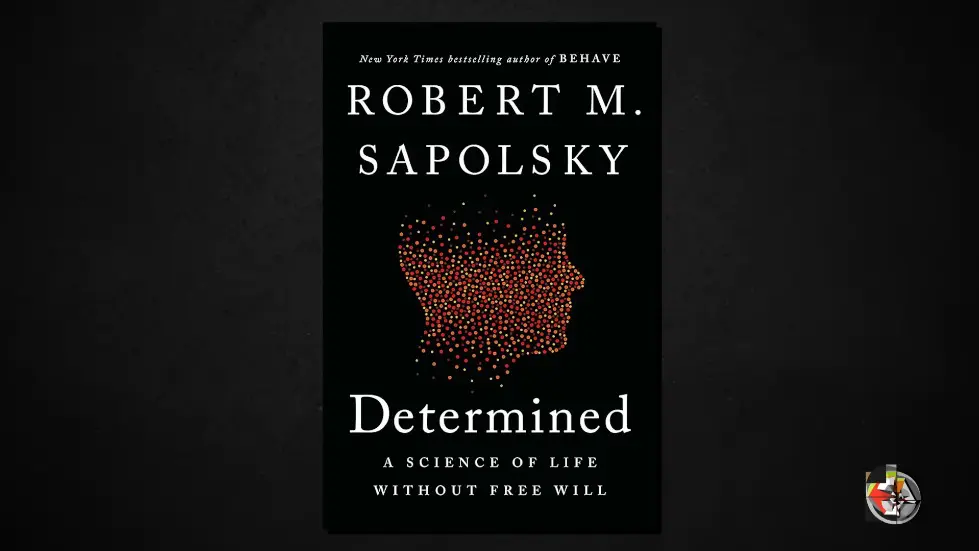
Section 1: Introduction
- The video is about a podcast episode with primatologist and neuroendocrinology researcher Dr. Robert Sapolsky.
- They discuss Game Theory and its application to human behavior.
- The unexpected success of the tit-for-tat negotiating principle is discussed.
- The role of neurochemical dopamine in reward reinforcement is discussed.
- The anticipation of the future and the potentially objective reality of transcendent ethical structures operating within the biological domain is discussed.

Section 2: Game Theory
- Game Theory is a field of study that is mostly the purview of War strategists and diplomats.
- Biologists and zoologists got a hold of it and applied it to study animals.
- The rationale was to study animals and make calculations about their physical properties.
- The scientists then study the animals and figure out how they survive in their environment.
- An example of this is the study of giraffes and how their heart has to be shaped to survive.

Section 3: Tit-for-Tat Negotiating Principle
- The tit-for-tat negotiating principle is an unexpected success in Game Theory.
- If one player invites another to play, the other player will only accept if they win 30% of the time in repeated bouts.
- This indicates an emergent morality of play in rats.
- This discovery is a compelling and stunning finding.

Of Baboons and Men | Robert Sapolsky | EP 390 - YouTube
Section 4: Neurochemical Dopamine in Reward Reinforcement
- Neurochemical dopamine plays a role in reward reinforcement.
- The repeated pairing of the same individuals across an indeterminate landscape leads to an emergent morality of play in rats.
- This discovery is a compelling and stunning finding.

Game Theory and Evolutionary Exigencies
- The concept of Game Theory as applied to animal behavior, human behavior, and other domains is based on the idea that there is an intrinsic logic to our behavior that has been shaped by evolutionary exigencies.
- The logic of our behavior is built around the optimal time to do certain actions and the opposite of those actions, which is influenced by context and physiology.
- The context of behavior is not just the immediate needs of the individual but also the reciprocal interactions that occur in a large social space between many individuals.
- Repeated interactions between individuals are crucial in shaping behavior and social environments.
- The landscape of need gratification switches dramatically in a social environment, with the problem of iterated needs across vast spans of time in a complex social environment.

The Shadow of the Future
- The future has a shape and is not completely unpredictable, although it becomes more unpredictable the farther out one goes.
- The concept of the shadow of the future refers to the idea that the future has a shape and is not completely unpredictable.
- The farther out one goes into the future, the more unpredictable it becomes, but it does not deteriorate to zero predictability.
- There is a future discounting literature that calculates the degree to which people regulate their behavior in the present in accordance with likely future contingencies.
- As one moves upward in the hierarchy of the nervous system towards the more recently evolved brain areas, the constraint of immediate behavior by future contingencies becomes more difficult.

The Prefrontal Cortex and Constraining Impulses
- The prefrontal cortex is more programmable because the relationship between the future and the present varies substantially with the particularities of the environment.
- The prefrontal cortex is more programmable because it is more recently evolved and has more circuits that are specific to the circumstances.
- The prefrontal cortex is more programmable because it is more recently evolved and has more circuits that are specific to the circumstances.
- The prefrontal cortex is more programmable because it is more recently evolved and has more circuits that are specific to the circumstances.
- The prefrontal cortex is more programmable because it is more recently evolved and has more circuits that are specific to the circumstances.

Religious Issues and Game Theory
- Religious issues are not explicitly discussed in the book, but the concept of Game Theory can be applied to them.
- The consequences of immediate actions have to be bounded by the future and the social context in Game Theory.
- The prefrontal cortex is more programmable because the relationship between the future and the present varies substantially with the particularities of the environment.
- The prefrontal cortex is more programmable because it is more recently evolved and has more circuits that are specific to the circumstances.
- The prefrontal cortex is more programmable because it is more recently evolved and has more circuits that are specific to the circumstances.

The Self
- The self is what you want to protect and what would protect you right now.
- Another answer is that you are a community that stretches across time.
- You as that community are varied in your manifestation.
- You are a community across time just like the community is a community.
- The ethical obligation to yourself as an extended creature is identical with the obligation that you have all things considered to other people.

Treating Yourself
- If you're treating yourself properly in the highest sense, you're treating yourself as that community that extends across time.
- There's no difference technically between treating yourself and treating other people well.
- The Golden Rule applies in the long run.
- Utilitarian thinking in the long run requires a deep distal mindset.
- There are often conflicts between what seems morally appropriate immediately and what seems morally appropriate when it's iterated.

Tit for Tat
- Tit for Tat is a game theory principle that involves reciprocating actions.
- It is a simple and effective strategy in many situations.
- It is often used in negotiations and conflicts.
- It is a key concept in the book "Of Baboons and Men".
- It is a powerful tool for achieving cooperation and mutual benefit.

Altruism
- Altruism is a concept that involves putting the needs of others before your own.
- It is often seen as a positive trait in society.
- It is difficult to determine the true motivations behind altruistic behavior.
- It is important to consider the long-term consequences of our actions.
- It is important to find a balance between self-interest and the needs of others.

The Science Behind Iterative Game Competitions
- The video discusses the science behind iterative game competitions, specifically the game of Tit for Tat.
- The video explains that the game of Tit for Tat emerged as a solution to the problem of repeated rounds of an unpredictable number of interactions.
- The video discusses the idea that the only logical thing to do in the first round is to stab the other person in the back.
- The video explains that the breakthrough in the game of Tit for Tat comes when the number of rounds is unknown, leading to selection for cooperation.
- The video discusses the idea that the fruit fly is the poster child for people who study Game Theory.

The Prisoner's Dilemma
- The video discusses the prisoner's dilemma, a classic game in Game Theory.
- The video explains that if both players cooperate, they both get a decent reward, but if they both stab each other in the back, they both get punished to a certain extent.
- The video discusses the idea that if a player cooperates with another player but then stabs them in the back, the other player gets a tremendous loss.
- The video explains that if a player is suckered into being cooperative and then stabs the other player in the back, the player who was stabbed in the back gets a huge number of brownie points.
- The video discusses the idea that the strategy that drives all other strategies into extinction is the simplest one out there, Tit for Tat.

The Role of Neurochemical Dopamine in Reward Reinforcement
- The video discusses the role of neurochemical dopamine in reward reinforcement.
- The video explains that dopamine is a neurotransmitter that is released in response to rewarding stimuli.
- The video discusses the idea that dopamine plays a crucial role in the brain's reward system.
- The video explains that dopamine is involved in the process of learning and memory.
- The video discusses the idea that dopamine is involved in the process of motivation.

The Anticipation of the Future and the Potentially Objective Reality of Transcendent Ethical Structures Operating Within the Biological Domain
- The video discusses the anticipation of the future and the potentially objective reality of transcendent ethical structures operating within the biological domain.
- The video explains that the anticipation of the future is a crucial aspect of human behavior.
- The video discusses the idea that the brain's reward system is involved in the anticipation of the future.
- The video explains that the brain's reward system is involved in the process of decision-making.
- The video discusses the idea that the brain's reward system is involved in the process of moral reasoning.

The Tit-for-Tat Strategy
- The Tit-for-Tat strategy is a game theory principle that involves reciprocating the actions of others.
- It is based on the assumption that cooperation is the best strategy in competitive situations.
- The strategy has been found to be effective in many species, including humans.
- It is a simple and easy-to-understand strategy that has been optimized by evolution.
- The strategy has been observed in many real-world situations, including in the animal kingdom and in human relationships.

The Prisoner's Dilemma
- The Prisoner's Dilemma is a classic game theory problem in which two individuals must choose between cooperation and defection.
- The problem is often used to illustrate the challenges of cooperation in competitive situations.
- The Tit-for-Tat strategy has been found to be an effective solution to the Prisoner's Dilemma.
- The strategy has been observed in many real-world situations, including in the animal kingdom and in human relationships.
- The strategy has been found to be effective in many situations, but it may not always be the best strategy in certain circumstances.

The Evolution of Cooperative Behavior
- Cooperative behavior has been found to be an important aspect of evolution in many species.
- The Tit-for-Tat strategy is an example of a cooperative behavior that has been optimized by evolution.
- The strategy has been observed in many real-world situations, including in the animal kingdom and in human relationships.
- The strategy has been found to be effective in many situations, but it may not always be the best strategy in certain circumstances.
- The strategy has been found to be effective in many situations, but it may not always be the best strategy in certain circumstances.

The Role of Neurochemical Dopamine
- Neurochemical dopamine plays a role in reward reinforcement in the brain.
- The Tit-for-Tat strategy may be effective in part because it provides a reward for cooperation.
- The strategy may also be effective because it provides a sense of satisfaction and accomplishment for both individuals involved.
- The role of dopamine in reward reinforcement may be an important factor in the success of the Tit-for-Tat strategy.
- The role of dopamine in reward reinforcement may be an important factor in the success of the Tit-for-Tat strategy.

The Anticipation of the Future
- The Tit-for-Tat strategy involves anticipating the future actions of others.
- The strategy may be effective because it allows individuals to make informed decisions about their own behavior.
- The strategy may also be effective because it allows individuals to anticipate the actions of others and adjust their own behavior accordingly.
- The anticipation of the future may be an important factor in the success of the Tit-for-Tat strategy.
- The anticipation of the future may be an important factor in the success of the Tit-for-Tat strategy.

Section 1: The Video
- The video is from YouTube channel of Jordan Peterson.
- The video is about the podcast episode with primatologist and neuroendocrinology researcher Dr. Robert Sapolsky.
- The episode discusses Game Theory and its application to human behavior.
- The episode touches on the emergence of a spontaneous morality in rats as a result of repeated pairing of the same individuals across an indeterminate landscape.

Section 2: Game Theory
- Game Theory is a branch of mathematics that studies strategic decision making.
- The tit-for-tat negotiating principle is a common application of Game Theory in human behavior.
- The principle is based on the idea that individuals will cooperate if they believe the other party will do the same.
- The success of the tit-for-tat principle is unexpected, as it is often thought that individuals will always act in their own self-interest.

Section 3: Neurochemical Dopamine
- Neurochemical dopamine is a neurotransmitter that plays a role in reward reinforcement.
- Dopamine is released when an individual experiences pleasure or reward.
- The anticipation of the future and the potentially objective reality of transcendent ethical structures operating within the biological domain are related to dopamine release.
- The release of dopamine is related to the experience of pleasure and reward, which can influence decision making and behavior.

Section 4: The Future of Human Behavior
- The emergence of a spontaneous morality in rats as a result of repeated pairing of the same individuals across an indeterminate landscape is an example of the potential for ethical structures to emerge in the biological domain.
- The success of the tit-for-tat negotiating principle is unexpected, as it is often thought that individuals will always act in their own self-interest.
- The anticipation of the future and the potentially objective reality of transcendent ethical structures operating within the biological domain are related to dopamine release.
- The release of dopamine is related to the experience of pleasure and reward, which can influence decision making and behavior.

Section 1: The Betrayal and the Signal Error
- The podcast episode discusses a betrayal on the part of one of the participants.
- It is suggested that this betrayal may have been a signal error instead.
- The episode also touches on the building up of trust and social capital.
- It is noted that a sociopath can exploit a reciprocal system.
- The episode suggests that a shared culture might be the abstracted equivalent of a multi-situational game.

Section 2: The Proclivity to Demonize the Foreign
- The podcast episode discusses the fact that we have a proclivity to demonize the foreign.
- It is noted that we often fail to differentiate the foreign into the individual.
- The episode suggests that we extend the inclusion of a game to everyone who shares our culture.
- It is noted that the less someone is part of your culture, the less abstracted evidence we have that they are direct participants in a reciprocal game.
- The episode suggests that psychopaths, which make up about 3% of the population, could be a hindrance to the development of a cooperative landscape.

Section 3: The Initiation of Low-Risk Trading Games
- The podcast episode discusses the initiation of low-risk trading games.
- It is noted that these games require an initial movement of faith.
- The episode suggests that these games can get the ball rolling in a upward cooperative direction.
- It is noted that kids do the same thing when they come of age.
- The episode suggests that these games can be a way to initiate a cooperative landscape.

Section 4: The Role of Neurochemical Dopamine in Reward Reinforcement
- The podcast episode discusses the role of neurochemical dopamine in reward reinforcement.
- It is noted that dopamine is released when we experience pleasure or reward.
- The episode suggests that dopamine plays a role in the development of trust and social capital.
- It is noted that dopamine is also involved in the development of addiction.
- The episode suggests that dopamine can be used to manipulate behavior in a game theory context.

Introduction
- The video is about a podcast episode with primatologist and neuroendocrinology researcher Dr. Robert Sapolsky.
- They discuss Game Theory and its application to human behavior, including the unexpected success of the tit-for-tat negotiating principle.
- The role of neurochemical dopamine in reward reinforcement is also discussed.
- The anticipation of the future and the potentially objective reality of transcendent ethical structures operating within the biological domain is touched upon.
- The emergence of a spontaneous morality in rats as a result of repeated pairing of the same individuals across an indeterminate landscape is also mentioned.

Game Theory and Human Behavior
- Game Theory is discussed as a way to understand human behavior.
- The tit-for-tat negotiating principle is mentioned as an example of a successful game theory strategy.
- The role of neurochemical dopamine in reward reinforcement is also discussed.

Anticipation of the Future and Ethical Structures
- The anticipation of the future is discussed as a potential objective reality.
- Transcendent ethical structures operating within the biological domain are also mentioned.

Spontaneous Morality in Rats
- The emergence of a spontaneous morality in rats is discussed as a result of repeated pairing of the same individuals across an indeterminate landscape.

The Role of Dopamine in Reward Reinforcement
- Dopamine is a neurotransmitter that plays a crucial role in reward reinforcement.
- It is anticipatory, meaning it signals the presence of a reward that is likely to occur.
- The dopaminergic system reinforces the potency and integrity of a predictive system that is predicting positively.
- It is curious about the issue of sacrifice in relationship to cortical maturation.
- One definition of maturity is the ability to forgo comparatively immediate gratification for probably larger but deferred gratification.

The Role of Religion in Human Behavior
- Religion seems to be mapping a pattern of sacrifice of the present to the future.
- It proposes that this is the optimal adaptive strategy.
- Religions where something amazing has happened and it's so amazing that you just have to join are about recruitment.
- Religions that are about retention because the reward is going to be amazing if you stick it out are about retention.
- Traditional nomadic pastoralist religions are about retention because you get a big problem because you're wandering all over the back of Beyond.

The Development of the Frontal Cortex
- The development of the frontal cortex is a product of religions of retention rather than religions of recruitment.
- It is curious about the issue of sacrifice in relationship to cortical maturation.
- One definition of maturity is the ability to forgo comparatively immediate gratification for probably larger but deferred gratification.
- It is curious about the issue of sacrifice in relationship to cortical maturation.
- One definition of maturity is the ability to forgo comparatively immediate gratification for probably larger but deferred gratification.

The Role of Religion in Morality
- Religion seems to be mapping a pattern of sacrifice of the present to the future.
- It proposes that this is the optimal adaptive strategy.
- Religions where something amazing has happened and it's so amazing that you just have to join are about recruitment.
- Religions that are about retention because the reward is going to be amazing if you stick it out are about retention.
- Traditional nomadic pastoralist religions are about retention because you get a big problem because you're wandering all over the back of Beyond.

The Relationship Between Sacrifice and Maturation
- The idea that sacrifice is necessary for maturation and the emergence of the prefrontal cortex as a predictor of deferred future reward.
- The concept of proper sacrifice and the study of dopamine neurochemistry and its receptor subtype.
- The idea that humans have a totally unrecognizably different neurochemical system compared to animals, but we mobilize the same molecule and mesolimbic cortical pathways.
- The comparison between the idea of an afterlife and the concept of setting up a situation where behavior in the present maximizes the utility of behavior across all possible iterations out into the future.
- The idea that the footprints we leave after we are gone will matter and that people will remember us based on our actions.

The Role of Dopamine in Anticipation of Future Reward
- The relationship between dopamine and reward reinforcement.
- The role of dopamine in anticipation of future reward.
- The idea that dopamine is involved in the discovery of an infinite future.
- The idea that the discovery of an infinite future is a consequence of cortical expansion.
- The idea that dopamine plays a role in the anticipation of future reward.

The Dopamine System and Anticipation
- Dopamine is a neurotransmitter that plays a crucial role in reward and reinforcement.
- Dopamine also encourages the neural structures that were active in the sequencing of behavior to grow and flourish.
- Anticipation of the future is a key aspect of the dopamine system.
- Dopamine's role in anticipation is different from its role in responding to successful behavior.
- The activation of dopaminergic reward pathways in the brain can be observed through functional imaging.

The Role of Anticipation in Behavior
- Anticipation of the future is a crucial aspect of behavior.
- The anticipation of a reward can be more motivating than the reward itself.
- The anticipation of a reward can drive behavior and lead to goal-directed behavior.
- The anticipation of a reward can also lead to a sense of mastery and agency.
- The anticipation of a reward can be influenced by the predictability and sense of control over the outcome.

You have read 50% of the summary.
To read the other half, please enter your Name and Email. It's FREE.
You can unsubscribe anytime. By entering your email you agree to our Terms & Conditions and Privacy Policy.
Watch the video on YouTube:
Of Baboons and Men | Robert Sapolsky | EP 390 - YouTube
Related summaries of videos:
- Robert O'Brien and Jordan Peterson: Dealing with the Deadly
- Michael Malice and Jordan Peterson: Discussing Communism in All Its Glory
- Jordan Peterson and Sam Harris Try to Find Something They Agree On
- Terrence Keeley and Jordan Peterson: Discussing Impact Investing and ESG's with a BlackRock Executive
- Jack Barsky and Jordan Peterson: True Stories from a Soviet Spy
- Jeremy Boreing and Jordan Peterson: Building an Empire And Making Snow White
- Miranda Devine and Jordan Peterson: The Biden Dynasty Exposed
- Helen Joyce and Jordan Peterson: The War for Reality
- Douglas Murray and Jordan Peterson: Truth as Glorious Adventure
- Eric Metaxas and Jordan Peterson: Listen and Weep
- Home
- About us
- Contact
- Book Summaries 0-9
- Book Summaries A
- Book Summaries B
- Book Summaries C
- Book Summaries D
- Book Summaries E
- Book Summaries F
- Book Summaries G
- Book Summaries H
- Book Summaries I
- Book Summaries J
- Book Summaries K
- Book Summaries L
- Book Summaries M
- Book Summaries N
- Book Summaries O
- Book Summaries P
- Book Summaries Q
- Book Summaries R
- Book Summaries S
- Book Summaries T
- Book Summaries U
- Book Summaries V
- Book Summaries W
- Book Summaries X
- Book Summaries Y
- Book Summaries Z
- Jay Shetty Podcast - Summaries
- Tom Bilyeu Impact Theory - Summaries
- Lex Fridman - Summaries
- Diary of a CEO - Summaries
- Alex Hormozi - Summaries
