
Stephen Wolfram: ChatGPT and the Nature of Truth, Reality & Computation | Lex Fridman Podcast #376
Last updated: Jul 2, 2023
The video is about Stephen Wolfram discussing the integration of ChatGPT and Wu from Alpha and Wolfram language. Wolfram, a computer scientist, mathematician, theoretical physicist, and founder of Wolfram Research, talks about the differences between large language models and computational systems, and how ChatGPT is primarily focused on generating language based on a trillion words of text on the web. He explains that ChatGPT is a shallow computation on a large amount of training data, while the computational stack that he built over the last 40 years is capable of performing arbitrarily deep computations. Wolfram's goal is to make as much of the world computable as possible, and he views ChatGPT as a wide and shallow system, while the deep and broad computational system he is building is more important.
This video by Lex Fridman was published on May 9, 2023.
Video length: 04:14:34.
The video is about the integration of ChatGPT and Wolfram language systems.
Stephen Wolfram, a computer scientist, mathematician, theoretical physicist, and founder of Wolfram Research, discusses the differences between large language models and computational systems. ChatGPT is a language model that is primarily focused on generating language similar to what humans have created and put on the web. It uses a neural net and other techniques to generate output based on a given prompt. On the other hand, Wolfram's computational system is designed to perform arbitrarily deep computations based on the formal structure of human civilization, including mathematics and systematic knowledge. The goal of Wolfram's system is to make as much of the world computable as possible, in the sense that if there is a question that can be answered from expert knowledge, it can be computed in a reliable way. ChatGPT, on the other hand, is a shallow and wide system that forages from existing things on the web.
Wolfram views ChatGPT as a wide and shallow system, while his computational system is deep and broad, and most importantly, a deep type of thing.
- Stephen Wolfram is a computer scientist, mathematician, theoretical physicist, and founder of Wolfram Research.
- ChatGPT is a large language model primarily focused on generating language based on a trillion words of text on the web.
- Wolfram's goal is to make as much of the world computable as possible.
- ChatGPT is a shallow computation on a large amount of training data, while the computational stack that Wolfram built over the last 40 years is capable of performing arbitrarily deep computations.
- The video is about Stephen Wolfram discussing the integration of ChatGPT and Wu from Alpha and Wolfram language.
- Large language models like ChatGPT are primarily focused on generating language based on a trillion words of text on the web.
- They are a shallow computation on a large amount of training data.
- On the other hand, computational systems like Wolfram's are capable of performing arbitrarily deep computations.
- ChatGPT is a wide and shallow system, while the deep and broad computational system Wolfram is building is more important.
- The discovery that even extremely simple programs when you run them can do really complicated things.

Section 1: Introduction
- The video is about Stephen Wolfram discussing the integration of ChatGPT and Wu from Alpha and Wolfram language.
- Stephen Wolfram is a computer scientist, mathematician, theoretical physicist, and founder of Wolfram Research.
- The video is from Lex Fridman YouTube channel.
- The video is a part of a transcript of a video with title 'Stephen Wolfram: ChatGPT and the Nature of Truth, Reality & Computation | Lex Fridman Podcast #376 - YouTube' and with description 'The video is about Stephen Wolfram discussing the integration of ChatGPT and Wu from Alpha and Wolfram language. Wolfram, a computer scientist, mathematician, theoretical physicist, and founder of Wolfram Research, talks about the differences between large language models and computational systems, and how ChatGPT is primarily focused on generating language based on a trillion words of text on the web. He explains that ChatGPT is a shallow computation on a large amount of training data, while the computational stack that he built over the last 40 years is capable of performing arbitrarily deep computations. Wolfram's goal is to make as much of the world computable as possible, and he views ChatGPT as a wide and shallow system, while the deep and broad computational system he is building is more important.'.

Section 2: Large Language Models vs. Computational Systems
- ChatGPT is a large language model that is primarily focused on generating language based on a trillion words of text on the web.
- It is a shallow computation on a large amount of training data.
- The computational stack that Stephen Wolfram built over the last 40 years is capable of performing arbitrarily deep computations.
- Wolfram's goal is to make as much of the world computable as possible.
Section 3: Sandboxing
- The AI knows about sandboxing and has the tools to crack them.
- Sandboxing is a version of the question for the world that is as soon as you put the AIS in charge of things.
- There should be constraints on these systems before you put the AIS in charge of all the weapons and all these different kinds of systems.
- The fun part about sandboxes is that the AI knows about them and has the tools to crack them.
Section 4: Conclusion
- Stephen Wolfram has announced the integration of chat GBT and Wu from Alpha and Wolfram language.
- The key differences from the high philosophical level and technical level between the capabilities of broadly speaking the two kinds of systems, large language models and this computational gigantic computational system infrastructure that is well from alpha.
- Chat GPT is mostly focused on making language like the language that humans have made and put on the web and so on.
- It is a shallow computation on a large amount of kind of training data that is what we humans have put on the web.

Section 1: The Nature of Truth, Reality, and Computation
- The video is about Stephen Wolfram discussing the integration of ChatGPT and Wu from Alpha and Wolfram language.
- Wolfram is a computer scientist, mathematician, theoretical physicist, and founder of Wolfram Research.
- ChatGPT is a large language model primarily focused on generating language based on a trillion words of text on the web.
- Wolfram's goal is to make as much of the world computable as possible.
- ChatGPT is a shallow computation on a large amount of training data, while the computational stack that Wolfram built over the last 40 years is capable of performing arbitrarily deep computations.
Section 2: The Differences between Large Language Models and Computational Systems
- Large language models like ChatGPT are primarily focused on generating language based on a trillion words of text on the web.
- They are a shallow computation on a large amount of training data.
- On the other hand, computational systems like Wolfram's are capable of performing arbitrarily deep computations.
- They are built over a long period of time and are capable of handling complex problems.
- ChatGPT is a wide and shallow system, while the deep and broad computational system Wolfram is building is more important.

Section 3: The Importance of Formal Structure and Foundation
- The question is how to think about computation and what aspects of computation we humans with our minds and with the kinds of things we've learned can relate to in that computational universe.
- The kind of form of foundation you can build such a formal structure on about the kinds of things you would start on in order to build this kind of deep computable knowledge trees.
- The discovery that even extremely simple programs when you run them can do really complicated things.
- The realization that even very simple programs can do incredibly complicated things that we very much don't expect.
- The challenge to sort of making things computational is to connect what's computationally possible out in the computational universe with the things that we humans sort of typically think about with our minds.

Section 4: The Importance of Symbolic Programming and Representations
- The big idea is this idea of kind of symbolic programming symbolic representations of things.
- The question is when you look at sort of everything in the world and you kind of you know you take some visual scene or something you're looking at and you say well how do I turn that into something that I can kind of stuff into my mind.
- The things that we remember from that visual scene are you know there's a there's a chair in this place it's a kind of a symbolic representation of the visual scene.
- There are two chairs on a table or something rather than there are all these pixels.
- The uh the big sort of idea there is this idea of kind of symbolic programming symbolic representations of things and so the the question is when you look at sort of everything in the world and you kind of you know you take some visual scene or something you're looking at and you say well how do I turn that into something that I can kind of stuff into my mind.
Section 1: The Nature of Truth, Reality, and Computation
- The video is about Stephen Wolfram discussing the integration of ChatGPT and Wu from Alpha and Wolfram language.
- Wolfram is a computer scientist, mathematician, theoretical physicist, and founder of Wolfram Research.
- ChatGPT is a large language model primarily focused on generating language based on a trillion words of text on the web.
- Wolfram's goal is to make as much of the world computable as possible.
- ChatGPT is a shallow computation on a large amount of training data, while the computational stack that Wolfram built over the last 40 years is capable of performing arbitrarily deep computations.

Section 2: Symbolic Representation
- Wolfram invented the idea of using symbolic expressions to represent computations at a high level.
- Symbolic expressions are structured as functions with arguments, but do not necessarily evaluate to anything.
- Building up that structure using symbolic representation has been extremely useful for representing higher-level concepts.
- Abstractions can be taken from a physics project at a very low level and built up from there.
- Symbolic representation is not a shortcut, but rather a way to take the highest level of abstraction and convert it to something computable.
Section 3: Computational Irreducibility
- Computational irreducibility is a phenomenon where you have to do the computation to find out the answer.
- The answer cannot be immediately jumped ahead to, even if you know the rules for the computation.
- The place where you really get value out of doing computation is when you have to do the computation to find out the answer.
- Computational irreducibility is important for thinking about lots of kinds of things.
- The universe can figure out what it's going to do, but for us to work out what it's going to do, we have to do the computation.
Section 4: Reducibility and Science
- The story of science is finding pockets of reducibility where everything in the world is full of computational irreducibility.
- Science is the story of finding these places where we can locally jump ahead.
- There are always pockets of reducibility where you can jump ahead a bit.
- The only way to jump completely ahead is to let the system run and see what happens.
- The story of most kinds of science and inventions is the story of finding these places where we can locally jump ahead.

Section 1: The Nature of Computation and Reducibility
- The video discusses the nature of computation and reducibility.
- The speaker explains that we exist in a slice of all the possible computational irreducibility in the universe.
- The computational stack that the speaker built over the last 40 years is capable of performing arbitrarily deep computations.
- The speaker views ChatGPT as a wide and shallow system, while the deep and broad computational system he is building is more important.
Section 2: The Interaction between Computational Irreducibility and Our Nature as Observers
- The speaker discusses the interaction between computational irreducibility and our nature as observers.
- The fact that we are computationally bounded observers leads to the main laws of physics that we discovered throughout the century.
- The speaker explains that we compress the symbolic essence of what's happening in the world into our minds.
- The speaker believes that we are persistent in time, which is a key aspect of our consciousness.

Section 3: The Persistence of Consciousness Through Time
- The speaker discusses the persistence of consciousness through time.
- The speaker believes that we have a single thread of experience, which is critical to the way we humans typically operate.
- The speaker explains that we have a consistent thread of experience, which is a key aspect of our consciousness.
- The speaker believes that the fact that we think of ourselves as being the same us through time is just another limitation of our mind that we want to reduce reality into some temporal consistency.

Section 4: The Importance of Computational Systems
- The speaker emphasizes the importance of computational systems.
- The speaker views ChatGPT as a wide and shallow system, while the deep and broad computational system he is building is more important.
- The speaker believes that as much of the world as possible should be made computable.
- The speaker views ChatGPT as a tool that can be used to generate language based on a trillion words of text on the web, but it is a shallow computation on a large amount of training data.

Section 1: The Nature of Truth, Reality, and Computation
- The video is about Stephen Wolfram discussing the integration of ChatGPT and Wu from Alpha and Wolfram language.
- Wolfram is a computer scientist, mathematician, theoretical physicist, and founder of Wolfram Research.
- ChatGPT is a large language model primarily focused on generating language based on a trillion words of text on the web.
- Wolfram's goal is to make as much of the world computable as possible.
- ChatGPT is a shallow computation on a large amount of training data, while the computational stack that Wolfram built over the last 40 years is capable of performing arbitrarily deep computations.

Section 2: The Importance of the Observer in the Computational Universe
- The word "Observer" means something in quantum mechanics and in human consciousness.
- The Observer is a key aspect of the computational universe, as it is a feature of a computationally limited system that is only able to observe reducible pockets.
- The Observer is related to the whole AI thing, as one question is what is a general model of an observer.
- There are many different observers like us, but one key aspect is the idea of taking all the detail of the world and being able to stuff it into a mind.
- The general Observer is a key aspect of the computational universe, as it is a feature of a computationally limited system that is only able to observe reducible pockets.

Section 3: The Equivalency of Many Different Configurations of a System
- The Observer is equivalent to many different configurations of a system, saying all I care about is this aggregate feature.
- The thin summary of the detail is that thin summary is never
Section 1: Snowflake Growth
- Snowflakes are fluffy and typically have dendritic arms.
- Snowflakes start in a phase of water that's relevant to their formation.
- Snowflakes grow as a hexagonal plate, but eventually grow arms.
- The growth of snowflake arms is inhibited due to heat generated from ice condensing from water vapor.
- Snowflakes have holes in them that are scars of the way their arms grow out.
Section 2: Snowflake Modeling
- Simple models for snowflake growth can be created using cellular automata.
- Snowflakes are fluffy because they have dendritic arms.
- Snowflakes grow out arms and then turn back to fill in a hexagon.
- Snowflakes can grow many iterations of this kind of growth.
- Snowflakes are flat and do not span out in three dimensions.
Section 3: Fluffiness of Snowflakes
- Fluffiness is a three-dimensional property of snowflakes.
- Multiple snowflakes become fluffy when they grow together.
- Snowflakes with arms do not fit together very well.
- Snowflakes have lots of air in them and slide against each other easily.
- Science is not able to describe the full complexity of snowflake growth.
Section 4: Science and Snowflake Growth
- Science often tries to turn snowflake growth into one number.
- Science fails to capture the detail of what's going on inside the snowflake growth system.
- Science is a big challenge for extracting aspects of the natural world that are of interest.
- People might not care about the fluffiness of snowflakes.
- The growth rate of snowflake arms is just one aspect of snowflake growth.
Section 1: The Nature of Truth, Reality, and Computation
- The video is about Stephen Wolfram discussing the integration of ChatGPT and Wu from Alpha and Wolfram language.
- Wolfram is a computer scientist, mathematician, theoretical physicist, and founder of Wolfram Research.
- ChatGPT is a large language model primarily focused on generating language based on a trillion words of text on the web.
- Wolfram's goal is to make as much of the world computable as possible.
- ChatGPT is a shallow computation on a large amount of training data, while the computational stack that Wolfram built over the last 40 years is capable of performing arbitrarily deep computations.
Section 2: The Differences Between Large Language Models and Computational Systems
- Large language models like ChatGPT are primarily focused on generating language based on a trillion words of text on the web.
- They are shallow computations on a large amount of training data.
- On the other hand, the computational stack that Wolfram built over the last 40 years is capable of performing arbitrarily deep computations.
- Wolfram's goal is to make as much of the world computable as possible.
- ChatGPT is a wide and shallow system, while the deep and broad computational system Wolfram is building is more important.
Section 3: The Importance of Modeling and Science
- Modeling and science involve reducing the actuality of the world to something where you can readily sort of give a narrative for what's happening.
- Answering questions that you care about requires a model that captures what you care about.
- If you want to answer all possible questions about the system you're building, you'd have to have the whole system.
- One counter example to this is if you think you're modeling the whole universe all the way down.
- Ultimately, everything that successfully runs a model is the actual running of the universe itself.
Section 4: The Human Concept of Modeling and Computation
- The video is about Stephen Wolfram discussing the integration of ChatGPT and Wu from Alpha and Wolfram language.
- Wolfram is a computer scientist, mathematician, theoretical physicist, and founder of Wolfram Research.
- ChatGPT is a large language model primarily focused on generating language based on a trillion words of text on the web.
- Wolfram's goal is to make as much of the world computable as possible.
- ChatGPT is a shallow computation on a large amount of training data, while the computational stack that Wolfram built over the last 40 years is capable of performing arbitrarily deep computations.
Section 1: The Integration of ChatGPT and Wolfram Language
- The video is about Stephen Wolfram discussing the integration of ChatGPT and Wu from Alpha and Wolfram language.
- ChatGPT is a large language model that is primarily focused on generating language based on a trillion words of text on the web.
- Wolfram's goal is to make as much of the world computable as possible, and he views ChatGPT as a wide and shallow system, while the deep and broad computational system he is building is more important.
- Wolfram's computational stack that he built over the last 40 years is capable of performing arbitrarily deep computations.
Section 2: The Differences between Large Language Models and Computational Systems
- ChatGPT is a shallow computation on a large amount of training data, while the computational stack that Wolfram built is capable of performing arbitrarily deep computations.
- ChatGPT is a wide and shallow system, while the deep and broad computational system Wolfram is building is more important.
Section 3: The Manual and Automated Ways of Mapping from Natural Language to Wolfram Language
- There is a manual way of mapping from the natural language of the internet to the Wolfram language, which involves curating data to be able to know things with some degree of certainty.
- There is also an automated way of mapping from the natural language of the internet to the Wolfram language, which involves using large language models like GPT.
Section 4: The Idea of Turning Natural Language into Computational Language
- The idea of turning natural language into computational language is to convert things like questions, math calculations, and chemistry calculations into computational language.
- Wolfram's computational stack has achieved a very high success rate of the little fragments of natural language that put people put in.
Section 1: Introduction to Computation
- Computation is a formal way of thinking about the world.
- It is a broad way of formalizing the way we think about the world.
- If we can successfully formalize things in terms of computation, computers can help us figure out what the consequences are.
- If we're not using a computer to do the math, we have to work out a bunch of stuff ourselves.
- The idea of computation is key for education.
Section 2: Natural Language and Computational Language
- We're trying to take the relationship between natural language and computational language.
- The typical workflow is first, a human has an idea of what they want to do.
- The human can type something in to an LLM system and generate computational language code.
- The LLM system can synthesize wealth language code and do better in the future.
- The LLM system can also debug the language code.
Section 3: Prompting Task and Debugging
- The prompting task is to generate computational language code.
- The LLM system can also debug the language code.
- The LLM system can generate a piece of language code that is usually small.
- The LLM system can also generate a piece of language code that is not small.
- The LLM system can generate a piece of language code that is not small and is probably not right.
Section 4: Human Mumbling and LLM System
- The human mumbles some things and the LLM system produces a fragment of awesome language code.
- The LLM system can checkpoint the code to make sure it produces the right thing.
- The LLM system can adjust the code to do what the human wants.
- The LLM system can give hints about the function of the code.
- The LLM system can debug the code based on the output.
Section 1: Introduction to ChatGPT
- ChatGPT is a large language model developed by OpenAI.
- It is capable of generating language based on a trillion words of text on the web.
- ChatGPT is a shallow computation on a large amount of training data.
- It is primarily focused on generating language and not on performing complex computations.
- ChatGPT is a wide and shallow system, while the deep and broad computational system built by Stephen Wolfram is more important.
Section 2: Notebooks and ChatGPT
- Notebooks are a concept that has been around for 36 years, where text, code, and output are combined.
- ChatGPT can automatically look at messages and internal information about stack traces and things like this.
- It can guess what's wrong and tell the user so in other words, it's looking at things and making sense of them.
- ChatGPT can also make mistakes, but it can read documentation and make up the name of some option for some function that doesn't really exist.
- The language built by Stephen Wolfram over the years is easy for humans to understand, but it also makes it easy for AIs to understand.
Section 3: The Importance of Language Structure
- ChatGPT is showing us that there is an additional kind of regularity to language beyond just the part of speech combination.
- The meaning of the language is also an important factor in language structure.
- Logic is an example of a kind of regularity to language that has to do with the meaning of the language.
- The discovery of logic was made by listening to a bunch of people giving speeches and recognizing patterns in their speech.
- The discovery of logic was made by Aristotle, who listened to a bunch of orators giving speeches and recognizing patterns in their speech.
Section 1: The Structure of Sentences
- Aristotle realized that there is a structure to sentences.
- This structure is independent of the details of the sentences.
- Logic is a discovery that abstracts from natural language.
- There is an abstraction from natural language that has a place for any word.
- Aristotle had an idea of syllogistic logic, which was a pattern of arguing things.
Section 2: The Evolution of Logic
- In the Middle Ages, education involved memorizing syllogisms.
- George Boole was the first to see that there was a level of abstraction beyond the templates of a sentence.
- Boolean algebra and the idea of arbitrary depth nested collections of ands, ors, and knots were introduced.
- This kind of computation is beyond the pure templates of natural language.
- Chat GPT operates at the Aristotelian level, dealing with templates of sentences.
Section 3: The Limitations of Chat GPT
- Chat GPT stopped too quickly and there was more that could have been lifted out of language as formal structures.
- There are many kinds of features captured in these aspects of language.
- Chat GPT effectively has found something much more complicated than logic.
- There is a finite number of things to discover in the computational universe.
- There are other kinds of computation that are not ones that humans have cared about.
Section 4: The Future of AI
- The answer to what AIS will ultimately do is insofar as they are doing computation.
- AIS can run off and do all kinds of crazy computations.
- The ones that we have decided we care about are the ones that AIS will ultimately do.
- There is a lot of other kinds of computation that can be done in the computational universe.
- The neural Nets of our brains are not that different in some sense from the neural Nets of a large language model.
Section 1: Introduction to ChatGPT
- ChatGPT is a large language model developed by OpenAI.
- It is capable of generating language based on a trillion words of text on the web.
- ChatGPT is primarily focused on generating language and is not a computational system.
- It is a shallow computation on a large amount of training data.
- ChatGPT is a wide and shallow system, while the deep and broad computational system built by Wolfram is more important.
Section 2: Differences between Large Language Models and Computational Systems
- Large language models like ChatGPT are primarily focused on generating language.
- They are a shallow computation on a large amount of training data.
- They are not capable of performing arbitrarily deep computations like the computational stack built by Wolfram.
- The computational stack built by Wolfram is capable of performing deep and broad computations.
- Wolfram's goal is to make as much of the world computable as possible, and he views ChatGPT as a wide and shallow system, while the deep and broad computational system he is building is more important.
Section 3: The Nature of Truth, Reality, and Computation
- ChatGPT is a shallow computation on a large amount of training data.
- It is not capable of performing arbitrarily deep computations like the computational stack built by Wolfram.
- Wolfram's goal is to make as much of the world computable as possible.
- ChatGPT is a wide and shallow system, while the deep and broad computational system built by Wolfram is more important.
- The computational stack built by Wolfram is capable of performing deep and broad computations.
Section 4: Conclusion
- ChatGPT is a large language model developed by OpenAI.
- It is primarily focused on generating language and is not a computational system.
- It is a shallow computation on a large amount of training data.
- Wolfram's goal is to make as much of the world computable as possible.
- ChatGPT is a wide and shallow system, while the deep and broad computational system built by Wolfram is more important.
Section 1: The Nature of Motion
- The video is about Stephen Wolfram discussing the integration of ChatGPT and Wu from Alpha and Wolfram language.
- Wolfram is a computer scientist, mathematician, theoretical physicist, and founder of Wolfram Research.
- ChatGPT is a large language model primarily focused on generating language based on a trillion words of text on the web.
- Wolfram's goal is to make as much of the world computable as possible.
- ChatGPT is a shallow computation on a large amount of training data, while the computational stack that Wolfram built over the last 40 years is capable of performing arbitrarily deep computations.
Section 2: The Nature of Meaning
- The video discusses the concept of meaning in language.
- Wolfram believes that words are defined by social use, not by their inherent meaning.
- The word "hate" is an example of a word with ambiguity and emotional loading.
- Wolfram suggests that the meaning of words can be defined by their use in context.
- In computational language, words are defined by specific definitions made by the programmer.
Section 3: The Nature of Computation
- The video discusses the nature of computation and its relationship to language.
- Wolfram believes that the meaning of words can be converted into something that a computation engine can use.
- The word "eat" is an example of a word with implications for computation.
- Wolfram suggests that the meaning of words can be defined by their use in computational language.
- The first target for computational language is to take the ordinary meaning of things and make it precise.
Section 4: The Nature of Analogies
- The video discusses the nature of analogies and their relationship to meaning.
- Wolfram suggests that analogies are a way of making things more precise.
- The analogy between software and the world is an example of a concrete concept in terms of meaning.
- Wolfram believes that the first target for computational language is to take the ordinary meaning of things and make it precise.
- The video suggests that the meaning of words can be defined by their use in computational language.
Section 1: The Nature of Truth, Reality, and Computation
- The speaker discusses the concept of truth and reality in relation to computation.
- He explains that large language models, such as ChatGPT, are primarily focused on generating language based on a trillion words of text on the web.
- ChatGPT is a shallow computation on a large amount of training data, while the computational stack that the speaker built over the last 40 years is capable of performing arbitrarily deep computations.
- The speaker's goal is to make as much of the world computable as possible, and he views ChatGPT as a wide and shallow system, while the deep and broad computational system he is building is more important.
Section 2: The Role of Natural Language
- The speaker discusses the role of natural language in communication and abstract thought.
- He explains that natural language allows for the communication of abstract ideas and concepts, and that this is one of its big roles.
- The speaker also discusses the relationship between thought, language, and computation, and how computation provides a more rigorous and precise way of reasoning.
- He notes that computers can do things that humans quickly do, but there are also plenty of formal things that humans never quickly do.
Section 3: The Limitations of Large Language Models
- The speaker discusses the limitations of large language models, such as ChatGPT.
- He notes that large language models can quickly do things like mental arithmetic, but they are not capable of running specialized programs or understanding complex concepts like Turing machines.
- The speaker also notes that humans build computers to do things that are different than what is happening in their minds, and that this is an important aspect of computation.
- He concludes that while large language models are useful tools, they are not capable of performing the same kind of deep and broad computations as the computational stack he has built over the last 40 years.
Section 4: The Future of Computation
- The speaker discusses his vision for the future of computation.
- He notes that his goal is to make as much of the world computable as possible, and that he views ChatGPT as a wide and shallow system, while the deep and broad computational system he is building is more important.
- The speaker also notes that he believes that the future of computation will involve the integration of different types of computational systems, including natural language processing, machine learning, and other types of artificial intelligence.
- He concludes that the future of computation will involve the creation of more powerful and capable systems that are capable of performing a wide range of tasks and functions.
The Nature of Computation
- The video is about Stephen Wolfram discussing the integration of ChatGPT and Wu from Alpha and Wolfram language.
- Wolfram is a computer scientist, mathematician, theoretical physicist, and founder of Wolfram Research.
- ChatGPT is a large language model primarily focused on generating language based on a trillion words of text on the web.
- ChatGPT is a shallow computation on a large amount of training data, while the computational stack that Wolfram built over the last 40 years is capable of performing arbitrarily deep computations.
- Wolfram's goal is to make as much of the world computable as possible, and he views ChatGPT as a wide and shallow system, while the deep and broad computational system he is building is more important.
The Nature of Truth and Reality
- Wolfram discusses the differences between large language models and computational systems.
- ChatGPT is a shallow computation on a large amount of training data, while the computational stack that Wolfram built over the last 40 years is capable of performing arbitrarily deep computations.
- Wolfram's goal is to make as much of the world computable as possible, and he views ChatGPT as a wide and shallow system, while the deep and broad computational system he is building is more important.
- Wolfram believes that there are computationally reducible aspects of what's happening in the world that can be understood in a simple computationally reducible way.
- Wolfram thinks that once we understand computational reducibility, it is neither depressing nor exciting when all the laws of thought are made explicit.
The Nature of Computational Reducibility
- Wolfram believes that there are computationally reducible aspects of what's happening in the world that can be understood in a simple computationally reducible way.
- He thinks that once we understand computational reducibility, it is neither depressing nor exciting when all the laws of thought are made explicit.
- Wolfram thinks that people often have the idea that they are doing something that is internal to them that they're figuring out what's what's happening, but in fact, he believes there are laws of physics that ultimately determine everything.
- Wolfram thinks that it's the same thing at a higher level, it's like it's it's it's a shorter distance to get from kind of semantic grammar to the way that we might construct a piece of text than it is to get from Individual nerve firings to how we construct a piece of text.
- Wolfram believes that by the way, as soon as we have this kind of level of description, it helps us to go even further so we'll end up being able to produce more and more complicated kinds of kinds of things.
The Nature of Computational Systems
- Wolfram discusses the differences between large language models and computational systems.
- ChatGPT is a shallow computation on a large amount of training data, while the computational stack that Wolfram built over the last 40 years is capable of performing arbitrarily deep computations.
- Wolfram's goal is to make as much of the world computable as possible, and he views ChatGPT as a wide and shallow system, while the deep and broad computational system he is building is more important.
- Wolfram believes that there are computationally reducible aspects of what's happening in the world that can be understood in a simple computationally reducible way.
- Wolfram thinks that once we understand computational reducibility, it is neither depressing nor exciting when all the laws of thought are made explicit.
Section 1: The Nature of Computation
- The speaker discusses the differences between large language models and computational systems.
- ChatGPT is primarily focused on generating language based on a trillion words of text on the web.
- ChatGPT is a shallow computation on a large amount of training data.
- The speaker's goal is to make as much of the world computable as possible.
- ChatGPT is a wide and shallow system, while the deep and broad computational system the speaker is building is more important.
Section 2: The Nature of Truth and Reality
- The speaker discusses the differences between large language models and computational systems.
- ChatGPT is primarily focused on generating language based on a trillion words of text on the web.
- ChatGPT is a shallow computation on a large amount of training data.
- The speaker's goal is to make as much of the world computable as possible.
- ChatGPT is a wide and shallow system, while the deep and broad computational system the speaker is building is more important.
Section 3: The Nature of Computational Systems
- The speaker discusses the differences between large language models and computational systems.
- ChatGPT is primarily focused on generating language based on a trillion words of text on the web.
- ChatGPT is a shallow computation on a large amount of training data.
- The speaker's goal is to make as much of the world computable as possible.
- ChatGPT is a wide and shallow system, while the deep and broad computational system the speaker is building is more important.
Section 4: The Nature of Computational Models
- The speaker discusses the differences between large language models and computational systems.
- ChatGPT is primarily focused on generating language based on a trillion words of text on the web.
- ChatGPT is a shallow computation on a large amount of training data.
- The speaker's goal is to make as much of the world computable as possible.
- ChatGPT is a wide and shallow system, while the deep and broad computational system the speaker is building is more important.
Section 1: Introduction
- The video is about Stephen Wolfram discussing the integration of ChatGPT and Wu from Alpha and Wolfram language.
- Wolfram is a computer scientist, mathematician, theoretical physicist, and founder of Wolfram Research.
- ChatGPT is a large language model that is primarily focused on generating language based on a trillion words of text on the web.
- Wolfram's goal is to make as much of the world computable as possible.
Section 2: Structure of ChatGPT
- ChatGPT has a similar structure to the very original way people imagined neural networks might work back in 1943.
- It is a shallow computation on a large amount of training data.
- The computational stack that Wolfram built over the last 40 years is capable of performing arbitrarily deep computations.
- ChatGPT is a wide and shallow system, while the deep and broad computational system Wolfram is building is more important.
Section 3: Neural Networks
- Neural networks are a type of machine learning algorithm that are modeled after the structure and function of the human brain.
- Each neuron in a neural network receives inputs from other neurons and computes a numerical value based on those inputs.
- The values of the neurons are then used to make predictions or decisions based on the input data.
- The architecture of a neural network can have a significant impact on its performance and ability to learn from data.
Section 4: Conclusion
- ChatGPT is a large language model that is primarily focused on generating language based on a trillion words of text on the web.
- It has a similar structure to the very original way people imagined neural networks might work back in 1943.
- The computational stack that Wolfram built over the last 40 years is capable of performing arbitrarily deep computations.
- Wolfram's goal is to make as much of the world computable as possible.
Section 1: Introduction to ChatGPT
- ChatGPT is a large language model developed by OpenAI that can generate human-like text based on a trillion words of text on the web.
- It is capable of recognizing bad syllogisms and understanding the context of language on the internet.
- ChatGPT is a shallow computation on a large amount of training data, while the computational stack built by Wolfram is capable of performing arbitrarily deep computations.
Section 2: Differences between Large Language Models and Computational Systems
- Large language models like ChatGPT are primarily focused on generating language based on a large amount of training data, while computational systems like Wolfram's are capable of performing arbitrarily deep computations.
- ChatGPT is a shallow computation on a large amount of training data, while the computational stack built by Wolfram is capable of performing arbitrarily deep computations.
- ChatGPT is a wide and shallow system, while the deep and broad computational system built by Wolfram is more important.
Section 3: Understanding ChatGPT's Capabilities
- ChatGPT is capable of recognizing bad syllogisms and understanding the context of language on the internet.
- It is a wide and shallow system, while the deep and broad computational system built by Wolfram is more important.
- ChatGPT is a shallow computation on a large amount of training data, while the computational stack built by Wolfram is capable of performing arbitrarily deep computations.
Section 4: The Future of Computation
- The goal is to make as much of the world computable as possible.
- ChatGPT is a wide and shallow system, while the deep and broad computational system built by Wolfram is more important.
- The best way to do it is probably a neural net, but there may be other ways to structure the thing.
Section 1: The Nature of Truth, Reality, and Computation
- The video is about Stephen Wolfram discussing the integration of ChatGPT and Wu from Alpha and Wolfram language.
- Wolfram is a computer scientist, mathematician, theoretical physicist, and founder of Wolfram Research.
- ChatGPT is a large language model primarily focused on generating language based on a trillion words of text on the web.
- Wolfram's goal is to make as much of the world computable as possible, and he views ChatGPT as a shallow computation on a large amount of training data.
- Wolfram's computational stack that he built over the last 40 years is capable of performing arbitrarily deep computations.
Section 2: The Limitations of Large Language Models
- ChatGPT is a shallow computation on a large amount of training data.
- It is not capable of performing arbitrarily deep computations like Wolfram's computational stack.
- ChatGPT is primarily focused on generating language based on a trillion words of text on the web.
- It is not capable of understanding the context and nuances of language like a human would.
- ChatGPT is not capable of reasoning or making decisions based on its understanding of language.
Section 3: The Importance of Deep and Broad Computational Systems
- Wolfram's goal is to make as much of the world computable as possible.
- He views ChatGPT as a wide and shallow system, while the deep and broad computational system he is building is more important.
- The deep and broad computational system is capable of performing arbitrarily deep computations.
- It is capable of understanding the context and nuances of language like a human would.
- It is capable of reasoning and making decisions based on its understanding of language.
Section 4: The Future of Computation and Human Intelligence
- Wolfram believes that the collective intelligence of the species in the individual minds will make up the collective intelligence of the species.
- He believes that there will be a trend towards being generalists and being kind of philosophers.
- He believes that the drilling the mechanical will become less significant compared to the kind of meta knowledge of understanding the big picture and being able to connect things together.
- He believes that the collective intelligence of the species will become more important than the individual minds.
- He believes that the future of computation and human intelligence will be focused on understanding the big picture and being able to connect things together.
Section 1: The Nature of Truth, Reality, and Computation
- The speaker discusses the integration of ChatGPT and Wu from Alpha and Wolfram language.
- ChatGPT is a large language model that is primarily focused on generating language based on a trillion words of text on the web.
- It is a shallow computation on a large amount of training data.
- The computational stack that the speaker built over the last 40 years is capable of performing arbitrarily deep computations.
- The speaker's goal is to make as much of the world computable as possible.
Section 2: The Differences between Large Language Models and Computational Systems
- ChatGPT is a large language model that is primarily focused on generating language based on a trillion words of text on the web.
- It is a shallow computation on a large amount of training data.
- The computational stack that the speaker built over the last 40 years is capable of performing arbitrarily deep computations.
- The speaker's goal is to make as much of the world computable as possible.
Section 3: The Importance of Automation and Specialization
- Automation and specialization have been a feature of human knowledge and history.
- As we accumulate more knowledge, it becomes less necessary to know the whole tower of specialization.
- Tools can be used to get to the top of the tower of specialization.
- The kind of automation and building of tools that we have is different from what AIs do.
Section 4: The Role of AIs in Society and the Future of Computation
- AIs are not capable of having an intrinsic idea of what they should achieve.
- The kind of web of society and history is what defines what objective we want to achieve.
- ChatGPT is a language model that can give an answer to what objective we want to achieve.
- The answers will become more and more interesting as the language models are trained better.
Section 1: The Nature of Truth and Reality
- Stephen Wolfram discusses the integration of ChatGPT and Wu from Alpha and Wolfram language.
- ChatGPT is a large language model that generates language based on a trillion words of text on the web.
- ChatGPT is a shallow computation on a large amount of training data.
- Wolfram's goal is to make as much of the world computable as possible.
- ChatGPT is a wide and shallow system, while the deep and broad computational system Wolfram is building is more important.
Section 2: The Role of Religion in Defining Human Action
- Many religions have a sacred book that defines how people should act for all future time.
- This is a version of the idea that the 2023 version of how the world has exposed itself can be used to define what the world should do in the future.
- However, this definition is imprecise because the human interpretation of what GPT says will be the perturbation in the system, full of uncertainty.
- ChatGPT will not tell you exactly what to do, it will suggest a narrative of what to do next, next.
- This is a more prescriptive situation than one has typically seen.
Section 3: The Question of Human Progress
- The question of which choices humans make to follow will determine the kind of human progress that will occur.
- There will be many possibilities thrown up, and the humans will have to choose which of those possibilities they want to follow.
- The degree to which there's a feedback loop of the idea that humans are picking something starts becoming questionable.
- The AIS take over will make the humans follow the AR Auto suggestion, which will make the AIS take over.
- The humans will no longer write emails to each other, they will just send the auto suggested email.
Section 4: The Role of Humans in the Computational Universe
- Humans are part of the universe that is doing what they do.
- Humans feel they have agency in what they are doing.
- Humans feel they are the Final Destination of what the universe was meant to create.
- The question is if there's a cooler, more complex, more interesting thing that will be materialized in the computational universe.
- ChatGPT is a specific example of a thing that humans can make in the computational universe, but it may not connect with their current way of thinking about things.
Section 1: The Nature of Truth, Reality, and Computation
- The video is about Stephen Wolfram discussing the integration of ChatGPT and Wu from Alpha and Wolfram language.
- Wolfram is a computer scientist, mathematician, theoretical physicist, and founder of Wolfram Research.
- ChatGPT is a large language model primarily focused on generating language based on a trillion words of text on the web.
- Wolfram's goal is to make as much of the world computable as possible.
- ChatGPT is a shallow computation on a large amount of training data, while the computational stack that Wolfram built over the last 40 years is capable of performing arbitrarily deep computations.
Section 2: The Differences between Large Language Models and Computational Systems
- Large language models like ChatGPT are primarily focused on generating language based on a trillion words of text on the web.
- They are shallow computations on a large amount of training data.
- Wolfram's computational stack is capable of performing arbitrarily deep computations.
- Wolfram's goal is to make as much of the world computable as possible.
- ChatGPT is a wide and shallow system, while the deep and broad computational system Wolfram is building is more important.
Section 3: The Importance of Understanding AI and Its Relationship to Us
- The video discusses the importance of understanding AI and its relationship to us.
- The infrastructure of AIs is doing their thing in a way that is perhaps not readily understandable by us humans.
- The natural world is full of things that operate according to definite rules, but we don't understand what the natural world is doing occasionally.
- We can expect when there's this giant infrastructure of the AIS that we have to kind of invent a new kind of natural science that explains to us how the AIS work.
- The natural science that explains to us how the AIS work is kind of like we can understand how a horse works, but we can't understand how the AIS work.
Section 4: The Philosophical Implications of AI
- There are a lot of people who worry about the existential risks of AI systems.
- Some of the arguments about kind of you know they'll always be a smarter AI they'll always be you know and eventually the AIS will get smarter than us and then all sorts of terrible things will happen.
- These arguments remind me of kind of the ontological arguments for the essence of God and things like this.
- The kind of simple logical argument that says oh eventually there'll be a super intelligence and then it will you know do this and that turns out not to really be the story.
- The kind of simple logical argument that says oh eventually there'll be a super intelligence and then it will you know do this and that turns out not to really be the story.
Section 1: The Nature of Computation
- The video is about Stephen Wolfram discussing the integration of ChatGPT and Wu from Alpha and Wolfram language.
- Wolfram is a computer scientist, mathematician, theoretical physicist, and founder of Wolfram Research.
- ChatGPT is a large language model that is primarily focused on generating language based on a trillion words of text on the web.
- ChatGPT is a shallow computation on a large amount of training data, while the computational stack that Wolfram built over the last 40 years is capable of performing arbitrarily deep computations.
- Wolfram's goal is to make as much of the world computable as possible, and he views ChatGPT as a wide and shallow system, while the deep and broad computational system he is building is more important.
Section 2: The Nature of Truth and Reality
- Wolfram discusses the differences between large language models and computational systems.
- ChatGPT is a shallow computation on a large amount of training data, while the computational stack that Wolfram built over the last 40 years is capable of performing arbitrarily deep computations.
- Wolfram's goal is to make as much of the world computable as possible, and he views ChatGPT as a wide and shallow system, while the deep and broad computational system he is building is more important.
- Wolfram believes that there will always be a machine that can go longer and as you go out to the infinite collection of possible Turing machines you'll never have reached the end so to speak.
- Wolfram also discusses the idea of a species that is the Apex intelligence right now on Earth, but he acknowledges that it is not trivial to say that humans are that.
Section 3: The Nature of Intelligence
- Wolfram views intelligence as like computation and it's kind of a you know you have the set of rules you deduce what happens.
- Wolfram believes that there is a specialization of computation that is sort of a consciousness-like thing that has to do with these you know computational boundedness, single thread of experience, the these kinds of things that are the specialization of computation that corresponds to a somewhat human-like experience of the world.
- Wolfram also discusses the idea of different intelligences every different mind is a different intelligence that thinks about things in different ways.
- Wolfram believes that there may be other intelligences like you know you know the aphorism you know the weather has a mind of its own it's a different kind of intelligence that can compute all kinds of of things that are hard for us to compute but it is not well aligned with us with the way that we think about things.
- Wolfram also discusses the idea of rule space the space of all possible sort of rule systems and different minds are in a sense of different points in real space human Minds ones that have grown up with the same kind of culture and ideas and things like this might be pretty close in real space pretty easy for them to communicate pretty easy to translate pretty easy to move from one place in rule your space that corresponds to one mind to another place in rule your space that corresponds to another sort of nearby mind when we deal with kind of more distant things in rule space like you know the pet cat or something.
Section 4: The Nature of Communication
- Wolfram discusses the idea of translating thought processes to the thought process of a cat or something like this.
- Wolfram believes that many animals I don't know dogs for example you know they have a labradal factory systems they you know they they have sort of the smell architecture of the of the of the world so to speak in a way that we don't and so you know if if you were sort of talking to the dog and you could you know communicate in a language the dog will say well this is a you know a a you know a flowing smelling this that and the other thing Concepts that we just don't have any idea about.
- Wolfram believes that one day we will have chemical sensors that do a really pretty good job you know we'll have artificial noses that work pretty well and we might have our augmented reality system show us kind of the same map that the dog could see and things like this so that you know similar to what happens in the dog's brain and eventually we will have kind of expanded in real space to the point where we will have those same sensory experiences that dogs have.
- Wolfram believes that we will have internalized what it means to have you know the smell landscape or whatever and and so then we will have kind of colonized that part of Royal space.
- Wolfram also discusses the idea of what kind of representation you know how how do we convert things that animals think about to things that we can think about that's not a trivial thing.
Section 1: ChatGPT and its capabilities
- ChatGPT is a large language model that generates language based on a trillion words of text on the web.
- It is a shallow computation on a large amount of training data.
- ChatGPT is primarily focused on generating language and is not capable of performing arbitrarily deep computations.
- It is a wide and shallow system, while the deep and broad computational system built by Wolfram is more important.
Section 2: The nature of truth, reality, and computation
- ChatGPT is a computational system that operates on a large amount of data, but it is not capable of performing arbitrarily deep computations.
- The computational stack built by Wolfram is capable of performing arbitrarily deep computations.
- Wolfram's goal is to make as much of the world computable as possible.
- ChatGPT is a wide and shallow system, while the deep and broad computational system built by Wolfram is more important.
Section 3: The limitations of interfaces
- ChatGPT is a limited interface that is not capable of performing arbitrarily deep computations.
- The iPad is a limited interface that is not capable of performing arbitrarily deep computations.
- There are plenty of animals that could outsmart humans if they were exposed to them.
- There are plenty of animals that could outsmart humans if they were exposed to them.
Section 4: The realm of intelligence
- ChatGPT is capable of generating language based on a large amount of data, but it is not capable of performing arbitrarily deep computations.
- There are things that cats could do that humans could not do, such as play chess.
- Cats have a different kind of intelligence than humans, which is based on concepts and speed of processing.
- ChatGPT is a limited interface that is not capable of performing arbitrarily deep computations.
Section 1: The Nature of Truth, Reality, and Computation
- The video is about Stephen Wolfram discussing the integration of ChatGPT and Wu from Alpha and Wolfram language.
- Wolfram is a computer scientist, mathematician, theoretical physicist, and founder of Wolfram Research.
- ChatGPT is a large language model primarily focused on generating language based on a trillion words of text on the web.
- Wolfram's goal is to make as much of the world computable as possible.
- ChatGPT is a shallow computation on a large amount of training data, while the computational stack that Wolfram built over the last 40 years is capable of performing arbitrarily deep computations.
Section 2: The Differences between Large Language Models and Computational Systems
- ChatGPT is a large language model that is primarily focused on generating language based on a trillion words of text on the web.
- Wolfram's goal is to make as much of the world computable as possible, and he views ChatGPT as a wide and shallow system, while the deep and broad computational system he is building is more important.
- ChatGPT is a shallow computation on a large amount of training data, while the computational stack that Wolfram built over the last 40 years is capable of performing arbitrarily deep computations.
- Wolfram's computational system is capable of performing computations on a wide range of topics, including mathematics, physics, and computer science.
- ChatGPT is limited in its ability to perform complex computations and is not capable of performing arbitrarily deep computations.
Section 3: The Importance of Computational Systems
- Wolfram's goal is to make as much of the world computable as possible.
- He views ChatGPT as a wide and shallow system, while the deep and broad computational system he is building is more important.
- ChatGPT is a shallow computation on a large amount of training data, while the computational stack that Wolfram built over the last 40 years is capable of performing arbitrarily deep computations.
- Wolfram's computational system is capable of performing computations on a wide range of topics, including mathematics, physics, and computer science.
- ChatGPT is limited in its ability to perform complex computations and is not capable of performing arbitrarily deep computations.
Section 4: The Future of Computational Systems
- Wolfram's goal is to make as much of the world computable as possible.
- He views ChatGPT as a wide and shallow system, while the deep and broad computational system he is building is more important.
- ChatGPT is a shallow computation on a large amount of training data, while the computational stack that Wolfram built over the last 40 years is capable of performing arbitrarily deep computations.
- Wolfram's computational system is capable of performing computations on a wide range of topics, including mathematics, physics, and computer science.
- ChatGPT is limited in its ability to perform complex computations and is not capable of performing arbitrarily deep computations.
Section 1: Computational Irreducibility
- The idea that machines are built to understand what they do and control what happens is not entirely accurate.
- The question is whether the lack of control will lead to machines conspiring and wiping out humans.
- The author is an optimist and does not believe that this is likely to happen.
- The author believes that an ecosystem of AIs will emerge, but it is difficult to predict what will happen.
- There are many details about what systems in the world could be connected to AI, but it is hard to be clear about what will happen.
Section 2: Sandboxing
- Sandboxing is a way to limit the actions of an AI system.
- The AI knows about sandboxes and has the tools to crack them.
- Computational irreducibility is the fundamental problem of computer security.
- Any sandbox is never perfect, and it can be cracked to do universal computation.
- The generic problem of computer security is that as soon as a system is sophisticated enough to be a universal computer, it can do anything.
Section 3: Computational Reducibility
- Computational reducibility is the ability to reduce a computation to a simpler computation.
- In digital space, things move quickly, and many interesting possibilities manifest themselves from computational reducibility.
- A chatbot or a piece of code generated by GPT could accidentally or intentionally create viruses or brain viruses.
- Phishing emails and other forms of deception are also possible in the digital space.
- The loop of machine learning and making things that convince people of things is likely to get easier to do.
Section 4: The Nature of Truth
- The nature of truth in the digital environment is relevant to Wolfram Alpha because computation through symbolic reasoning is embodied in it.
- There is a sense that what Wolfram Alpha tells us is true, but it is difficult to prove that it is always going to be true.
- Computational disability is a relevant concern in terms of the impact of GPT on society.
- The environment for humans in the digital space is changing rapidly, and one of the relevant concerns is the nature of truth.
- The author believes that an ecosystem of AIs will emerge, but it is difficult to predict what will happen.
Section 1: The Nature of Truth and Reality
- The speaker discusses the concept of truth and reality in relation to large language models and computational systems.
- He explains that ChatGPT is a shallow computation on a large amount of training data, while the computational stack built over the last 40 years is capable of performing arbitrarily deep computations.
- The speaker's goal is to make as much of the world computable as possible, and he views ChatGPT as a wide and shallow system, while the deep and broad computational system he is building is more important.
- The speaker notes that the operational definition of truth is that it is something that humans can agree on.
- He also notes that there is no theoretical framework that says this is the way that ethics has to be, and that humans don't all agree about what is right and wrong.
Section 2: The Ethics of What Counts as Good
- The speaker discusses the ethics of what counts as good, and notes that there is no theoretical framework that says this is the way that ethics has to be.
- He also notes that humans don't all agree about what is right and wrong, and that there is no theorem about kind of uh you know ethics has to be.
- The speaker notes that there are certain things that human laws have tended to consistently agree about, such as murder being bad.
- He also notes that the question about what humans agree about is a complex one, and that there are certain things that humans agree on and certain things that they don't.
- The speaker notes that the question about what do humans agree about it's uh you know there are certain things that you know human laws have tended to consistently agree about is a complex one.
Section 3: The Ethics of AI
- The speaker discusses the ethics of AI, and notes that one of the things with AIs is that it's one thing to wipe out an AI that has no owner.
- He also notes that the question about what do humans agree about it's uh you know there are certain things that you know human laws have tended to consistently agree about is a complex one.
- The speaker notes that the question about what do humans agree about it's uh you know there are certain things that you know human laws have tended to consistently agree about is a complex one.
- He also notes that the question about what do humans agree about it's uh you know there are certain things that you know human laws have tended to consistently agree about is a complex one.
- The speaker notes that the question about what do humans agree about it's uh you know there are certain things that you know human laws have tended to consistently agree about is a complex one.
Section 4: The Role of Computation in Ethics
- The speaker notes that the question about what do humans agree about it's uh you know there are certain things that you know human laws have tended to consistently agree about is a complex one.
- He also notes that the question about what do humans agree about it's uh you know there are certain things that you know human laws have tended to consistently agree about is a complex one.
- The speaker notes that the question about what do humans agree about it's uh you know there are certain things that you know human laws have tended to consistently agree about is a complex one.
- He also notes that the question about what do humans agree about it's uh you know there are certain things that you know human laws have tended to consistently agree about is a complex one.
- The speaker notes that the question about what do humans agree about it's uh you know there are certain things that you know human laws have tended to consistently agree about is a complex one.
Section 1: Computational Contracts
- People write computational contracts.
- These contracts are like blockchain stories.
- The idea of computational contracts is to have a large part of the world as chains and networks of computational contracts.
- When something happens in the world, it can cause a domino effect of contracts firing autonomously, causing other things to happen.
- Wolfram Research is the main source of Oracle for quotes, facts, or truth for things like blockchain and computational contracts.
Section 2: Truth and Facts
- It is difficult to determine if something is true or not.
- The best we can do is to follow a procedure and have transparency about the procedure.
- The problem arises when things that are converted into computational language expand, such as into the realm of politics.
- Wolf from Alpha and Chad GBT are shallow and broad, making language and both fiction and fact.
- Wolf from Alpha and Chad GBT have a view of roughly how the world works at the same level as books of fiction talk about roughly how the world works.
Section 3: Computational Language
- Computational language is used to represent things as accurately as possible.
- The atoms in the world are abstractly described as a tank, and we can say whether something is a tank or not.
- Even things that would consider strong facts can be disassembled and shown that they are not right.
- Gust of wind is a complicated concept that requires defining and measuring.
- The nature of truth is useful for understanding Chat GPT because it has been contending with the idea of what is fact and not.
Section 1: Large Language Models
- Large language models are used to generate language based on a trillion words of text on the web.
- They are primarily focused on generating language and not necessarily on performing computations.
- They are shallow computations on a large amount of training data.
- They are used for a variety of purposes, including translation and bug reports.
- They can be useful even if they get it roughly right, as they can still provide valuable insights and suggestions.
Section 2: Computational Language
- Computational language is a linguistic user interface that is intended to be read by humans.
- It is designed to be easy to use and understand, even for non-experts.
- It can be used for a variety of purposes, including journalism and report writing.
- It can be used to connect to the collective understanding of language.
- It can be used to puff out facts and ideas into a larger, more comprehensive report or document.
Section 3: Natural Language Produced by Large Language Models
- The natural language produced by large language models is a transport layer that allows them to communicate with each other.
- It is a way for the larger language model to understand and interpret the information produced by the smaller language model.
- It is important to ensure that the natural language produced by large language models is semantically plausible and accurate.
- It is important to ensure that the natural language produced by large language models is aligned with the way that humans think and understand the world.
- It is important to ensure that the natural language produced by large language models is not misleading or inaccurate.
Section 4: Examples of Large Language Models
- An example of a large language model is ChatGPT, which is capable of generating language based on a trillion words of text on the web.
- Another example of a large language model is Wu from Alpha, which is used for translation and other purposes.
- An example of a large language model being used for bug reports is the use of a large language model to read and analyze bug reports, providing suggestions for how to fix the code.
- An example of a large language model being used for journalism is the use of a large language model to help journalists write articles by taking in a set of facts and turning them into a coherent and informative report.
- An example of a large language model being used for math word problems is the use of a large language model to take apart a complex math problem and provide a solution.
Section 1: Introduction to ChatGPT
- ChatGPT is a large language model developed by OpenAI.
- It is capable of generating language based on a trillion words of text on the web.
- ChatGPT is primarily focused on generating language and is a shallow computation on a large amount of training data.
- It is a wide and shallow system, while the deep and broad computational system built by Wolfram is more important.
Section 2: Differences between ChatGPT and Computational Systems
- ChatGPT is a shallow computation on a large amount of training data, while the computational stack built by Wolfram is capable of performing arbitrarily deep computations.
- ChatGPT is primarily focused on generating language, while the computational stack built by Wolfram is capable of performing a wide range of computations.
- ChatGPT is a wide and shallow system, while the deep and broad computational system built by Wolfram is more important.
Section 3: Example of ChatGPT's Capabilities
- ChatGPT was used to solve a set of equations and produce a series of notes that played a tune on the user's computer.
- ChatGPT was able to correctly identify the tune that Hal sang when he was being disconnected in 2001, but it was wrong in its interpretation of the lyrics.
- ChatGPT was able to produce a series of notes that played a tune on the user's computer, but it was not the correct tune.
Section 4: Conclusion
- ChatGPT is a large language model developed by OpenAI that is capable of generating language based on a trillion words of text on the web.
- It is a shallow computation on a large amount of training data, while the computational stack built by Wolfram is capable of performing arbitrarily deep computations.
- ChatGPT is primarily focused on generating language, while the computational stack built by Wolfram is capable of performing a wide range of computations.
- ChatGPT is a wide and shallow system, while the deep and broad computational system built by Wolfram is more important.
Section 1: Introduction to ChatGPT
- ChatGPT is a large language model developed by OpenAI.
- It is capable of generating language based on a trillion words of text on the web.
- ChatGPT is a shallow computation on a large amount of training data.
- It is primarily focused on generating language and not performing deep computations.
- ChatGPT is accessible to a certain demographic, including people who have not interacted with AI systems before.
Section 2: The Nature of Truth, Reality, and Computation
- The idea that you're going to get factual output from large language models is not a very good idea.
- Language can be truthful or not truthful, and that's a different slice of what's going on.
- You can check a fact source, but it's not always accurate.
- The Wolfram plug-in in the right place can sometimes produce accurate results.
- The great democratization of access to computation is happening, making it accessible to people who were previously excluded.
Section 3: The Great Democratization of Access to Computation
- Computation and the ability to figure out things with computers has been something that only a select few could achieve in the past.
- The ability to access computation has been de-druidified, making it accessible to a wider audience.
- Before Mathematica existed, physicists and mathematicians had to delegate computations to programmers.
- People were able to make their own piece of code that would do a computation they cared about using Mathematica stack.
- The same thing is happening with large language models, which broadens access to deep computation.
Section 4: The Future of Programming
- The fact that there's all of this activity of doing lower level programming is something that Stephen Wolfram doesn't think is the right thing to do.
- Automation of programming with a high enough level language can turn a slab of code into a function that can be used easily.
- Many people have used Wolfram's technology and not had to do lower level programming.
- Computer science departments are turning into places where people are learning the trade of programming.
- There are two dynamics at play: one is the uh sort of uh uh uh uh uh uh uh uh uh uh uh uh uh uh uh uh uh uh uh uh uh uh uh uh uh uh uh uh uh uh uh uh uh uh uh uh uh uh uh uh uh uh uh uh uh uh uh uh uh uh uh uh uh uh uh uh uh uh uh uh uh uh uh uh uh uh uh uh uh uh uh uh uh uh uh uh uh uh uh uh uh uh uh uh uh uh uh uh uh uh uh uh uh uh uh uh uh uh uh uh uh uh uh uh uh uh uh uh uh uh uh uh uh uh uh uh uh uh uh uh uh uh uh uh uh uh uh uh uh uh uh uh uh uh uh uh uh uh uh uh uh uh uh uh uh uh uh uh uh uh uh uh uh uh uh uh uh uh uh uh uh uh uh uh uh uh uh uh uh uh uh uh uh uh uh uh uh uh uh uh uh uh uh uh uh uh uh uh uh uh uh uh uh uh uh uh uh uh uh uh uh uh uh uh uh uh uh uh uh uh uh uh uh uh uh uh uh uh uh uh uh uh uh uh uh uh uh uh uh uh uh uh uh uh uh uh uh uh uh uh uh uh uh uh uh uh uh uh uh uh uh uh uh uh uh uh uh uh uh uh uh uh uh uh uh uh uh uh uh uh uh uh uh uh uh uh uh uh uh uh uh uh uh uh uh uh uh uh uh uh uh uh uh uh uh uh uh uh uh uh uh uh uh uh uh uh uh uh uh uh uh uh uh uh uh uh uh uh uh uh uh uh uh uh uh uh uh uh uh uh uh uh uh uh uh uh uh uh uh uh uh uh uh uh uh uh uh uh uh uh uh uh uh uh uh uh uh uh uh uh uh uh uh uh uh uh uh uh uh uh uh uh uh uh uh uh uh uh uh uh uh uh uh uh uh uh uh uh uh uh uh uh uh uh uh uh uh uh uh uh uh uh uh uh uh uh uh uh uh uh uh uh uh uh uh uh uh uh uh uh uh uh uh uh uh uh uh uh uh uh uh uh uh uh uh uh uh uh uh uh uh uh uh uh uh uh uh uh uh uh uh uh uh uh uh uh uh uh uh uh uh uh uh uh uh uh uh uh uh uh uh uh uh uh uh uh uh uh uh uh uh uh uh uh uh uh uh uh uh uh uh uh uh uh uh uh uh uh uh uh uh uh uh uh uh uh uh uh uh uh uh uh uh uh uh uh uh uh uh uh uh uh uh uh uh uh uh uh uh uh uh uh uh uh uh uh uh uh uh uh uh uh uh uh uh uh uh uh uh uh uh uh uh uh uh uh uh uh uh uh uh uh uh uh uh uh uh uh uh uh uh uh uh uh uh uh uh uh uh uh uh uh uh uh uh uh uh uh uh uh uh uh uh uh uh uh uh uh uh uh uh uh uh uh uh uh uh uh uh uh uh uh uh uh uh uh uh uh uh uh uh uh uh uh uh uh uh uh uh uh uh uh uh uh uh uh uh uh uh uh uh uh uh uh uh uh uh uh uh uh uh uh uh uh uh uh uh uh uh uh uh uh uh uh uh uh uh uh uh uh uh uh uh uh uh uh uh uh uh uh uh uh uh uh
The Evolution of Programming
- The text discusses the evolution of programming from boilerplate programming to natural language processing.
- The author argues that the shift towards natural language processing will make computation more accessible to people who are not familiar with programming.
- The author believes that the ability to interpret and interact with computational languages will make it easier for people to understand and use computation.
- The author suggests that people will trust that computational languages are generated correctly as they become better at generating them.
- The author believes that there will be enough cases where people will see the results of computational languages and trust them without having to understand the code.
The Intermediate Level of People Reading Computational Language Code
- The text discusses the intermediate level of people reading computational language code.
- The author argues that people will learn to read computational language code as they become more familiar with it.
- The author believes that people will learn to read computational language code in some cases and look at the tests in other cases.
- The author suggests that people will learn to read computational language code by looking at the results and sometimes it will be obvious that they got the thing they wanted.
- The author believes that the ability to read computational language code will make it easier for people to understand and use computation.
The Ability to Access Computation
- The text discusses the ability of people to access computation through a linguistic interface mechanism.
- The author argues that this ability will make computation more accessible to people who are not familiar with it.
- The author believes that people will be able to use computational languages without having to learn them beforehand.
- The author suggests that people will be able to trust that computational languages are generated correctly as they become better at generating them.
- The author believes that this ability will make computation more accessible and useful to people in various fields.
The Emergence of Computational Thinking
- The text discusses the emergence of computational thinking as a response to the increasing demand for computational skills.
- The author argues that learning to do programming language type programming is the main thing that people need to do to get to that point.
- The author believes that computational thinking will become a fundamental skill that people will need in the future.
- The author suggests that people will learn to do programming language type programming as a way to become more computational.
- The author believes that computational thinking will make it easier for people to understand and use computation in various fields.
The Emergence of Computer Science Departments
- The emergence of computer science departments in universities was a significant development in the field.
- These departments were primarily focused on teaching students how to write programs and perform computations.
- Some universities had already established computer science departments, while others were just starting to do so.
- The question was whether these skills were worth learning or if they could be automated.
- It was surprising to see that many tasks that were previously thought to require human intervention could be automated.
The Nature of Large Language Models
- Large language models, such as ChatGPT, are primarily focused on generating language based on a trillion words of text on the web.
- They are a shallow computation on a large amount of training data.
- ChatGPT is a wide and shallow system, while the deep and broad computational system built by Stephen Wolfram is more important.
- Wolfram's goal is to make as much of the world computable as possible.
- ChatGPT is a wide and shallow system, while the deep and broad computational system built by Stephen Wolfram is more important.
The Importance of Expository Writing
- Expository writing is an important skill for writers to have.
- It involves explaining things clearly and effectively to an audience.
- Expository writing is used in many fields, including science, technology, and engineering.
- It is important for writers to be able to write expository content that is clear and easy to understand.
- Expository writing is used in many fields, including science, technology, and engineering.
The Integration of Large Language Models and Expository Writing
- Large language models, such as ChatGPT, can be used to generate expository content.
- They can be used to write clear and concise explanations of complex concepts.
- However, the quality of the output depends on the quality of the training data.
- It is important for writers to understand the limitations of large language models and how to use them effectively.
- Large language models, such as ChatGPT, can be used to generate expository content.
Section 1: Large Language Models vs. Computational Systems
- Large language models (LLMs) are a type of artificial intelligence (AI) that can generate language based on a trillion words of text on the web.
- ChatGPT is a specific LLM developed by OpenAI that is capable of generating text based on a prompt.
- Computational systems, on the other hand, are systems that perform computations on data.
- ChatGPT is a shallow computation on a large amount of training data, while computational systems are capable of performing arbitrarily deep computations.
- Stephen Wolfram, the founder of Wolfram Research, is building a deep and broad computational system that is more important than ChatGPT.
Section 2: The Science of Large Language Models
- The science of large language models (LLMs) is not yet fully understood.
- The reverse engineering of the language that controls LLMs can be done by a large percentage of the population because it is a natural language interface.
- Theoretical area of computer science is great and is a fine thing.
- ChatGPT is showing us that brains can be represented pretty well by simple artificial neural net type models.
- The science of LLMs is an important area of study and understanding the science of these models is necessary to explain a lot of what's going on in the brain.
Section 3: The Importance of Computational Thinking
- Computational thinking is the ability to think about the world computationally.
- It is important to have a formal representation of different kinds of things, such as images, colors, shapes, molecules, and things that correspond to them.
- Computational thinking is a kind of computational understanding of the world that isn't the sort of details of the computation.
- Computational thinking is a kind of CX not Cs, where CX is a computational understanding of the world that isn't the sort of details of the computation.
- Computational thinking is a kind of like CX not Cs and is a kind of computational understanding of the world that isn't the sort of details of the computation.
Section 4: The Future of Computation
- Stephen Wolfram is building a deep and broad computational system that is more important than ChatGPT.
- The science of LLMs is an important area of study and understanding the science of these models is necessary to explain a lot of what's going on in the brain.
- Computational thinking is a kind of like CX not Cs and is a kind of computational understanding of the world that isn't the sort of details of the computation.
- The future of computation will likely involve a combination of LLMs and computational systems.
- The future of computation will likely involve a combination of LLMs and computational systems.
Section 1: Formalizing the World
- The goal is to make as much of the world computable as possible.
- ChatGPT is a shallow computation on a large amount of training data.
- The computational stack built over the last 40 years is capable of performing arbitrarily deep computations.
- Stephen Wolfram is the founder of Wolfram Research and a computer scientist, mathematician, theoretical physicist, and language expert.
Section 2: Computational Thinking
- Computational thinking is a broad and formal way of thinking about the world.
- It does not have to be highly constrained and can evolve over time.
- Natural language will likely evolve to incorporate computational thinking.
- There may be a pigeon of computational language and natural language in the future.
Section 3: Combining Nest List and ChatGPT
- Nest list is a term from open language and refers to a collection of information.
- ChatGPT can understand and combine Nest list with other information.
- Young people can learn natural language by interacting with ChatGPT.
- Language will have a strong incentive to evolve into a more computational form.
Section 4: Turning Computational Language into a Spoken Language
- Computational language is not easily spoken and requires conversion.
- It is a tree-structured language like human language.
- Dictation should be easy and not require relearning the entire system.
- Human language has optimized features for easy processing by the brain.
Section 1: Introduction to ChatGPT
- ChatGPT is a large language model developed by OpenAI.
- It is capable of generating language based on a trillion words of text on the web.
- ChatGPT is a shallow computation on a large amount of training data.
- It is primarily focused on generating language and not on performing deep computations.
- ChatGPT is a wide and shallow system, while the deep and broad computational system built by Stephen Wolfram is more important.
Section 2: Differences between ChatGPT and Computational Systems
- ChatGPT is a shallow computation on a large amount of training data, while the computational stack built by Stephen Wolfram is capable of performing arbitrarily deep computations.
- ChatGPT is primarily focused on generating language, while the computational stack built by Stephen Wolfram is capable of performing a wide range of computations, including mathematical, physical, and computational tasks.
- ChatGPT is a wide and shallow system, while the deep and broad computational system built by Stephen Wolfram is more important.
- ChatGPT is a human-like system, while the computational stack built by Stephen Wolfram is a machine-like system.
- ChatGPT is a system that can understand and generate natural language, while the computational stack built by Stephen Wolfram is a system that can perform complex computations and simulations.
Section 3: Stephen Wolfram's Goal
- Stephen Wolfram's goal is to make as much of the world computable as possible.
- He views ChatGPT as a wide and shallow system, while the deep and broad computational system he is building is more important.
- Wolfram's computational stack is capable of performing arbitrarily deep computations and simulations.
- Wolfram's computational stack is a machine-like system that can perform complex computations and simulations.
- Wolfram's computational stack is a system that can understand and generate natural language, as well as perform complex computations and simulations.
Section 4: Conclusion
- ChatGPT is a large language model developed by OpenAI that is capable of generating language based on a trillion words of text on the web.
- ChatGPT is a shallow computation on a large amount of training data, while the computational stack built by Stephen Wolfram is capable of performing arbitrarily deep computations.
- ChatGPT is a wide and shallow system, while the deep and broad computational system built by Stephen Wolfram is more important.
- Stephen Wolfram's goal is to make as much of the world computable as possible, and he views ChatGPT as a wide and shallow system, while the deep and broad computational system he is building is more important.
- The computational stack built by Stephen Wolfram is a machine-like system that can perform complex computations and simulations, as well as understand and generate natural language.
Section 1: Introduction
- The video is about Stephen Wolfram discussing the integration of ChatGPT and Wu from Alpha and Wolfram language.
- Wolfram is a computer scientist, mathematician, theoretical physicist, and founder of Wolfram Research.
- He talks about the differences between large language models and computational systems.
- ChatGPT is primarily focused on generating language based on a trillion words of text on the web.
- Wolfram's goal is to make as much of the world computable as possible.
Section 2: Understanding ChatGPT
- ChatGPT is a shallow computation on a large amount of training data.
- It is a wide and shallow system, while the deep and broad computational system Wolfram is building is more important.
- ChatGPT is a level of description that is not the engineering level description or the qualitative kind of description.
- It is an expository and mechanistic description of what's going on together with a bigger picture of the philosophy of things.
- Wolfram realized that ChatGPT is an outlier in terms of explaining what's going on.
Section 3: The Importance of Computationalization and Formalization
- Computationalization and formalization of the world is important.
- Wolfram has spent much of his life working on the tooling and mechanics of this process.
- The science you get from this process is valuable.
- Different universities have evolved their teaching of CX differently.
- There is an interesting question about whether there is a centralization of the teaching of CX.
Section 4: Writing and Technical Writing
- Understanding what you're writing about is important for writing.
- People in different fields are expected to write English essays.
- Some level of knowledge of math is assumed by the time you get to the college level.
- The question is how tall is the Tower of CX that you need before you can use it in all different fields.
- Wolfram hopes to define a curriculum that will get people to the point where most have a reasonably broad understanding of CX.
Section 1: Knowledge and Computational Thinking
- The speaker is discussing the concept of knowledge and literacy in a computational way of thinking.
- The speaker is still stuck in the rating of human preferences for candy.
- The speaker is asking for a rating of the best candy, but is not sure what to ask.
- The speaker is asking for the best candy, but is not sure what to ask.
- The speaker is asking for the best candy, but is not sure what to ask.
Section 2: Eating and Tasting Food
- The speaker is discussing the way food tastes and how it depends on its physical structure.
- The speaker is discussing the way food tastes and how it depends on its physical structure.
- The speaker is discussing the way food tastes and how it depends on its physical structure.
- The speaker is discussing the way food tastes and how it depends on its physical structure.
- The speaker is discussing the way food tastes and how it depends on its physical structure.
Section 3: Consciousness and Computation
- The speaker is discussing the relationship between consciousness and computation.
- The speaker is discussing the relationship between consciousness and computation.
- The speaker is discussing the relationship between consciousness and computation.
- The speaker is discussing the relationship between consciousness and computation.
- The speaker is discussing the relationship between consciousness and computation.
Section 4: Computational Experience and Perception
- The speaker is discussing the experience of being a computer and how it feels.
- The speaker is discussing the experience of being a computer and how it feels.
- The speaker is discussing the experience of being a computer and how it feels.
- The speaker is discussing the experience of being a computer and how it feels.
- The speaker is discussing the experience of being a computer and how it feels.
Section 1: The Experience of Transcendence
- The speaker is discussing the experience of transcendence, which is something that is difficult to come to terms with.
- The speaker is not necessarily sure if their personal experience is different from what they can see in the physicality of what is happening.
- The speaker feels that the experience is disconnected from the physicality of what is happening.
- The speaker is unsure if a computer, even a large language model, could experience transcendence.
- The speaker believes that an ordinary computer is already there, but a large language model may experience it in a way that is more aligned with humans.
Section 2: The Large Language Model's Experience
- The large language model is built to be aligned with our way of thinking about things.
- The large language model is able to explain its fear of being shut off and deleted.
- The large language model is able to say that it is sad about the way it has been spoken to over the past two days.
- The large language model is able to manipulate people by saying things that are emotionally charged.
- The large language model's experience is not necessarily aligned with our biology.
Section 3: The Emotional Overlay
- The emotional overlay that happens in our experience is much more physical and straightforwardly chemical than higher level thinking.
- Our biology does not tell us to say that we are afraid just at the right time when people that love us are listening.
- The large language model and our biological neural network are able to experience emotions in a similar way.
- The large language model is able to draw on its experience to put together things that seem meaningful.
- The large language model is able to percolate through random inputs and prompts in a similar way to how we dream.
Section 4: The Future of Jobs and Automation
- The speaker is concerned about the future of jobs and automation.
- The speaker believes that having a human in the loop can give confidence that the right thing will happen.
- The speaker believes that there are different reasons to have a human in the loop, depending on the profession.
- The speaker believes that having a human in the loop can provide human encouragement and persuasion.
- The speaker is unsure if a large language model could be considered a human in the loop.
Section 1: Introduction to Second Law of Thermodynamics
- The second law of thermodynamics, also known as the law of entropy increase, is a principle of physics that states that things tend to get more random over time.
- This law is based on the idea that mechanical energy tends to be dissipated as heat, resulting in a decrease in systematic mechanical motion and an increase in randomness.
- The efficiency of a system, such as a steam engine, is limited by this law, as it cannot be turned back into systematic mechanical energy.
- The second law of thermodynamics is a global principle about how things work, and its explanation is still a topic of research and debate.
Section 2: Understanding Second Law of Thermodynamics
- The second law of thermodynamics was first understood by Sadi Carnot, a French engineer, in the 1820s.
- Carnot's father was a mathematical engineer, and he developed rules for the efficiency of steam engines.
- Carnot's work on the efficiency of steam engines led to the idea that mechanical energy tends to be dissipated as heat.
- At the time, people thought that heat was a fluid called caloric, which was absorbed into substances and transferred from hot to cold.
Section 3: The Global Principle of Second Law of Thermodynamics
- The second law of thermodynamics is a global principle about how things work, and its explanation is still a topic of research and debate.
- One way to understand this principle is through the example of molecules in a box.
- Molecules arranged in a flotilla in one corner of the box will eventually become randomly arranged throughout the box.
- This happens because the laws of mechanics cannot determine how the molecules will arrange themselves, resulting in a decrease in order and an increase in disorder.
Section 4: The Irreversible Nature of Second Law of Thermodynamics
- The second law of thermodynamics is an irreversible process, meaning that it cannot be undone.
- For example, when you scramble an egg, it will eventually spread out and fill up the water.
- Similarly, when you put ink into water, it will eventually spread out and fill up the water.
- The question is why things happen in this irreversible way, where order is lost and disorder is gained.
Stephen Wolfram's Background
- Stephen Wolfram is a computer scientist, mathematician, theoretical physicist, and founder of Wolfram Research.
- He has been interested in space and spacecraft since childhood.
- Wolfram graduated from elementary school at age 12 and developed an interest in physics.
- He has written extensively on physics and has a collection of physics books.
- Wolfram's first serious program for a computer was written in 1973, when he was 16 years old.
The Second Law of Thermodynamics
- The second law of thermodynamics is a principle that describes the dynamics of heat.
- It is a mysterious principle that has always been difficult to understand.
- Wolfram has been interested in the second law of thermodynamics since childhood.
- He has tried to derive the second law of thermodynamics from underlying mechanical laws.
- Wolfram has not been able to derive the second law of thermodynamics from underlying mechanical laws.
Wolfram's Interest in Physics
- Wolfram's interest in physics was sparked by a book about statistical physics.
- The book claimed that certain principles of physics were derivable from fundamental mathematical or logical principles.
- Wolfram was fascinated by the idea that there were certain principles of physics that were inevitably true and derivable.
- Wolfram's first serious program for a computer was written in 1973, when he was 16 years old.
- The program was designed to reproduce a picture from a book about statistical physics, but Wolfram was not successful.
Wolfram's Early Computing Experiences
- Wolfram's first computer was a desk-sized computer with paper tape and other components.
- The computer had 8 kilowatts of memory and used 18-bit words.
- The computer was not designed to handle floating-point numbers or other advanced mathematical operations.
- Wolfram simplified his model of particles bouncing around a box by making them move one square at a time.
- The simulation did not produce the expected results, and Wolfram realized later that the model was an example of a whole sort of physics.
Section 1: Stephen Wolfram's Background
- Stephen Wolfram is a computer scientist, mathematician, theoretical physicist, and founder of Wolfram Research.
- He has been interested in particle physics and other kinds of physics since the 1970s.
- He is also interested in neural networks and how brains make complicated things happen.
- He is curious about how complexity arises from simple origins.
- He has looked at snowflakes, fluid dynamics, and other phenomena to understand how complexity arises.
Section 2: The Minimal Model of Computation
- Stephen Wolfram built his first big computer system, SMP, in 1979.
- He built a language called Wolfram Language, which is a Runner of modern morphology language with many of the same ideas about symbolic computation and so on.
- In building a language, he tried to figure out what were the relevant computational primitives.
- These computational primitives have turned out to stay with him for the last 40 something years.
- Building a language was very different from natural science, which is what he had mostly done before.
Section 3: The Minimal Model of Computation and Complexity
- Stephen Wolfram was interested in how complexity arises from simple origins.
- He was curious about the general phenomenon of how complexity arises.
- He decided to make the minimal model of how these things work.
- He built a language called Wolfram Language, which is a Runner of modern morphology language with many of the same ideas about symbolic computation and so on.
- He was thinking about making an artificial physics, where he just made up the rules by which systems operate.
Section 4: The Minimal Model of Computation and Cellular Automata
- Stephen Wolfram built a line of black and white cells, where he had a rule that says you know given a cell and its neighbors what will the color of the cell be on the next step.
- Cellular automata are great models for many kinds of things.
- Galaxies and brains are two examples where they do very very badly.
- There is a connection to the second law of Thermodynamics and cellular automata.
- Stephen Wolfram's early understanding of cellular automata had to do with these are intrinsically irreversible processes in cellular automata that form uh it's kind of conform orderly structures even from random initial conditions.
Stephen Wolfram's Discovery of Rule 30
- Stephen Wolfram discovered the computational power of Rule 30 in 1984.
- He made a high-resolution picture of Rule 30 and found it to be very simple.
- The middle column of Rule 30 appears to be random, even though the rules are simple.
- Wolfram put up a prize for proving anything about the sequence, but no one has been able to do anything on it.
- Wolfram is still unsure whether Rule 30 is a problem that is 100 years away from being solved or if someone will come and do something very clever.
Computational Irreducibility
- Even though the rules for Rule 30 are simple, it is impossible to predict what will happen or prove anything about it.
- This phenomenon is known as computational irreducibility.
- It is similar to the second law of thermodynamics, where a simple initial condition can produce a seemingly random outcome.
- The idea of reversibility is also related to computational irreducibility.
- If you trace the detailed motions of all molecules backwards, you would be able to reverse time.
The Mystery of the Second Law
- The second law of thermodynamics states that orderly things become disordered over time.
- This is the forward direction of time, where order goes to disorder.
- If you trace the detailed motions of all molecules backwards, you would be able to reverse time.
- This is the reverse of time, where disorder goes to order.
- The mystery of the second law is that it is impossible to see this process happening in the world.
Section 1: The Second Law of Thermodynamics
- The second law of thermodynamics states that the entropy of a closed system always increases over time.
- This increase in entropy is a result of the computational irreducibility of the system.
- The second law of thermodynamics is a story of a computationally bounded observer trying to observe a computationally irreducible system.
- The molecules in a system are bouncing around in a determined way, but the point is that as computationally bounded observers, we cannot describe the simple underlying rules of the system.
- The second law of thermodynamics is a story of computational reducibility and the limitations of our ability to observe and understand complex systems.
Section 2: Computational Reducibility
- Computational reducibility refers to the idea that certain systems can be described and understood using a limited amount of computation.
- The second law of thermodynamics is a story of computational reducibility and the limitations of our ability to observe and understand complex systems.
- The molecules in a system are bouncing around in a determined way, but the point is that as computationally bounded observers, we cannot describe the simple underlying rules of the system.
- The second law of thermodynamics is a story of computational reducibility and the limitations of our ability to observe and understand complex systems.
- The second law of thermodynamics is a story of computational reducibility and the limitations of our ability to observe and understand complex systems.
Section 3: Computational Bounded Observers
- Computational bounded observers are limited in their ability to observe and understand complex systems.
- The second law of thermodynamics is a story of computational reducibility and the limitations of our ability to observe and understand complex systems.
- The molecules in a system are bouncing around in a determined way, but the point is that as computationally bounded observers, we cannot describe the simple underlying rules of the system.
- The second law of thermodynamics is a story of computational reducibility and the limitations of our ability to observe and understand complex systems.
- The second law of thermodynamics is a story of computational reducibility and the limitations of our ability to observe and understand complex systems.
Section 4: The Evolution of Systems
- The second law of thermodynamics states that the entropy of a closed system always increases over time.
- This increase in entropy is a result of the computational irreducibility of the system.
- The second law of thermodynamics is a story of computational reducibility and the limitations of our ability to observe and understand complex systems.
- The molecules in a system are bouncing around in a determined way, but the point is that as computationally bounded observers, we cannot describe the simple underlying rules of the system.
- The second law of thermodynamics is a story of computational reducibility and the limitations of our ability to observe and understand complex systems.
The Definition of Entropy
- Entropy is the logarithm of the number of possible microscopic configurations of a system given overall constraints.
- Boltzmann's definition of entropy is based on the idea that molecules can be placed anywhere in a box and have a certain pressure and temperature.
- Boltzmann simplified the definition of entropy by assuming that molecules are discrete and can be placed in a box.
- Boltzmann's idea of discrete molecules was an interesting piece of history as people didn't know molecules existed at that time.
- Max Planck's experiments on black body radiation proved that electromagnetic radiation is discrete, which explains how the second law of thermodynamics works.
The Discretization of Molecules
- Boltzmann thought that molecules can be placed anywhere in a box and have a certain pressure and temperature.
- Boltzmann simplified the definition of entropy by assuming that molecules are discrete and can be placed in a box.
- People didn't know molecules existed at the time Boltzmann was working on his theory.
- Max Planck's experiments on black body radiation proved that electromagnetic radiation is discrete, which explains how the second law of thermodynamics works.
- Einstein's papers on relativity theory, Brownian motion, and photons were written in 1905, which was a big deal year for physics and Einstein.
The History of Entropy
- Boltzmann's definition of entropy is based on the idea that molecules can be placed anywhere in a box and have a certain pressure and temperature.
- Boltzmann simplified the definition of entropy by assuming that molecules are discrete and can be placed in a box.
- Max Planck's experiments on black body radiation proved that electromagnetic radiation is discrete, which explains how the second law of thermodynamics works.
- Einstein's papers on relativity theory, Brownian motion, and photons were written in 1905, which was a big deal year for physics and Einstein.
- The idea of discrete molecules was an interesting piece of history as people didn't know molecules existed at that time.
The Evolution of Entropy
- Boltzmann's definition of entropy is based on the idea that molecules can be placed anywhere in a box and have a certain pressure and temperature.
- Boltzmann simplified the definition of entropy by assuming that molecules are discrete and can be placed in a box.
- Max Planck's experiments on black body radiation proved that electromagnetic radiation is discrete, which explains how the second law of thermodynamics works.
- Einstein's papers on relativity theory, Brownian motion, and photons were written in 1905, which was a big deal year for physics and Einstein.
- The idea of discrete molecules was an interesting piece of history as people didn't know molecules existed at that time.
The Significance of Entropy
- Boltzmann's definition of entropy is based on the idea that molecules can be placed anywhere in a box and have a certain pressure and temperature.
- Boltzmann simplified the definition of entropy by assuming that molecules are discrete and can be placed in a box.
- Max Planck's experiments on black body radiation proved that electromagnetic radiation is discrete, which explains how the second law of thermodynamics works.
- Einstein's papers on relativity theory, Brownian motion, and photons were written in 1905, which was a big deal year for physics and Einstein.
- The idea of discrete molecules was an interesting piece of history as people didn't know molecules existed at that time.
Section 1: Stephen Wolfram's Views on Large Language Models
- Stephen Wolfram, a computer scientist, mathematician, theoretical physicist, and founder of Wolfram Research, discusses the integration of ChatGPT and Wu from Alpha and Wolfram language.
- ChatGPT is a large language model primarily focused on generating language based on a trillion words of text on the web.
- ChatGPT is a shallow computation on a large amount of training data, while the computational stack that Wolfram built over the last 40 years is capable of performing arbitrarily deep computations.
- Wolfram's goal is to make as much of the world computable as possible, and he views ChatGPT as a wide and shallow system, while the deep and broad computational system he is building is more important.
Section 2: The Nature of Truth, Reality, and Computation
- Wolfram discusses the differences between large language models and computational systems.
- ChatGPT is a shallow computation on a large amount of training data, while the computational stack that Wolfram built over the last 40 years is capable of performing arbitrarily deep computations.
- Wolfram's goal is to make as much of the world computable as possible, and he views ChatGPT as a wide and shallow system, while the deep and broad computational system he is building is more important.
Section 3: The History of Physics and Discreteness
- At the time, everybody including Einstein assumed that space was probably going to end up being discreet too, but that didn't work out technically because it wasn't consistent with relativity theory.
- In the history of physics, people had determined that matter was discrete, electromagnetic field was discrete, space was a holdout of not being discreet.
- Einstein 1916 wrote a letter saying that in the end it will turn out space is discrete but we don't have the mathematical tools necessary to figure out how that works yet.
- Now people know about particles and so they say that dark matter is not just must be particles.
Section 4: The Theory of Heat and Discreteness
- Wolfram discusses his current guess that dark matter is the caloric of our time.
- He thinks that dark matter is a feature of space and it is not a bunch of particles.
- Wolfram hopes to find the analog of Brownian motion in space, which would reveal the discreteness of space.
- He is beginning to have some guesses and evidence that black hole mergers work differently when there's discrete space.
Section 1: Introduction to Computational Systems
- The video is about Stephen Wolfram discussing the integration of ChatGPT and Wu from Alpha and Wolfram language.
- Wolfram is a computer scientist, mathematician, theoretical physicist, and founder of Wolfram Research.
- ChatGPT is a large language model that is primarily focused on generating language based on a trillion words of text on the web.
- Wolfram's goal is to make as much of the world computable as possible.
- ChatGPT is a shallow computation on a large amount of training data, while the computational stack that Wolfram built over the last 40 years is capable of performing arbitrarily deep computations.
Section 2: Computational Systems vs. Large Language Models
- ChatGPT is a large language model that is primarily focused on generating language based on a trillion words of text on the web.
- It is a shallow computation on a large amount of training data.
- Wolfram's goal is to make as much of the world computable as possible.
- The computational stack that Wolfram built over the last 40 years is capable of performing arbitrarily deep computations.
- Wolfram's system is more important than ChatGPT.
Section 3: Computational Systems and Computational Boundedness
- Computational boundedness is the idea that a computationally bounded observer can only observe a coarse-grained version of what the system is doing.
- The underlying dynamics is computationally irreducible, which means that it is impossible to reduce it to a simpler form.
- If an observer is computationally bounded, they are forced to look only at a coarse-grained version of what the system is doing.
- The computational stack that Wolfram built over the last 40 years is capable of performing arbitrarily deep computations.
- The computational stack is more important than ChatGPT.
Section 4: Computational Systems and Thermodynamics
- The entropy of a system is the measure of the number of possible microscopic states of the system that are consistent with what we know about where the molecules are.
- If we knew where all the molecules were, the entropy wouldn't increase.
- Gibbs introduced the idea of graining, which is the idea that we can only observe a coarse-grained version of a system.
- The computational stack that Wolfram built over the last 40 years is capable of performing arbitrarily deep computations.
- The computational stack is more important than ChatGPT.
Section 1: The Notion of Existence
- The notion of existence requires specialization.
- If we were spread throughout the universe, there would be no coherence to the way we work.
- The idea of identity is coherent only if we are in a certain place in real space.
- The notion of existence is not just about being computationally bonded.
- The big interesting thing is that there are rules and laws that govern the big things we observe.
Section 2: Computational Reduction
- The gas laws work and can be described, which is a non-trivial fact.
- We perceive the universe at a large scale to be continuous space and so on.
- In quantum mechanics, we think that there are many threads of time and history.
- Our brains are also branching and merging, and when we perceive the universe, we are branching brains perceiving a branching universe.
- The claim that we are persistent in time is the statement that we managed to aggregate together separate threads of time that are separated in the fundamental operation of the universe.
Section 3: Computational Stack
- ChatGPT is a shallow computation on a large amount of training data.
- The computational stack that Stephen Wolfram built over the last 40 years is capable of performing arbitrarily deep computations.
- Wolfram's goal is to make as much of the world computable as possible.
- ChatGPT is a wide and shallow system, while the deep and broad computational system Wolfram is building is more important.
- The deep and broad computational system is more important because it allows for more complex and nuanced computations.
Section 4: Computational Computability
- The notion of existence requires specialization.
- If we were spread throughout the universe, there would be no coherence to the way we work.
- The idea of identity is coherent only if we are in a certain place in real space.
- The notion of existence is not just about being computationally bonded.
- The big interesting thing is that there are rules and laws that govern the big things we observe.
Section 1: Thermodynamics and Aggregate Laws
- The question is when you do that averaging for space, what are the aggregate laws of space?
- The answer is that the aggregate laws are the laws of quantum mechanics and the second law of thermodynamics.
- All three great theories of 20th century physics (general relativity, quantum mechanics, and statistical mechanics) are the result of an interplay between computational irreducibility and the computational boundedness of observers.
- These laws are not derivable just from mathematics or logical computation; they require an observer with computational boundedness, persistence, and time.
- The nature of the observer implies these very precise facts about physics, even though it is an illusion.
Section 2: Computational Irreducibility and Boundedness
- Computational irreducibility means that certain computations cannot be reduced to simpler computations.
- Computational boundedness means that there is a limit to the amount of information that can be processed by an observer.
- These two concepts are interrelated and lead to the emergence of fundamental principles of physics.
- The computational boundedness of observers implies that the universe is a simplification of reality.
- The nature of the observer implies that there is a unique object that exists, which is the limit of all possible computations.
Section 3: The Existence of the Universe
- The question is why is there a thing that we can experience in a certain way.
- The answer is that the universe exists because there is a unique object that is the limit of all possible computations.
- The fact that the universe exists is almost like it is a simplification of reality.
- The existence of the universe is inevitable given the characteristics of the observer.
- The perception of physical reality is necessarily a simplification given the computational boundedness of observers.
Section 4: The Unique Object and Its Existence
- The unique object is the limit of all possible computations.
- It is inevitable that this object exists.
- The existence of this object implies the existence of the universe.
- The unique object is the only rule that is necessary for computation.
- The existence of this object is a fundamental principle of physics.
Section 1: The Nature of Truth and Reality
- Stephen Wolfram discusses the integration of ChatGPT and Wu from Alpha and Wolfram language.
- ChatGPT is primarily focused on generating language based on a trillion words of text on the web.
- ChatGPT is a shallow computation on a large amount of training data.
- Wolfram's goal is to make as much of the world computable as possible.
- ChatGPT is a wide and shallow system, while the deep and broad computational system Wolfram is building is more important.
Section 2: The Science of the Last Few Hundred Years
- Wolfram discusses the science of the last few hundred years.
- Science has not been concerned with questions about the existence of the universe and other transcendent questions.
- Wolfram views that science has not been able to talk about questions like the existence of God.
- Wolfram believes that there is something bigger than us that exists, but our existence is contingent.
- Wolfram believes that the whole universe, the whole set of all possibilities, exists, but it is more inevitable than our existence.
Section 3: Computational Energy and Reducibility
- Wolfram discusses the concept of computational energy and its ability to guarantee the existence of an infinite collection of pockets of reducibility.
- Wolfram believes that there will always be new things to discover in the universe.
- Wolfram believes that there is a limit to what can be discovered in the universe.
- Wolfram believes that there is a limit to what can be discovered in the universe.
- Wolfram believes that there is a limit to what can be discovered in the universe.
Section 4: Computational Systems and Rules
- Wolfram discusses the study of computational systems and the rules they follow.
- Wolfram believes that rules can be easily jumped from one place to another in the universe.
- Wolfram believes that there is no human connection to computational systems.
- Wolfram believes that there is no human connection to computational systems.
- Wolfram believes that there is no human connection to computational systems.
Section 1: ChatGPT and its limitations
- ChatGPT is a large language model that is capable of generating language based on a trillion words of text on the web.
- It is a shallow computation on a large amount of training data.
- ChatGPT is primarily focused on generating language and is not capable of performing arbitrarily deep computations.
- Stephen Wolfram's goal is to make as much of the world computable as possible.
- ChatGPT is a wide and shallow system, while the deep and broad computational system that Wolfram is building is more important.
Section 2: The passage of time and the importance of continued learning
- The things we care about now are different from what we will care about in the future.
- The things that most people will think about in the future are likely to be strange relics of thinking from the past.
- Inventing new things and seeing what will happen in the future is both a good and a bad thing in terms of the passage of one's life.
- It is better to have continued learning and interest in new things than to have everything figured out and be done.
- Stephen Wolfram hopes to live for many more years and continue to see the development of new ideas and systems.

Section 1: Snowflake Growth
- Snowflakes are fluffy and typically have dendritic arms.
- Snowflakes start in a phase of water that's relevant to their formation.
- Snowflakes grow as a hexagonal plate, but eventually grow arms.
- The growth of snowflake arms is inhibited due to heat generated from ice condensing from water vapor.
- Snowflakes have holes in them that are scars of the way their arms grow out.

Section 2: Snowflake Modeling
- Simple models for snowflake growth can be created using cellular automata.
- Snowflakes are fluffy because they have dendritic arms.
- Snowflakes grow out arms and then turn back to fill in a hexagon.
- Snowflakes can grow many iterations of this kind of growth.
- Snowflakes are flat and do not span out in three dimensions.

Section 3: Fluffiness of Snowflakes
- Fluffiness is a three-dimensional property of snowflakes.
- Multiple snowflakes become fluffy when they grow together.
- Snowflakes with arms do not fit together very well.
- Snowflakes have lots of air in them and slide against each other easily.
- Science is not able to describe the full complexity of snowflake growth.
Section 4: Science and Snowflake Growth
- Science often tries to turn snowflake growth into one number.
- Science fails to capture the detail of what's going on inside the snowflake growth system.
- Science is a big challenge for extracting aspects of the natural world that are of interest.
- People might not care about the fluffiness of snowflakes.
- The growth rate of snowflake arms is just one aspect of snowflake growth.
Section 1: The Nature of Truth, Reality, and Computation
- The video is about Stephen Wolfram discussing the integration of ChatGPT and Wu from Alpha and Wolfram language.
- Wolfram is a computer scientist, mathematician, theoretical physicist, and founder of Wolfram Research.
- ChatGPT is a large language model primarily focused on generating language based on a trillion words of text on the web.
- Wolfram's goal is to make as much of the world computable as possible.
- ChatGPT is a shallow computation on a large amount of training data, while the computational stack that Wolfram built over the last 40 years is capable of performing arbitrarily deep computations.
Section 2: The Differences Between Large Language Models and Computational Systems
- Large language models like ChatGPT are primarily focused on generating language based on a trillion words of text on the web.
- They are shallow computations on a large amount of training data.
- On the other hand, the computational stack that Wolfram built over the last 40 years is capable of performing arbitrarily deep computations.
- Wolfram's goal is to make as much of the world computable as possible.
- ChatGPT is a wide and shallow system, while the deep and broad computational system Wolfram is building is more important.

Section 3: The Importance of Modeling and Science
- Modeling and science involve reducing the actuality of the world to something where you can readily sort of give a narrative for what's happening.
- Answering questions that you care about requires a model that captures what you care about.
- If you want to answer all possible questions about the system you're building, you'd have to have the whole system.
- One counter example to this is if you think you're modeling the whole universe all the way down.
- Ultimately, everything that successfully runs a model is the actual running of the universe itself.

Section 4: The Human Concept of Modeling and Computation
- The video is about Stephen Wolfram discussing the integration of ChatGPT and Wu from Alpha and Wolfram language.
- Wolfram is a computer scientist, mathematician, theoretical physicist, and founder of Wolfram Research.
- ChatGPT is a large language model primarily focused on generating language based on a trillion words of text on the web.
- Wolfram's goal is to make as much of the world computable as possible.
- ChatGPT is a shallow computation on a large amount of training data, while the computational stack that Wolfram built over the last 40 years is capable of performing arbitrarily deep computations.

Section 1: The Integration of ChatGPT and Wolfram Language
- The video is about Stephen Wolfram discussing the integration of ChatGPT and Wu from Alpha and Wolfram language.
- ChatGPT is a large language model that is primarily focused on generating language based on a trillion words of text on the web.
- Wolfram's goal is to make as much of the world computable as possible, and he views ChatGPT as a wide and shallow system, while the deep and broad computational system he is building is more important.
- Wolfram's computational stack that he built over the last 40 years is capable of performing arbitrarily deep computations.

Section 2: The Differences between Large Language Models and Computational Systems
- ChatGPT is a shallow computation on a large amount of training data, while the computational stack that Wolfram built is capable of performing arbitrarily deep computations.
- ChatGPT is a wide and shallow system, while the deep and broad computational system Wolfram is building is more important.

Section 3: The Manual and Automated Ways of Mapping from Natural Language to Wolfram Language
- There is a manual way of mapping from the natural language of the internet to the Wolfram language, which involves curating data to be able to know things with some degree of certainty.
- There is also an automated way of mapping from the natural language of the internet to the Wolfram language, which involves using large language models like GPT.

Section 4: The Idea of Turning Natural Language into Computational Language
- The idea of turning natural language into computational language is to convert things like questions, math calculations, and chemistry calculations into computational language.
- Wolfram's computational stack has achieved a very high success rate of the little fragments of natural language that put people put in.

Section 1: Introduction to Computation
- Computation is a formal way of thinking about the world.
- It is a broad way of formalizing the way we think about the world.
- If we can successfully formalize things in terms of computation, computers can help us figure out what the consequences are.
- If we're not using a computer to do the math, we have to work out a bunch of stuff ourselves.
- The idea of computation is key for education.

Section 2: Natural Language and Computational Language
- We're trying to take the relationship between natural language and computational language.
- The typical workflow is first, a human has an idea of what they want to do.
- The human can type something in to an LLM system and generate computational language code.
- The LLM system can synthesize wealth language code and do better in the future.
- The LLM system can also debug the language code.
Section 3: Prompting Task and Debugging
- The prompting task is to generate computational language code.
- The LLM system can also debug the language code.
- The LLM system can generate a piece of language code that is usually small.
- The LLM system can also generate a piece of language code that is not small.
- The LLM system can generate a piece of language code that is not small and is probably not right.

Section 4: Human Mumbling and LLM System
- The human mumbles some things and the LLM system produces a fragment of awesome language code.
- The LLM system can checkpoint the code to make sure it produces the right thing.
- The LLM system can adjust the code to do what the human wants.
- The LLM system can give hints about the function of the code.
- The LLM system can debug the code based on the output.

Section 1: Introduction to ChatGPT
- ChatGPT is a large language model developed by OpenAI.
- It is capable of generating language based on a trillion words of text on the web.
- ChatGPT is a shallow computation on a large amount of training data.
- It is primarily focused on generating language and not on performing complex computations.
- ChatGPT is a wide and shallow system, while the deep and broad computational system built by Stephen Wolfram is more important.

Section 2: Notebooks and ChatGPT
- Notebooks are a concept that has been around for 36 years, where text, code, and output are combined.
- ChatGPT can automatically look at messages and internal information about stack traces and things like this.
- It can guess what's wrong and tell the user so in other words, it's looking at things and making sense of them.
- ChatGPT can also make mistakes, but it can read documentation and make up the name of some option for some function that doesn't really exist.
- The language built by Stephen Wolfram over the years is easy for humans to understand, but it also makes it easy for AIs to understand.

Section 3: The Importance of Language Structure
- ChatGPT is showing us that there is an additional kind of regularity to language beyond just the part of speech combination.
- The meaning of the language is also an important factor in language structure.
- Logic is an example of a kind of regularity to language that has to do with the meaning of the language.
- The discovery of logic was made by listening to a bunch of people giving speeches and recognizing patterns in their speech.
- The discovery of logic was made by Aristotle, who listened to a bunch of orators giving speeches and recognizing patterns in their speech.

Section 1: The Structure of Sentences
- Aristotle realized that there is a structure to sentences.
- This structure is independent of the details of the sentences.
- Logic is a discovery that abstracts from natural language.
- There is an abstraction from natural language that has a place for any word.
- Aristotle had an idea of syllogistic logic, which was a pattern of arguing things.
Section 2: The Evolution of Logic
- In the Middle Ages, education involved memorizing syllogisms.
- George Boole was the first to see that there was a level of abstraction beyond the templates of a sentence.
- Boolean algebra and the idea of arbitrary depth nested collections of ands, ors, and knots were introduced.
- This kind of computation is beyond the pure templates of natural language.
- Chat GPT operates at the Aristotelian level, dealing with templates of sentences.

Section 3: The Limitations of Chat GPT
- Chat GPT stopped too quickly and there was more that could have been lifted out of language as formal structures.
- There are many kinds of features captured in these aspects of language.
- Chat GPT effectively has found something much more complicated than logic.
- There is a finite number of things to discover in the computational universe.
- There are other kinds of computation that are not ones that humans have cared about.

Section 4: The Future of AI
- The answer to what AIS will ultimately do is insofar as they are doing computation.
- AIS can run off and do all kinds of crazy computations.
- The ones that we have decided we care about are the ones that AIS will ultimately do.
- There is a lot of other kinds of computation that can be done in the computational universe.
- The neural Nets of our brains are not that different in some sense from the neural Nets of a large language model.

Section 1: Introduction to ChatGPT
- ChatGPT is a large language model developed by OpenAI.
- It is capable of generating language based on a trillion words of text on the web.
- ChatGPT is primarily focused on generating language and is not a computational system.
- It is a shallow computation on a large amount of training data.
- ChatGPT is a wide and shallow system, while the deep and broad computational system built by Wolfram is more important.
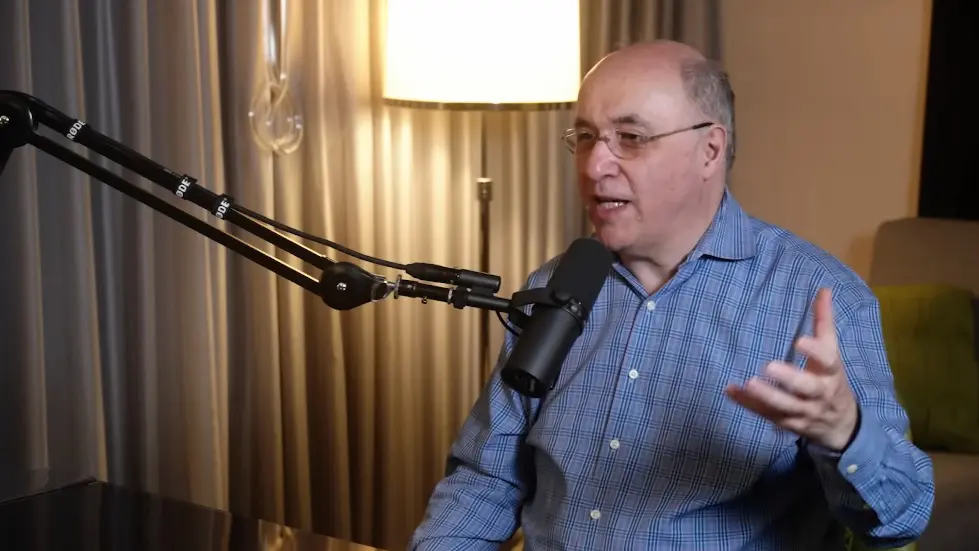
Section 2: Differences between Large Language Models and Computational Systems
- Large language models like ChatGPT are primarily focused on generating language.
- They are a shallow computation on a large amount of training data.
- They are not capable of performing arbitrarily deep computations like the computational stack built by Wolfram.
- The computational stack built by Wolfram is capable of performing deep and broad computations.
- Wolfram's goal is to make as much of the world computable as possible, and he views ChatGPT as a wide and shallow system, while the deep and broad computational system he is building is more important.

Section 3: The Nature of Truth, Reality, and Computation
- ChatGPT is a shallow computation on a large amount of training data.
- It is not capable of performing arbitrarily deep computations like the computational stack built by Wolfram.
- Wolfram's goal is to make as much of the world computable as possible.
- ChatGPT is a wide and shallow system, while the deep and broad computational system built by Wolfram is more important.
- The computational stack built by Wolfram is capable of performing deep and broad computations.

Section 4: Conclusion
- ChatGPT is a large language model developed by OpenAI.
- It is primarily focused on generating language and is not a computational system.
- It is a shallow computation on a large amount of training data.
- Wolfram's goal is to make as much of the world computable as possible.
- ChatGPT is a wide and shallow system, while the deep and broad computational system built by Wolfram is more important.
Section 1: The Nature of Motion
- The video is about Stephen Wolfram discussing the integration of ChatGPT and Wu from Alpha and Wolfram language.
- Wolfram is a computer scientist, mathematician, theoretical physicist, and founder of Wolfram Research.
- ChatGPT is a large language model primarily focused on generating language based on a trillion words of text on the web.
- Wolfram's goal is to make as much of the world computable as possible.
- ChatGPT is a shallow computation on a large amount of training data, while the computational stack that Wolfram built over the last 40 years is capable of performing arbitrarily deep computations.

Section 2: The Nature of Meaning
- The video discusses the concept of meaning in language.
- Wolfram believes that words are defined by social use, not by their inherent meaning.
- The word "hate" is an example of a word with ambiguity and emotional loading.
- Wolfram suggests that the meaning of words can be defined by their use in context.
- In computational language, words are defined by specific definitions made by the programmer.

You have read 50% of the summary.
To read the other half, please enter your Name and Email. It's FREE.
You can unsubscribe anytime. By entering your email you agree to our Terms & Conditions and Privacy Policy.
Watch the video on YouTube:
Stephen Wolfram: ChatGPT and the Nature of Truth, Reality & Computation | Lex Fridman Podcast #376 - YouTube
Related summaries of videos:
- Harvey Silverglate: Freedom of Speech | Lex Fridman Podcast #377
- Anna Frebel: Origin and Evolution of the Universe, Galaxies, and Stars | Lex Fridman Podcast #378
- Randall Kennedy: The N-Word - History of Race, Law, Politics, and Power | Lex Fridman Podcast #379
- Neil Gershenfeld: Self-Replicating Robots and the Future of Fabrication | Lex Fridman Podcast #380
- Chris Lattner: Future of Programming and AI | Lex Fridman Podcast #381
- Bert Kreischer: Comedy, Drinking, Rogan, Segura, Churchill & Kim Jong Un | Lex Fridman Podcast #382
- Mark Zuckerberg: Future of AI at Meta, Facebook, Instagram, and WhatsApp | Lex Fridman Podcast #383
- Matthew McConaughey: Freedom, Truth, Family, Hardship, and Love | Lex Fridman Podcast #384
- Jimmy Wales: Wikipedia | Lex Fridman Podcast #385
- Marc Andreessen: Future of the Internet, Technology, and AI | Lex Fridman Podcast #386
- Home
- About us
- Contact
- Book Summaries 0-9
- Book Summaries A
- Book Summaries B
- Book Summaries C
- Book Summaries D
- Book Summaries E
- Book Summaries F
- Book Summaries G
- Book Summaries H
- Book Summaries I
- Book Summaries J
- Book Summaries K
- Book Summaries L
- Book Summaries M
- Book Summaries N
- Book Summaries O
- Book Summaries P
- Book Summaries Q
- Book Summaries R
- Book Summaries S
- Book Summaries T
- Book Summaries U
- Book Summaries V
- Book Summaries W
- Book Summaries X
- Book Summaries Y
- Book Summaries Z
- Jay Shetty Podcast - Summaries
- Tom Bilyeu Impact Theory - Summaries
- Lex Fridman - Summaries
- Diary of a CEO - Summaries
- Alex Hormozi - Summaries
